 Whalesbook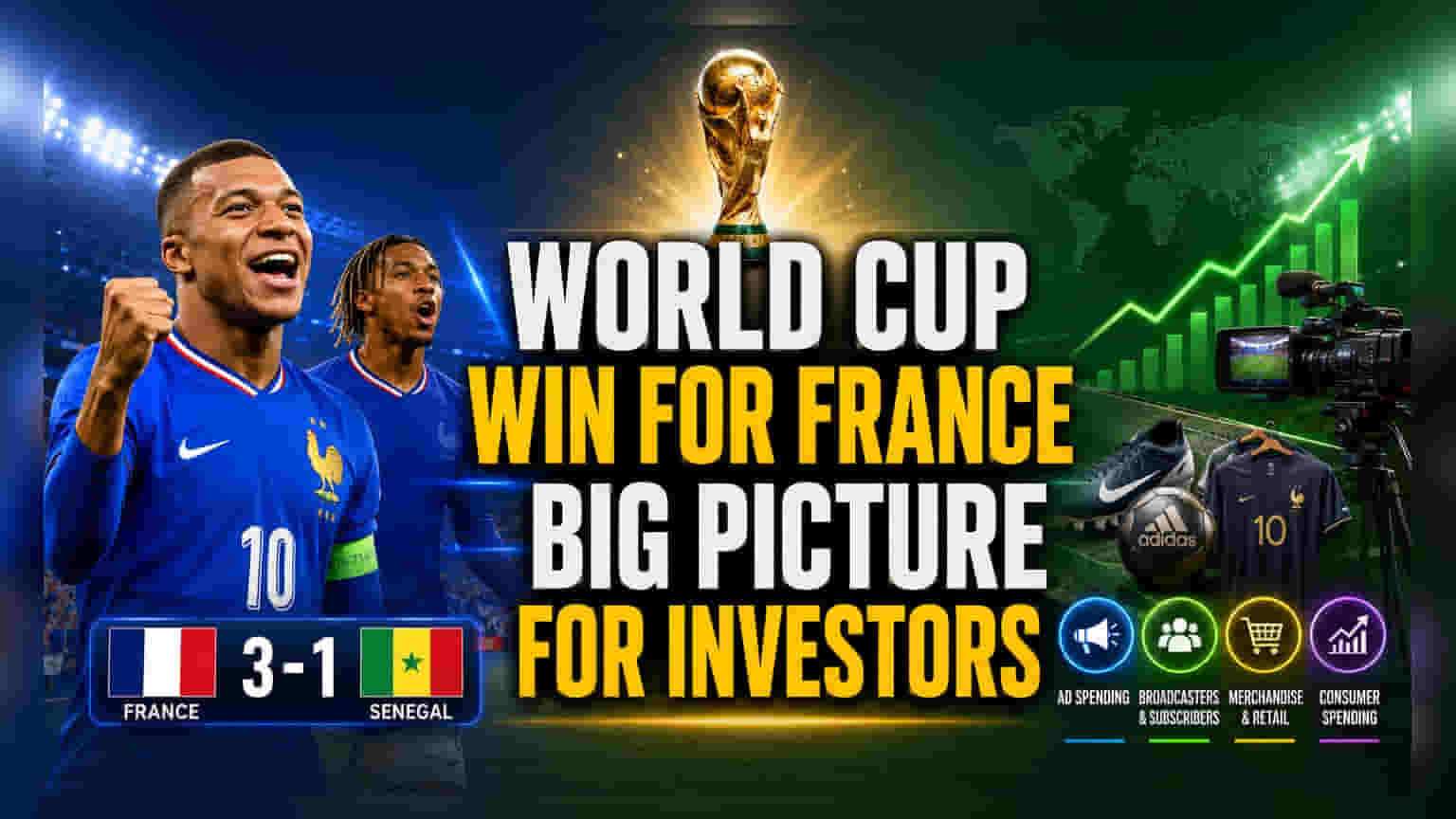


France’s 3-1 opening victory in the 2026 World Cup, led by Kylian Mbappe, shines a spotlight on the massive commercial ecosystem surrounding the tournament. Investors monitor major global sporting events for their impact on broadcasting rights, sports apparel demand, and advertising revenue across consumer sectors.
What Happened
France commenced their 2026 World Cup campaign with a 3-1 victory over Senegal on Tuesday. The match was highlighted by a standout performance from star player Kylian Mbappe, who scored two goals, and a late contribution from Bradley Barcola. Despite a challenging first half where the team struggled to find momentum, tactical adjustments by coach Didier Deschamps in the second half—specifically shifting Michael Olise to a central position—proved effective in securing the win. The victory serves as France's first step in the tournament, with future group matches scheduled against Iraq and Norway.
The Commercial Scale of Global Football
While the match result is a sports outcome, the FIFA World Cup represents a significant event for global markets, particularly in media, retail, and consumer discretionary sectors. Investors often track these tournaments as they drive advertising budgets and consumer engagement. Major international events frequently influence the performance of media conglomerates that hold broadcasting rights and consumer brands that invest heavily in sponsorships and marketing campaigns featuring high-profile athletes.
Impact on Sports Apparel and Branding
Individual player performances, such as Mbappe’s brace, are closely watched by global sportswear brands. High-profile players often serve as primary ambassadors for companies like Nike and Adidas. When stars perform well on the global stage, it enhances brand visibility and can influence product demand. Investors in this space typically monitor marketing effectiveness and consumer engagement metrics during and after the tournament, as strong brand associations can correlate with sustained product interest.
Broadcasters and Ad Spending
For media companies, a successful tournament—defined by high viewership numbers and competitive matches—is critical for monetizing broadcasting rights. High-scoring games and performances by global icons tend to drive higher audience retention and, consequently, premium advertising rates. When matches are broadcast during prime time or attract large viewership, media firms may see a short-term boost in ad revenue, though this is often balanced against the high costs of acquiring tournament rights and the risks associated with audience fluctuations.
How Investors May Read This
Investors looking at the business of sports often differentiate between short-term noise and long-term trends. A single match result is unlikely to shift the fundamental value of large global corporations. However, the tournament as a whole acts as a barometer for consumer sentiment and discretionary spending power. If the tournament drives strong retail sales and high digital engagement, it is often viewed as a positive signal for the broader consumer discretionary sector. Conversely, if economic conditions are weak, companies may find it harder to convert tournament-related marketing into actual sales growth.
What Investors Should Track
Investors interested in the economic side of the World Cup monitor several key factors beyond match results. These include the trend in advertising spending, as companies may adjust their budgets based on viewer engagement data. The financial health of broadcasters, particularly regarding subscriber acquisition and retention during the event, is another important monitorable. Additionally, global supply chain and inventory levels for licensed merchandise are relevant, as these businesses aim to capitalize on the surge in demand during the tournament weeks. Finally, any shifts in consumer spending patterns during the event can offer insights into the overall strength of the consumer economy.