 Whalesbook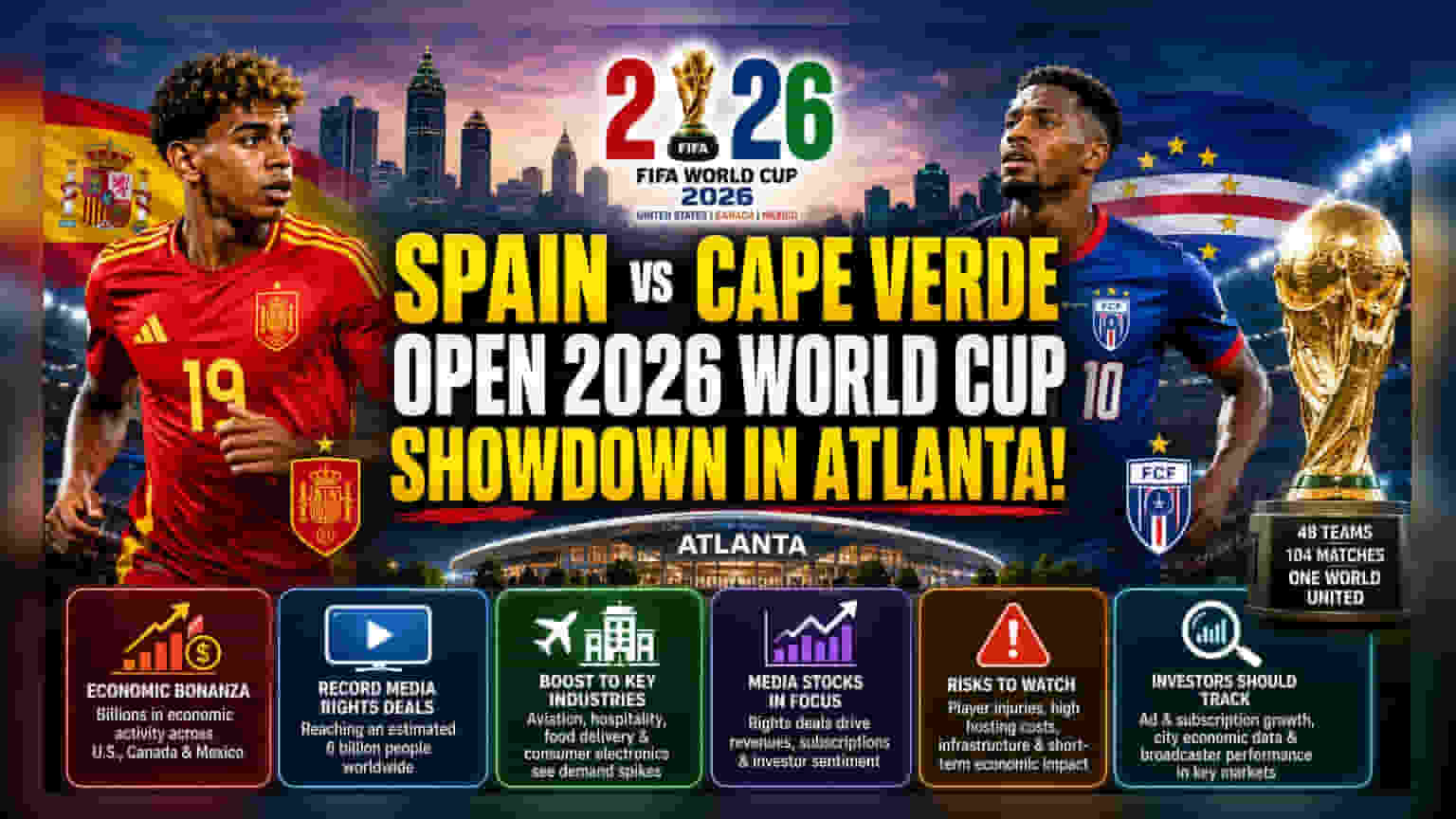


As Spain faces debutants Cape Verde in their 2026 World Cup opener, the event underscores the tournament's massive commercial scale, driven by record-breaking media rights and projected economic boosts for host cities.
What Happened
Spain, the reigning European champions, will face tournament debutants Cape Verde in their opening match of the 2026 FIFA World Cup in Atlanta. This fixture is a highly anticipated event, pitting a seasoned football power against a historic newcomer. For Spain, the tournament is a chance to reset their recent World Cup record, while Cape Verde marks a significant milestone as one of the smallest nations by population to compete on the world stage. The match carries extra weight as global audiences monitor the fitness of Spanish stars like Lamine Yamal and Nico Williams, whose injury status could influence both team performance and, consequently, viewer engagement metrics.
The Bigger Business Context
Beyond the pitch, the 2026 World Cup represents a significant economic event, described by analysts as a commercial bonanza. The tournament is projected to generate billions in economic activity across host cities in the U.S., Canada, and Mexico. For the media sector, this tournament is a major revenue driver. In India, for instance, the recent, eleventh-hour media rights deal by Zee Entertainment underscores the high value placed on live football content, which continues to see significant investment despite the dominance of cricket. Global broadcasting partnerships have reached record-breaking levels, with FIFA utilizing a diverse ecosystem of traditional broadcasters and digital platforms to reach an estimated 6 billion people.
Why This Matters For Investors
For investors and market observers, major sporting events like the World Cup function as massive demand signals. The tournament is expected to create temporary but measurable spikes in economic activity, particularly in aviation, hospitality, food delivery, and consumer electronics. Analysts anticipate that host cities will see substantial increases in tourism-related spending, with job creation in the leisure and hospitality sectors providing a short-term boost to local economies. While these benefits are often localized and temporary, the scale of the 2026 event—with 48 teams and over 100 matches—is expected to provide a broader lift to consumer spending than previous, smaller-scale tournaments.
The Media Rights Equation
Broadcasting remains the largest revenue pillar for the tournament. The complexity of securing rights in key markets, such as India, highlights the competitive nature of this space. When rights are secured, it often triggers positive market sentiment for the broadcasting companies, as seen in recent stock movements where such announcements led to increased investor interest. These deals are crucial for OTT platforms and television networks looking to boost subscriptions and advertising revenue. The ability of broadcasters to monetize this content, through both traditional ads and digital engagement, is a critical measure of success for media stocks during the tournament period.
What Could Go Wrong
While the tournament is a major commercial event, risks remain. The economic impact is often temporary, and market gains in sectors like tourism or hospitality may not lead to long-term structural growth. Additionally, the uncertainty surrounding star players can affect viewer interest; if key players like Lamine Yamal remain sidelined, it could temper the initial surge in excitement and engagement. Furthermore, the high cost of hosting and the potential for regulatory or infrastructure challenges are factors that investors should keep in mind when evaluating the tournament's long-term value for host nations.
What Investors Should Track
Investors may want to monitor how media companies manage advertising revenue and subscription growth throughout the tournament. Tracking the economic data released by host cities, such as footfall in restaurants and demand for local travel services, can provide insight into the real-world impact of the event. Additionally, monitoring the performance of broadcasting partners in key emerging markets will be important to understand whether football is successfully capturing a larger share of the mainstream sports-viewing audience.