

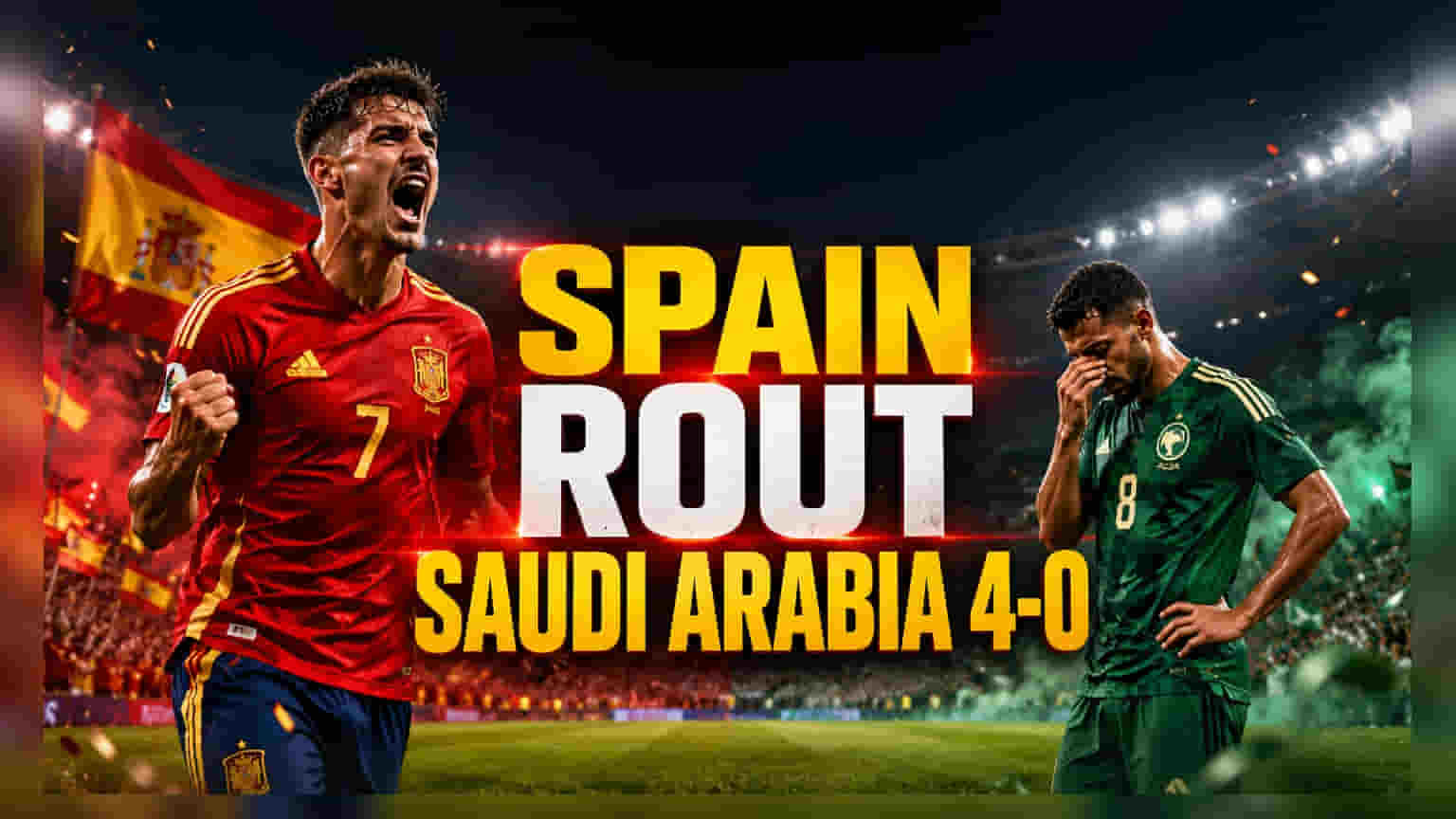
Spain's convincing victory over Saudi Arabia in the 2026 FIFA World Cup qualifier underscores the high commercial stakes for official kit sponsors. With the tournament acting as a global retail catalyst, investors are tracking how team performance influences brand visibility and potential sales growth for major sports apparel companies like Adidas.
What Happened
Spain secured a decisive 4-0 victory against Saudi Arabia in their FIFA World Cup 2026 qualifying match, held at Atlanta Stadium. Lamine Yamal opened the scoring, followed by two goals from Mikel Oyarzabal and an own goal by Saudi Arabia's Hassan Altambakti. The win pushes Spain to four points in Group H, marking a significant improvement from their earlier opening match performance. For the business side of football, this match serves as a key platform for team apparel, as both national sides are outfitted by Adidas, the event’s major commercial partner.
Why Brand Visibility Matters
For global sportswear brands, tournament performance is directly linked to commercial interest. As Spain and Saudi Arabia are both part of the Adidas portfolio, the high-profile nature of World Cup qualifiers and the tournament itself are critical for maximizing merchandise exposure. Apparel companies leverage these matches to showcase new kit designs—such as the recently released home and away jerseys for the 2026 cycle—and drive direct-to-consumer sales. When teams perform well, fan engagement and merchandise demand typically increase, providing a measurable boost to the "event-driven" retail segment.
The Economic Scale of World Cup 2026
The 2026 FIFA World Cup is projected to be the largest sporting event in history, featuring 48 teams and 104 matches across the United States, Canada, and Mexico. Analysts anticipate billions of dollars in global economic output, with sportswear retail, hospitality, and media rights being primary beneficiaries. For investors in the sports retail sector, the tournament acts as a major marketing engine. Success in early qualifying stages, like Spain’s recent win, helps sustain consumer interest and momentum throughout the lead-up to and duration of the event.
Risks and Monitorables
While major tournaments create a surge in activity, they also come with inherent risks. The financial benefit for sportswear companies is often heavily dependent on the duration of a national team’s participation in the tournament. If highly popular teams exit the competition early, the sustained demand for that specific national team’s merchandise can drop significantly. Furthermore, retail performance is sensitive to broader consumer spending trends. Investors typically track inventory levels and sell-through rates of licensed merchandise to assess the health of the sports apparel market. The key monitorable for shareholders in this space remains whether team-specific success can translate into long-term customer loyalty and consistent revenue growth beyond the temporary spike of the tournament period.