 Whalesbook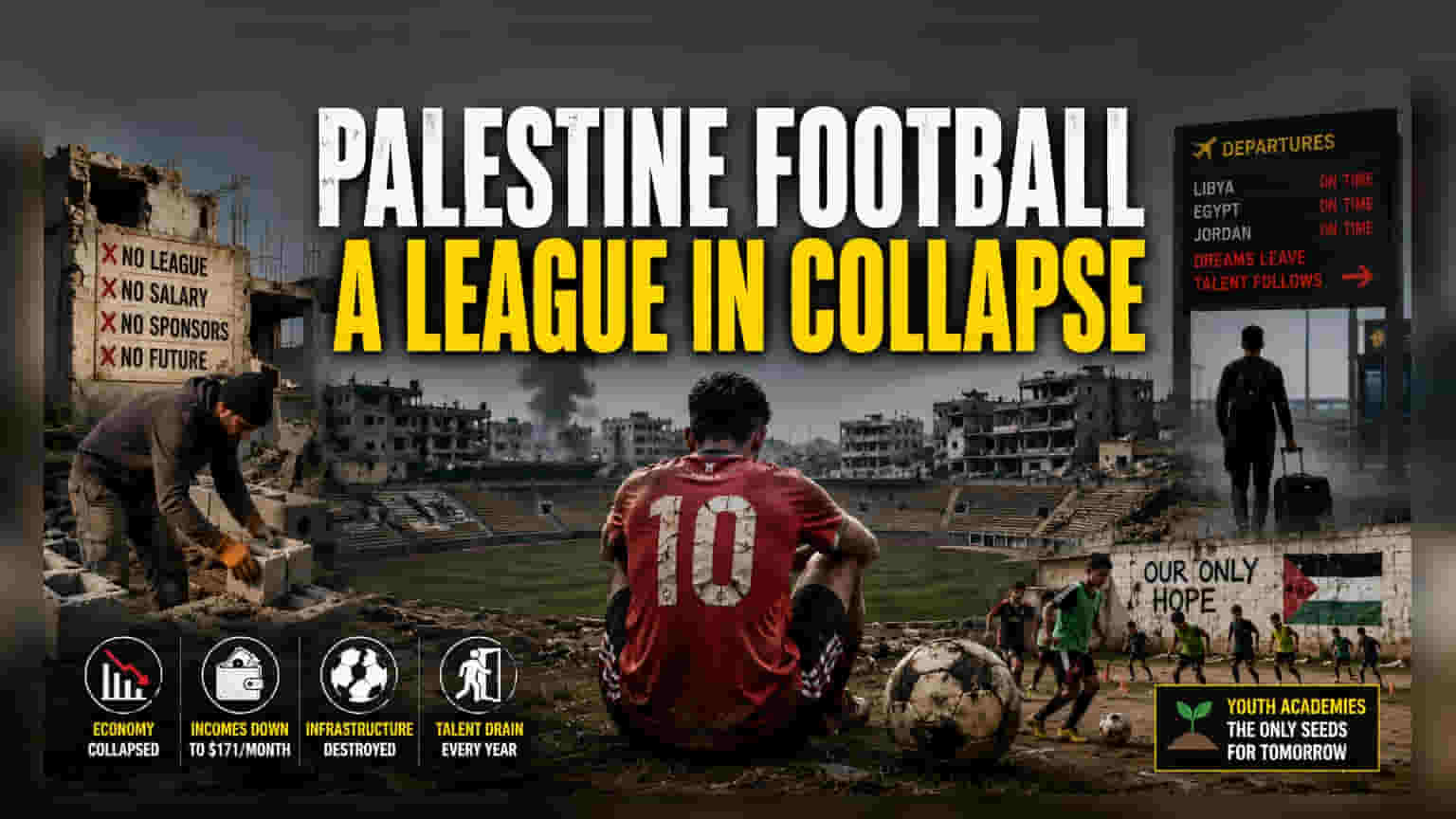


The Palestinian Professional League’s three-year suspension has triggered a deep economic crisis for the region's sports industry. With professional salaries vanishing and clubs facing insolvency, talented players are leaving the sport for manual labor. This institutional breakdown has led to significant loss of human capital and infrastructure, effectively setting the sector back by two decades.
What Happened
The Palestinian sports ecosystem is currently dealing with a near-total collapse of its professional football structure. The Palestinian Professional League has remained suspended for nearly three years due to the ongoing regional conflict. This prolonged inactivity has effectively dismantled the industry, stripping clubs of their revenue models and leaving professional athletes without a stable income or career path. The situation has resulted in a regression of the sector by an estimated 20 years, with infrastructure destroyed and organizational structures struggling to survive.
The Erosion of Professional Livelihoods
The financial impact on athletes has been immediate and severe. Prior to the suspension, professional football provided a viable career path, with players earning between $2,000 and $7,000 per month. That economic reality has vanished. Today, many athletes have been forced to pivot to low-wage manual labor in construction, retail, or mechanics to support their families. For those attempting to remain in the sport, the projected future salary environment is dire, with estimates suggesting pay could drop to as low as 500 shekels (approximately $171) per month. This drop reflects the total loss of the commercial viability that once sustained the league.
Institutional Collapse and Funding Challenges
The business side of Palestinian football has been hit just as hard. Clubs, which rely on a combination of local business sponsorship and funding, are currently insolvent. A major systemic issue is the freezing of Palestinian Authority funds by Israeli authorities, which has choked off the primary capital flow for many sporting organizations. Without this liquidity, clubs cannot meet operating expenses, maintain grounds, or pay wages. The disappearance of local business donors, who are also grappling with the broader economic downturn, has further left clubs without a financial lifeline.
Loss of Human Capital
Beyond the immediate financial losses, the industry is suffering from a long-term 'brain drain' of its most promising talent. Coaches and industry veterans report that a generation of players is essentially being lost every year. Young athletes who should be hitting their prime performance years are either quitting the sport entirely or seeking opportunities in foreign leagues, such as those in Libya, Egypt, or Jordan, where they are often signed as cost-effective international players. This migration not only depletes the local talent pool but also ensures that the domestic league will face a significant quality deficit if and when play ever resumes.
What Investors and Observers Should Track
While the immediate focus is on the human and organizational cost, the future of the sector depends on several key variables. The primary monitorable is the potential return of professional play, which remains stalled by security closures that make movement between the West Bank and East Jerusalem difficult. Additionally, observers are watching the viability of youth academies, which currently represent the only remaining seeds for a long-term resurgence. The industry's ability to attract new capital or government-backed funding, should the geopolitical landscape shift, will determine whether this sector can eventually rebuild or if it faces permanent institutional decay.