

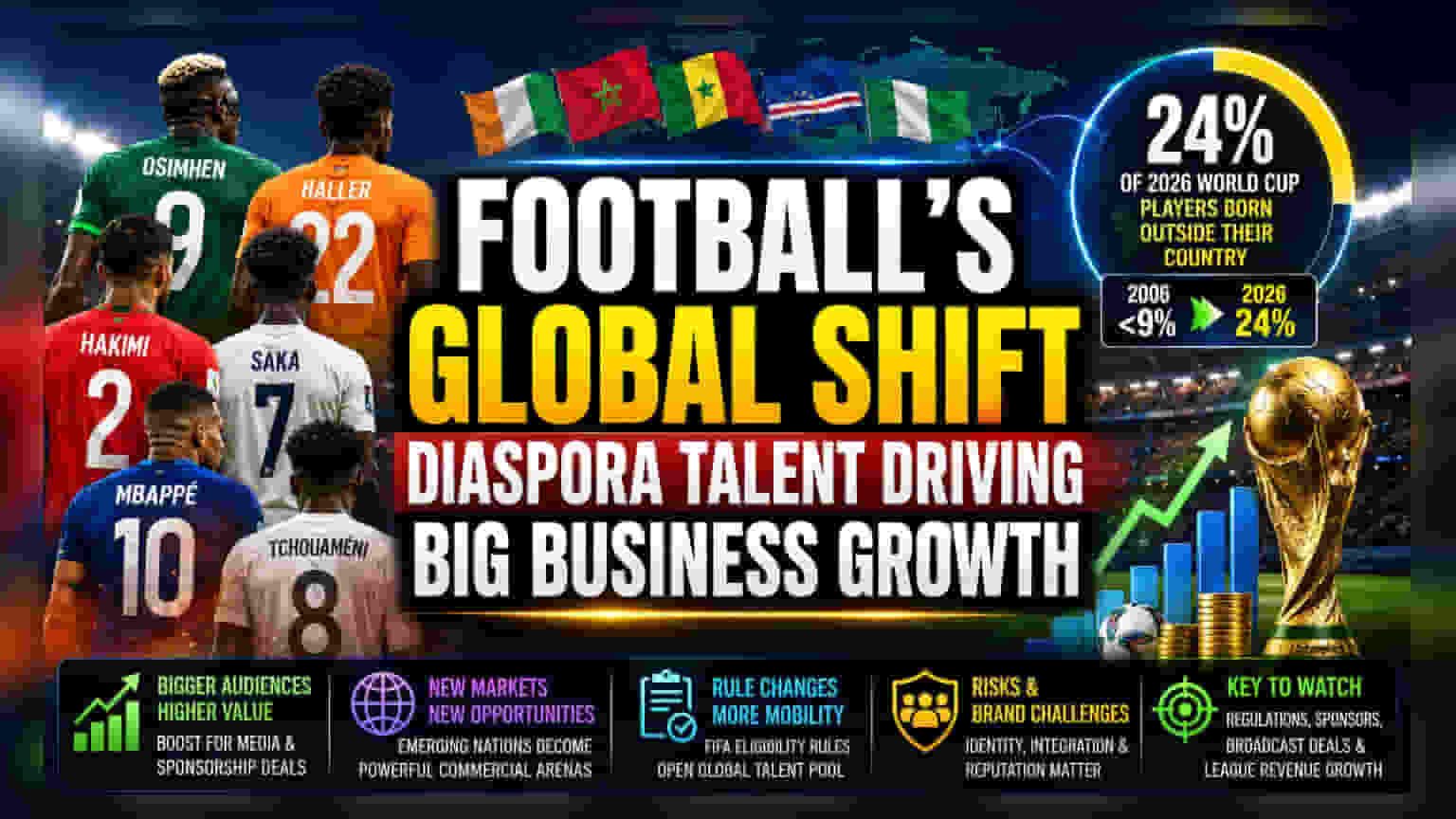
Almost 25% of players in the 2026 World Cup now represent nations different from their birthplaces. This shift, driven by updated FIFA eligibility rules, is expanding the talent pool for emerging markets, creating new commercial opportunities for media rights, global sponsorships, and the growth of sports leagues in Africa and beyond.
The Changing Economics Of Football Talent
The international football market is undergoing a significant demographic shift that has clear implications for the business of sports. For the 2026 World Cup, nearly a quarter of all selected players are representing a country other than the one where they were born, a sharp rise from less than 9 percent in 2006. In business terms, this represents a massive expansion of the talent supply chain for emerging footballing nations. By tapping into players who grew up in established systems—such as those in England or other European nations—emerging teams are effectively bypassing years of slow development, allowing them to compete at higher levels more quickly.
Why This Matters For The Business Of Sports
For investors and companies in the media and entertainment space, the rise of diaspora-driven teams creates new value. When nations like Ivory Coast, Cape Verde, or Morocco perform well on the global stage, they attract larger audiences, increasing the value of broadcasting rights, sponsorship deals, and merchandise sales in these regions. The success of Morocco in the 2022 World Cup demonstrated how a strong performance can elevate a nation's sporting brand, leading to increased investment and infrastructure development. This trend is turning African and other emerging markets into more competitive commercial arenas for global sports brands.
Regulatory Impact On Talent Mobility
This shift is largely fueled by changes in FIFA’s eligibility rules. By allowing players with dual nationality to switch their allegiance to an ancestral country, FIFA has essentially deregulated the international labor market for footballers. This has leveled the playing field, making it harder for traditional footballing powers to hoard talent. From an investor's perspective, this increases the volatility of team performance. Scouting networks now have to be much wider, and the competition for talent is no longer limited by geographic borders, potentially increasing the cost of talent acquisition for national football associations.
Risks And Brand Challenges
The commercial growth of these national teams is not without risks. The integration of diaspora players is complex, involving deep personal and historical connections that can sometimes create tension. Media scrutiny and the potential for public bias—such as the challenges faced by high-profile players in England—can affect team morale and, by extension, the brand value of these teams. For commercial partners, this means that investing in these teams requires careful reputation management and a deep understanding of the socio-political context. Investors may note that teams relying heavily on diaspora talent must manage the pressure of "conditional belonging," where performance is often heavily scrutinized by both the home and ancestral fanbases.
What Investors And The Market Should Track
The key monitorables for the sports business sector will be the continued evolution of FIFA's eligibility regulations and their impact on team valuations. As African and emerging leagues continue to grow, investors should track the growth of domestic broadcasting deals, the entry of global sponsors into these previously underserved markets, and the infrastructure spending by these nations to support their rising football status. The ability of these nations to convert international tournament success into sustainable domestic league revenue will determine the long-term commercial viability of this footballing shift.