 Whalesbook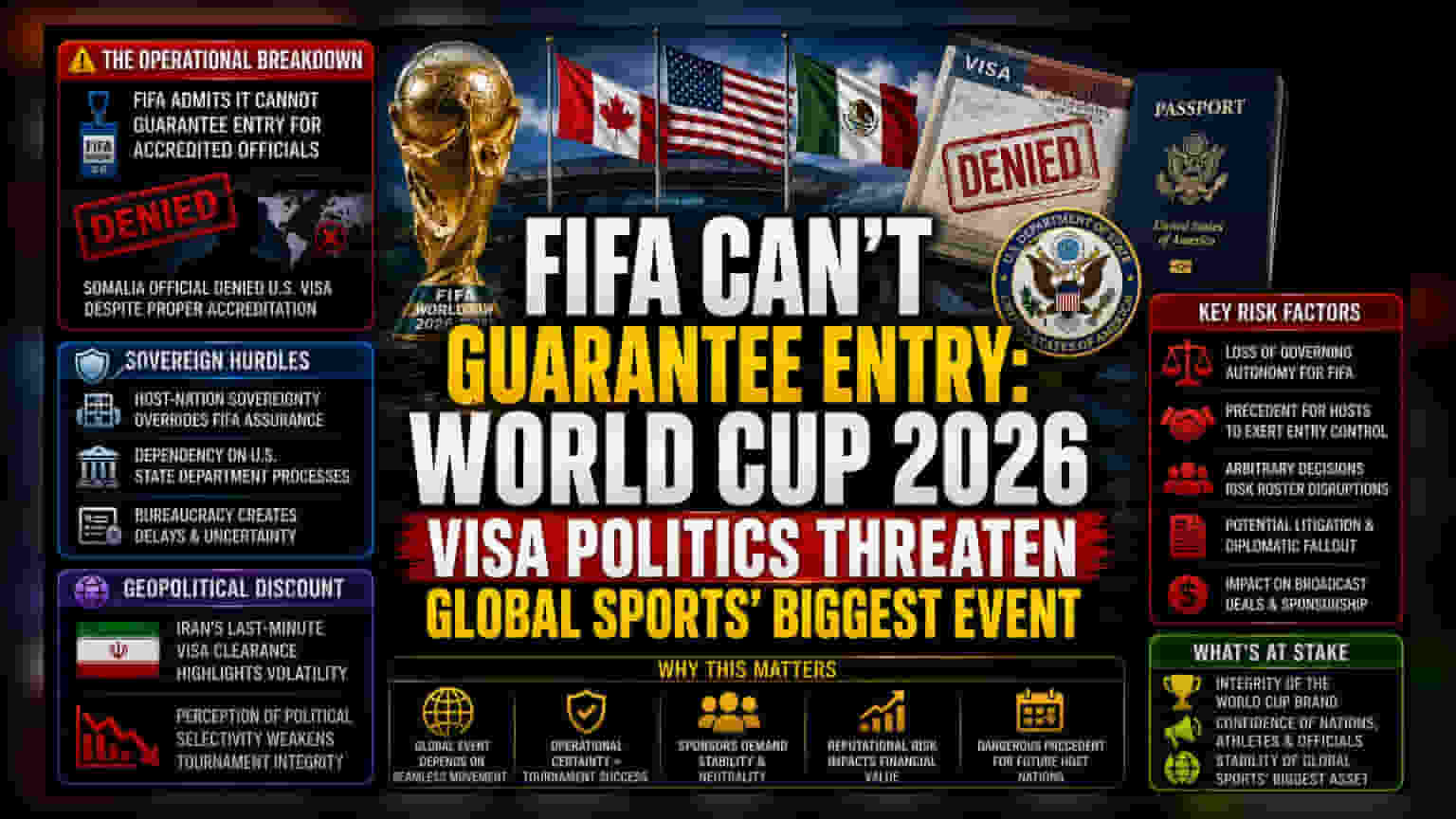


FIFA President Gianni Infantino faces mounting scrutiny as U.S. border policies disrupt World Cup operations. By conceding that FIFA lacks authority over sovereign border control, the organization highlights a significant operational vulnerability that threatens to overshadow the tournament's commercial success and logistical integrity.
The Operational Friction Point
The admission by FIFA leadership regarding its inability to guarantee entry for accredited officials exposes a profound disconnect between the organization’s commercial ambitions and the reality of host-nation sovereignty. While the spotlight remains on the diplomatic optics of the World Cup, the underlying issue centers on operational certainty. When governing bodies cannot secure passage for essential personnel, the event’s logistical architecture suffers. This reliance on individual host-nation discretion creates a precedent where athletic participation becomes subordinate to domestic security policy, potentially discouraging future bids from nations with stringent visa protocols.
Sovereign Hurdles and Organizational Liability
Unlike professional leagues that operate within a single domestic jurisdiction, FIFA’s global model relies on the seamless movement of human capital. The recent exclusion of a high-profile official from Somalia illustrates a failure in the advance vetting process that FIFA relies upon to maintain tournament continuity. This creates a reputational risk that extends beyond mere headlines. Stakeholders and corporate sponsors prioritize the stability of the World Cup as a global asset, yet this incident reveals a structural dependency on U.S. State Department processes that FIFA cannot control or influence. The current situation mirrors past challenges in mega-sporting events where local bureaucratic rigidities clashed with the requirements of international federations, often leading to unpredictable delays and the sudden unavailability of key stakeholders.
The Geopolitical Discount
The presence of national teams from countries currently engaged in intense diplomatic friction with the host nation introduces an element of volatility that markets generally avoid. Iran’s participation, which required a last-minute visa clearance, underscores the precarious nature of this specific World Cup cycle. From an analytical perspective, this creates a 'geopolitical discount' on the tournament’s brand value. If the perception takes hold that the host nation exerts selective entry power based on foreign policy objectives, the integrity of the competition is brought into question. This fragility increases the probability of future litigation or diplomatic fallout that could impact broadcasting contracts and sponsorship renewals, as partners look for stable, non-partisan environments to deploy capital.
Risk Factors and Regulatory Exposure
The primary danger for FIFA is not the specific visa denials, but the erosion of its governing autonomy. By publicly accepting that it cannot override government directives, FIFA may be signaling to future host nations that they possess absolute control over who participates, thereby weakening the federation's leverage in future agreements. This sets a dangerous precedent for upcoming cycles, particularly if host countries use visa mechanisms as a tool for soft-power leverage. The lack of a robust arbitration framework to handle these entry disputes leaves participating nations and individual athletes exposed to arbitrary decisions, increasing the cost of compliance and the risk of last-minute roster disruptions.