

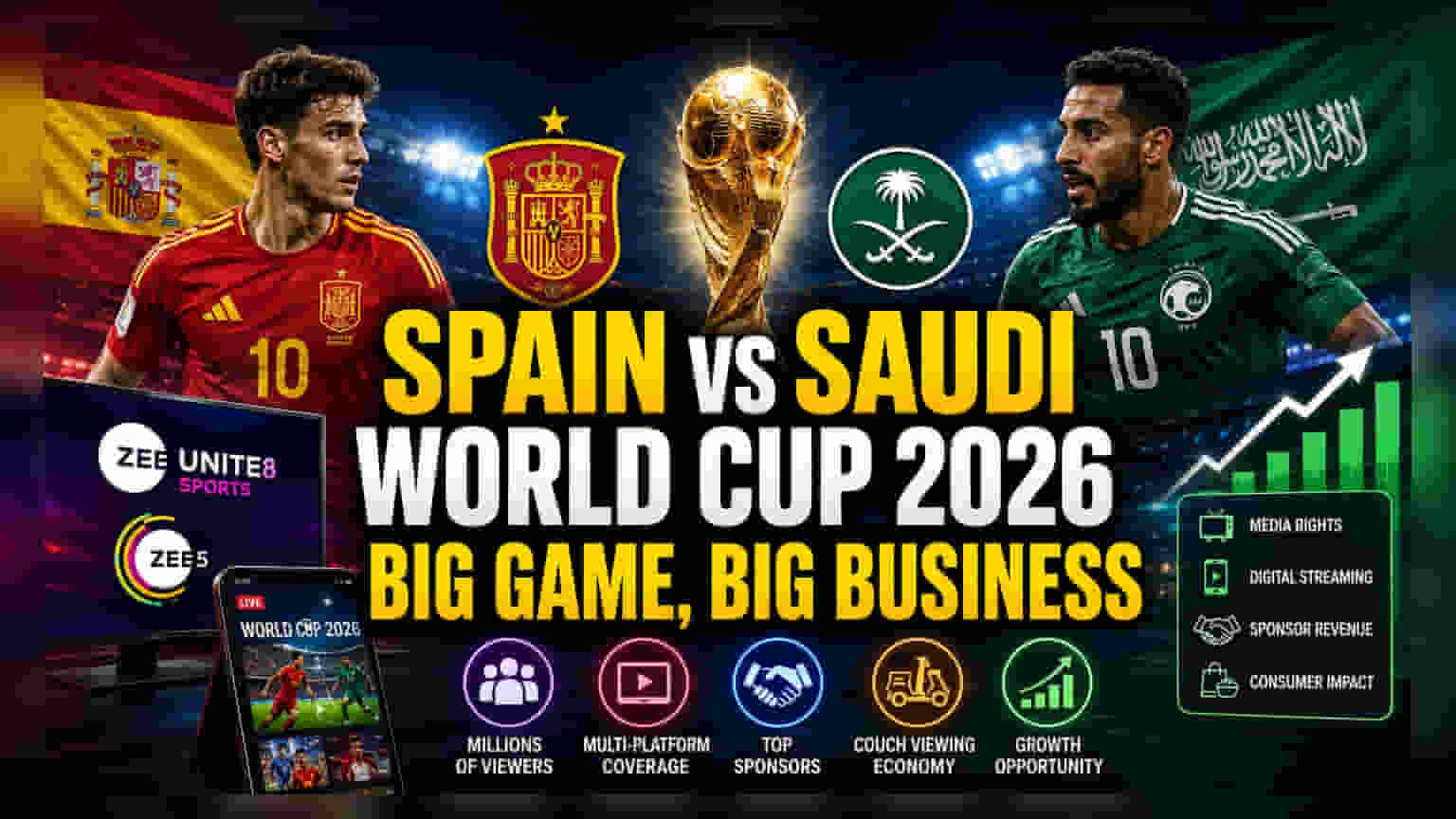
As Spain takes on Saudi Arabia in a crucial FIFA World Cup 2026 group stage match, Indian investors are tracking the tournament's impact on domestic consumer and media stocks. Broadcaster ZEE Entertainment is navigating the streaming challenge, while FMCG and quick-service brands leverage the late-night match timings to boost consumption.
What Happened
Spain is set to face Saudi Arabia in a pivotal FIFA World Cup 2026 group stage fixture, following a challenging opening match against Cape Verde. The game, which carries significant weight for both teams' advancement in the expanded 48-team tournament, highlights the growing intensity of the group stages. For Indian viewers and investors, the event is more than a sporting spectacle; it is a live test case for Zee Entertainment Enterprises, which holds exclusive broadcast and streaming rights for the tournament in India through 2034.
The Media Rights and Monetization Play
Zee Entertainment has positioned itself at the center of the World Cup experience in India, broadcasting matches through its 'Unite8 Sports' channels and streaming via the Zee5 platform. For investors, the critical monitorable is how the broadcaster monetizes this multi-year deal. With reports indicating a deal value under $60 million for the 2026 cycle, the focus is on whether Zee5 can convert the intense but temporary demand into a sustainable subscription base. The company has secured over a dozen sponsors, including major brands like Mahindra, Diageo, Apple, and Mondelez, aiming to generate revenue across TV and digital platforms. The market is closely observing whether these integrated advertising solutions can offset the heavy infrastructure costs required to stream high-definition content to millions simultaneously.
Impact on the 'Couch Viewing' Economy
Beyond media, the World Cup is creating a ripple effect across Indian consumer sectors. Because matches are held in North American time zones, many games air late at night in India, creating a niche but measurable demand for the 'couch viewing' economy. This trend typically benefits food delivery platforms, quick commerce companies, and snack brands as households adjust their consumption patterns during match hours. Investors are watching whether this shift leads to a noticeable bump in order volumes for delivery apps and sales for FMCG players during the six-week tournament period.
Streaming and Execution Risks
While the commercial potential exists, execution is a known risk in digital broadcasting. Recent reports of traffic bottlenecks and technical issues on streaming platforms suggest that maintaining a flawless viewer experience is difficult. For companies like Zee, technical stability is paramount, as persistent buffering or access issues can hurt brand reputation and deter new subscribers from recurring payments. These operational hurdles are key variables that could influence the net profitability of the broadcast rights deal.
What Investors Should Track
Investors monitoring the tournament's impact on listed companies may track three key areas. First, look for management commentary from Zee Entertainment regarding subscriber acquisition numbers and advertising revenue targets post-tournament. Second, keep an eye on volume data from consumer-facing logistics and delivery companies that benefit from late-night demand surges. Finally, monitor whether the shift in sports viewership toward digital platforms sustains long-term growth or if this remains a tournament-specific blip. The tournament concludes on July 19, 2026, and the data emerging from this window will provide a clearer picture of whether football can reliably anchor a segment of the Indian sports media market.