

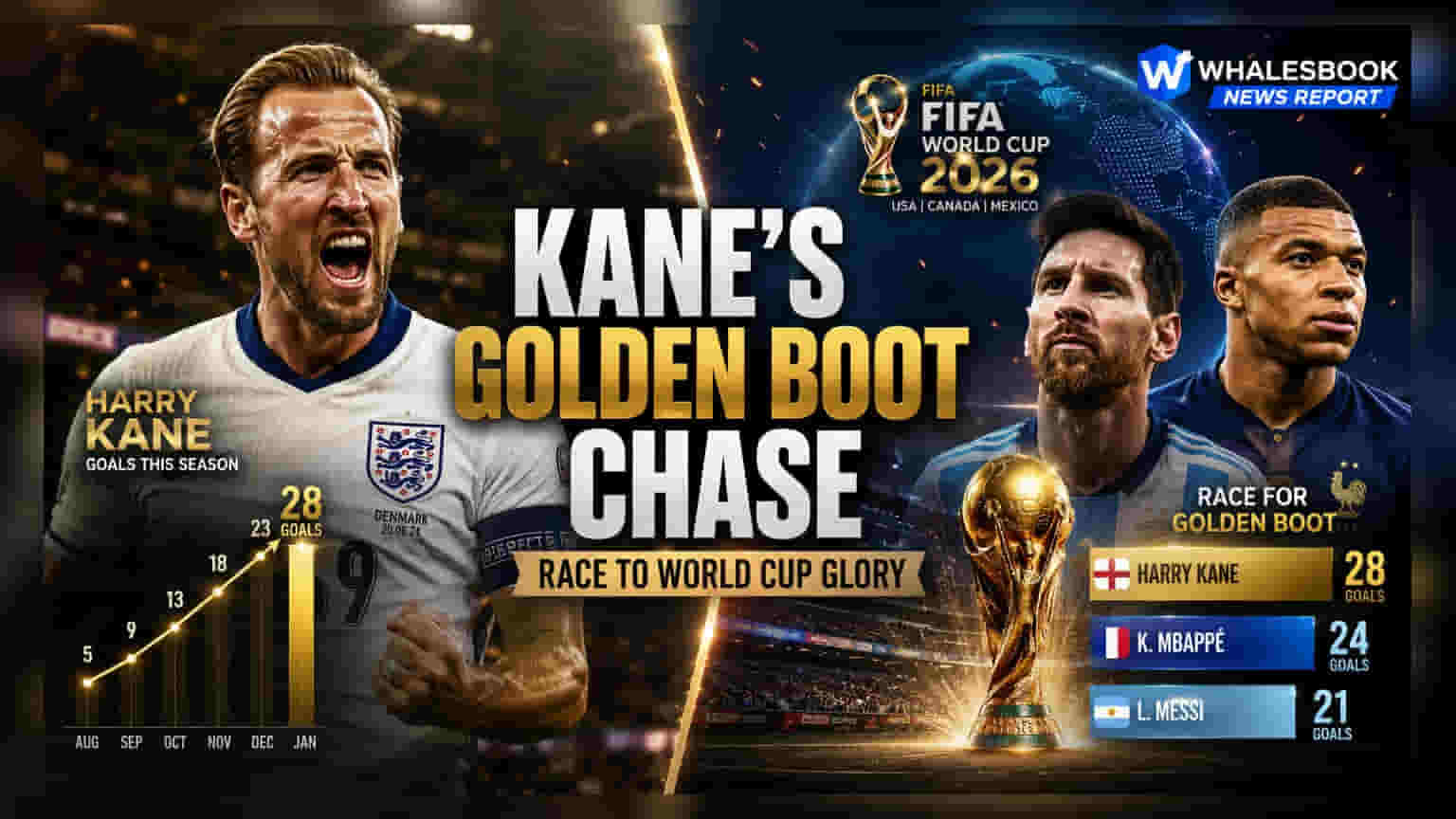
Harry Kane’s five-goal tally in the FIFA World Cup 2026 has reignited the Golden Boot race, helping drive viewer engagement for India's official broadcaster, Zee Entertainment. With matches airing during late-night hours in India, the tournament remains a critical test for Zee’s media monetisation strategy and digital subscriber growth.
What Happened
Harry Kane’s recent brace against DR Congo, which brought his tournament total to five goals, has placed him in the centre of the FIFA World Cup 2026 Golden Boot race. This performance has not only kept England in the tournament but has also intensified global viewer interest. For Indian investors, the tournament—hosted by the USA, Canada, and Mexico—is more than just a football event; it is a major media property for Zee Entertainment Enterprises (ZEEL), which holds the exclusive broadcasting and streaming rights in India through 2034.
Why This Matters For Zee Entertainment
The FIFA World Cup 2026 serves as a significant content test for Zee Entertainment. After acquiring the rights, the company launched its United8 Sports channel bouquet and is streaming all matches on its platform, Zee5. The business logic here is to leverage the high-intensity engagement that comes with tournaments like the World Cup to drive subscriber additions and ad revenue.
However, the tournament presents a structural challenge for the broadcaster. Because the matches are being played in North American time zones, many are broadcast at 2:30 AM and 5:00 AM IST. This creates a difficult environment for traditional linear television viewership, shifting the pressure onto Zee’s digital platform, Zee5, to capture the 'midnight economy' audience. Investors are closely watching whether the excitement surrounding top players like Harry Kane, Lionel Messi, and Kylian Mbappé can generate enough consistent viewership to justify the broadcaster’s investment.
The Ad Market Pressure
While major sporting events traditionally attract high advertising spend, the 2026 tournament has faced a mixed response from the advertising industry. Some market reports suggest that brand interest has been more cautious compared to historical benchmarks. Analysts point to the inconvenient match timings as a primary factor, leading to a more conservative ad-buying environment than initially expected.
For Zee, the ability to convert high-profile on-field moments—such as the race for the Golden Boot—into ad-revenue is vital. Brands are moving away from traditional reach-based metrics, instead looking for high-intent digital engagement. If Zee can demonstrate high completion rates for its digital ads during match recaps and highlights, it may mitigate the impact of lower live-viewership numbers.
Competitive and Sector Risks
Investors should be aware that the media sector is facing intense competition for digital eyeballs. With several OTT players fighting for subscription growth, Zee’s performance during this World Cup is a key indicator of its ability to monetize premium sports properties beyond cricket. The risk is that if the audience growth does not meet the internal targets set by the company, the return on the broadcasting rights investment may come under pressure.
Furthermore, the fragmentation of audience attention across multiple digital feeds remains a persistent risk for any broadcaster. Companies like Zee are essentially betting that a high-quality, exclusive sports property can anchor its digital platform during off-peak hours, but the execution risk regarding viewer retention is significant.
What Investors Should Track Next
The most important monitorables for shareholders include the company's upcoming quarterly financial reports, which will offer the first concrete evidence of subscription growth on Zee5 during the tournament period. Investors should also monitor management commentary on ad-revenue realization and whether the broadcaster can successfully upsell its digital platform to the younger, football-loving demographic. Future updates on tournament-related subscriber acquisition costs versus lifetime value (LTV) will be critical to understanding the long-term profitability of this media rights deal.