 Whalesbook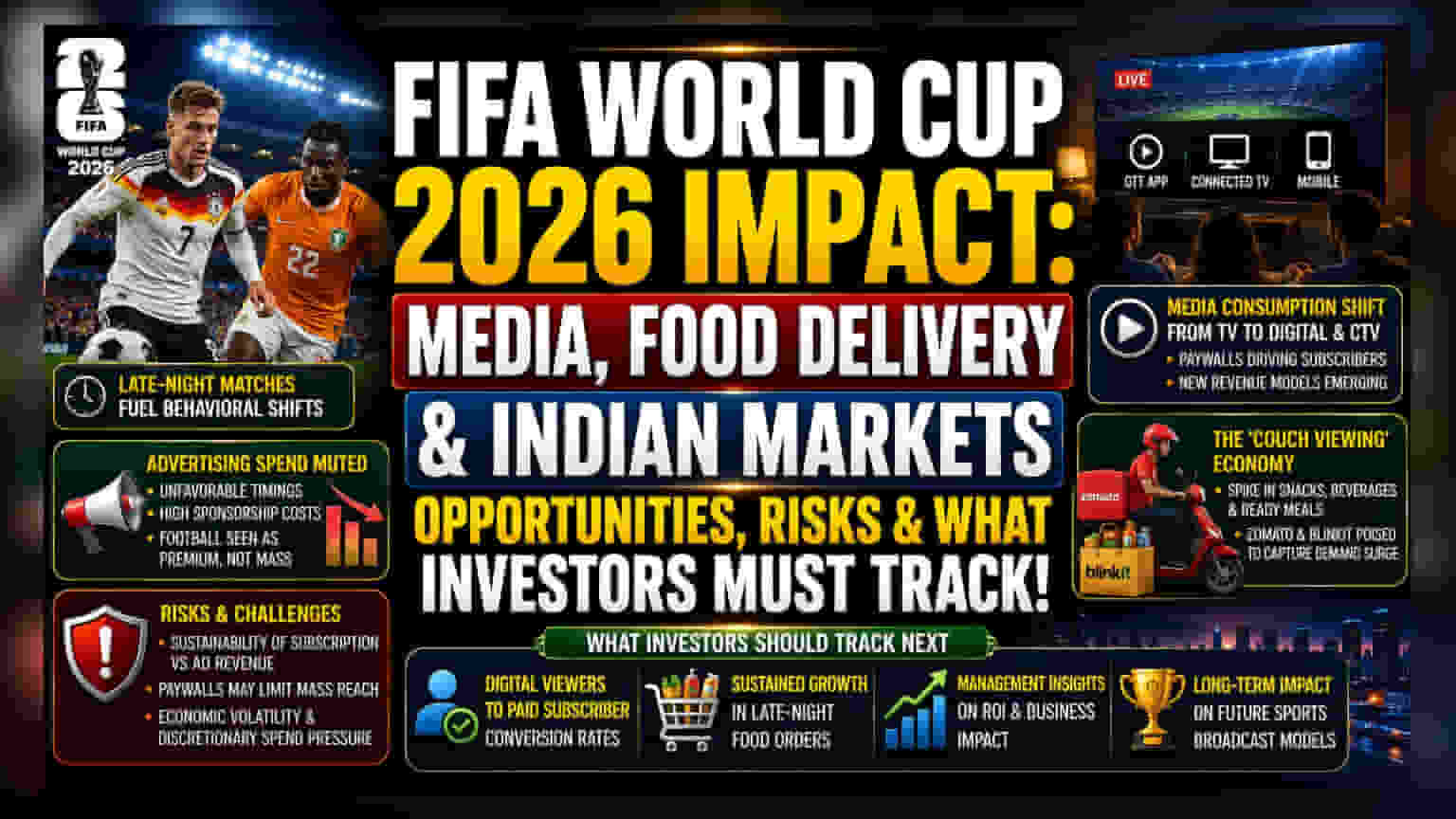
As the FIFA World Cup 2026 progresses, investors are tracking its influence on Indian media, quick-service restaurants, and digital platforms. Despite the global excitement, the event presents a mixed picture for domestic stocks due to match timings and changing viewership patterns.
What Happened
The FIFA World Cup 2026 is currently in full swing, with group stage matches like the pivotal clash between Germany and Ivory Coast drawing global attention. For Indian markets, the tournament serves as a unique test for consumer-facing sectors, particularly media, digital platforms, and the food delivery industry. As matches are being played across North American time zones, the event is creating distinct challenges and opportunities in the Indian business landscape.
The Shift in Media Consumption
A key trend for investors to watch is the migration of sports viewership from traditional linear television to digital and Connected TV (CTV) platforms. While cricket has historically dominated Indian sports viewership and advertising, the World Cup is accelerating a structural shift in how audiences consume premium global content. Media companies are navigating this transition by putting content behind paywalls to drive subscriber growth, a strategy that is being closely monitored for its effectiveness in monetizing non-cricket sports events. This shift suggests that revenue models for media broadcasters are evolving, as they prioritize digital engagement and data-driven ad targeting over traditional television reach.
The 'Couch Viewing' Economy
The food delivery and quick commerce sectors are finding a relevant angle in the tournament, often referred to as the 'couch viewing economy.' With matches frequently scheduled at late-night hours in the Indian time zone, there is potential for increased demand for snacks, beverages, and ready-to-eat meals. Platforms with strong delivery networks, such as Zomato and its quick commerce arm Blinkit, are positioned to capture this behavioral surge. Investors are looking at whether these short-term spikes in order volume can translate into meaningful improvements in unit economics or if they remain a seasonal, promotional-driven phenomenon.
Why Advertising Spend is Muted
Despite the scale of the tournament, the expected advertising bonanza for Indian companies has been more muted than in previous years. Industry reports indicate that many brands are cautious about committing large budgets to the tournament. Several factors are contributing to this trend: unfavorable match timings that limit live viewership, the high cost of sponsorship packages, and the perception of football as a premium rather than mass-market property in India. This reluctance highlights a key risk for media companies: the possibility that the revenue generated from ad slots may fall short of the high costs incurred to secure broadcasting rights.
Risks and Market Challenges
For investors, it is important to distinguish between short-term excitement and long-term business impact. The World Cup, while significant, is often 'trading context' rather than a fundamental driver for stock prices. The primary risk for the media sector is the sustainability of subscription revenue versus ad revenue. If paywalls discourage mass viewership, it could hamper the ability to attract large-scale advertisers. Additionally, the broader economic environment—marked by volatility and global uncertainty—means that discretionary spending by both advertisers and consumers remains sensitive.
What Investors Should Track Next
Going forward, the key monitorables for investors include the actual conversion of digital viewers into paying subscribers for media platforms, and whether the spike in late-night food orders translates into sustained usage frequency. Furthermore, management commentary from listed broadcasting and consumer goods companies will be crucial to understand how they evaluate the return on investment from this tournament. Investors may also want to observe if the shift toward digital sports consumption creates a more permanent, profitable model for broadcasters in future sporting events, or if the current muted marketing spend is a sign of long-term caution among advertisers.