

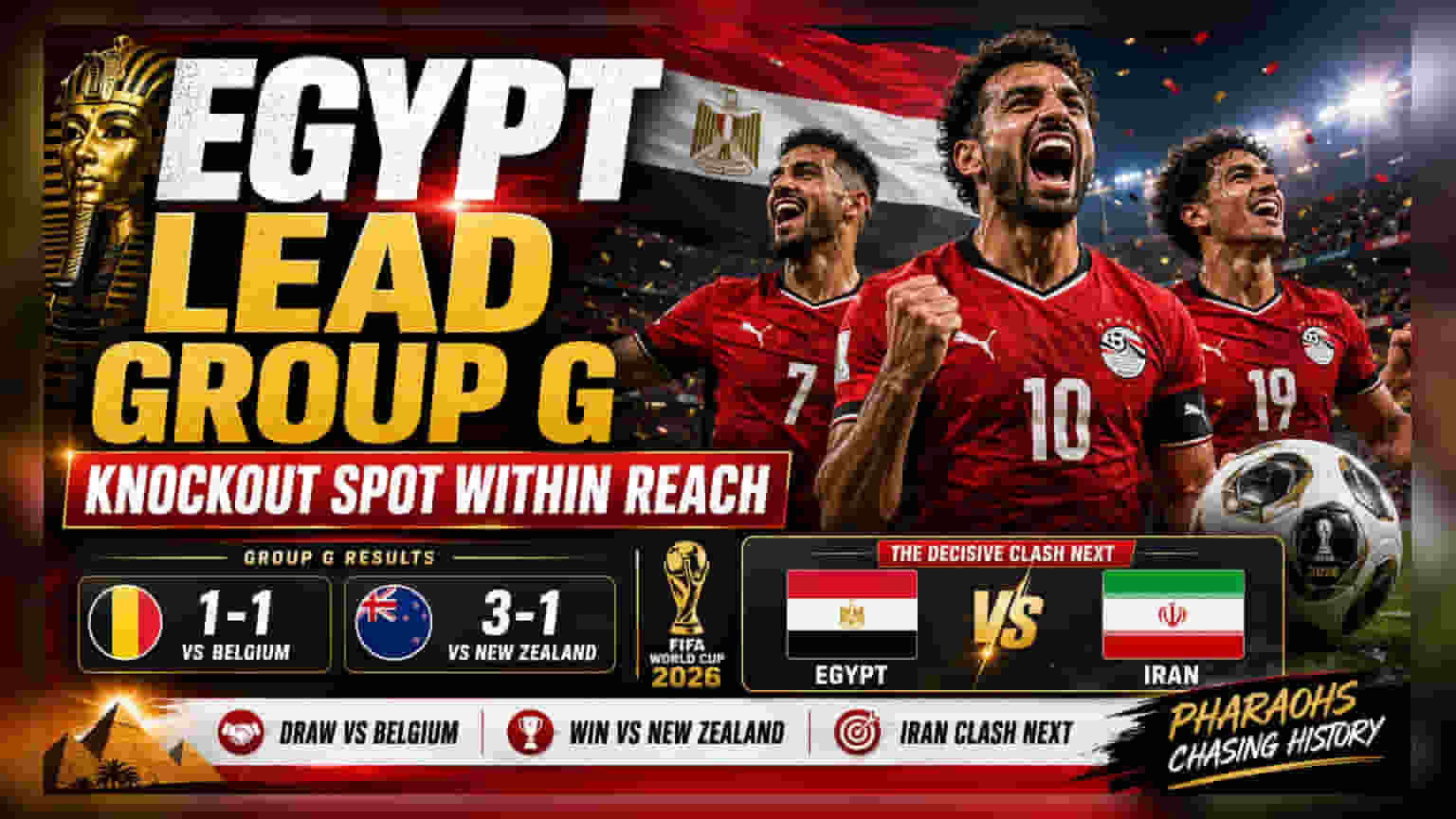
Egypt leads Group G in the 2026 World Cup after securing a 3-1 win over New Zealand and a draw with Belgium. The team’s performance under coach Hossam Hassan has shifted national sentiment, with advertising campaigns reflecting a new sense of ambition. This change in confidence is being observed as a barometer for broader societal expectations in the country.
What Happened
Egypt’s national football team, the Pharaohs, has emerged as a leader in Group G at the 2026 World Cup. The team reached this position following a 1-1 draw against Belgium, currently ranked world No. 10, and a 3-1 victory over New Zealand. These results have given Egypt its highest-ever points and goal tally in a single World Cup tournament. The team’s advancement to the knockout stage now depends on their final group match against Iran. A win or a draw will secure their place in the next round, though a loss would leave their qualification dependent on other group results.
A Shift in Historical Expectations
This tournament performance marks a departure from Egypt’s past World Cup record. While the nation was the first African and Arab country to participate in the tournament in 1934 and holds seven Africa Cup of Nations titles, the Pharaohs had struggled to secure a single match victory in their three previous World Cup appearances prior to 2018. The current success is being attributed to the leadership of coach Hossam Hassan. As the team’s all-time top scorer and a former player in the 1990 tournament, Hassan is the first Egyptian to manage the team at the World Cup, providing a blend of historical experience and current strategic direction.
Advertising and National Sentiment
Beyond the football pitch, the team’s progress has triggered a shift in national advertising and cultural discourse. Recent commercial campaigns have directly challenged the country’s tendency to expect early elimination from major tournaments. Using the slogan, "This time, we're staying longer," the advertisements feature players pushing back against doubters. This shift in messaging resonates with a population that often balances high aspirations with economic and political uncertainties. While debate continues over whether such ads effectively change mindset or simply highlight past struggles, they provide a clear signal of rising national confidence.
What To Watch Next
The most critical event for observers is the upcoming final group match against Iran. Beyond the immediate sporting outcome, the sustainability of this performance is a key point of interest. Observers are tracking whether the renewed confidence under Hossam Hassan can lead to a lasting change in the team's competitive standing. Additionally, the impact of this tournament run on general consumer sentiment remains a point of interest, as strong national sporting performances often serve as indicators of collective mood and outlook.