

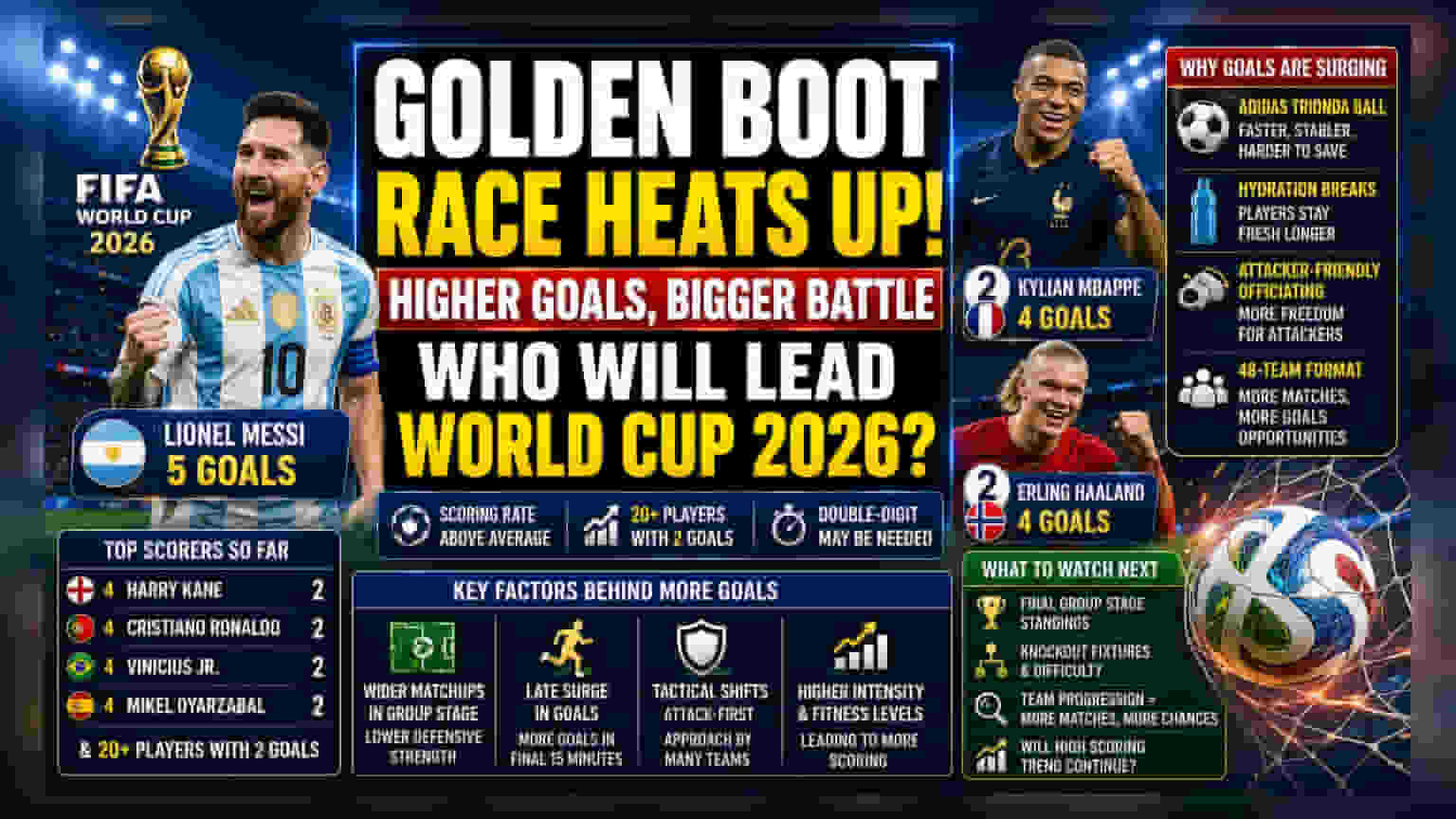
The 2026 FIFA World Cup is experiencing an unprecedented volume of goals, potentially setting the stage for a double-digit Golden Boot winner. With Lionel Messi leading the performance charts, structural changes like the expanded 48-team format and new ball technology are emerging as key drivers of this high-scoring environment.
What Happened
The 2026 FIFA World Cup is witnessing a historic shift in scoring volume, with the race for the Golden Boot developing into a high-intensity contest. After just two matches, the scoring rate has outpaced historical averages, suggesting that reaching a double-digit goal tally could be necessary to secure the top scorer award—a milestone achieved only three times in the history of the tournament.
Argentina's Lionel Messi is currently leading the chart with five goals. The competitive landscape remains fluid, with France's Kylian Mbappe and Norway's Erling Haaland closely trailing with four goals each. This trend of widespread scoring, with over 20 players netting two goals in their opening appearances, points to a tournament environment that is currently favoring attackers.
Performance And Market Leaders
The current scoring leaders have established significant momentum early in the group stages. Messi, who netted seven goals in the previous tournament, has demonstrated high consistency, finding the net in six consecutive tournament appearances. His performance is currently bolstered by a favorable path in the knockout stages.
Following him, Mbappe and Haaland are sustaining pressure on the lead. Meanwhile, established performers such as Harry Kane, Cristiano Ronaldo, Vinicius Jr., and Mikel Oyarzabal have demonstrated strong scoring potential, each having netted twice. The depth of this scoring distribution indicates that the Golden Boot race may remain highly competitive well into the later stages of the tournament.
The Factors Driving Higher Goal Counts
Several structural and technical factors are being analyzed as contributors to the increased scoring frequency. The tournament has expanded to a 48-team format, which increases the total number of matches, with semifinalists now playing up to eight games. This structure inevitably leads to a wider range of matchups in the initial phase, impacting team defensive statistics.
Technical changes in equipment are also being cited as a relevant factor. The Adidas Trionda ball, characterized by enhanced stability and grip, has been noted by players and coaches alike for its speed and flight characteristics. Austria's coach Ralf Rangnick described the ball’s pace as difficult for goalkeepers to manage, which may be contributing to the goal glut.
Operational adjustments are playing a role as well. The introduction of mandated hydration breaks is allowing players to maintain peak physical performance for longer durations, which is contributing to a noticeable surge in goals scored during the latter parts of matches. Furthermore, officiating standards, which increasingly prioritize the protection of attackers, have been highlighted as a support factor for offensive play compared to previous eras.
The Competitive Outlook
While the current scoring trend is strong, team performance remains the primary variable for individual honors. Players whose teams advance deeper into the knockout stages are mathematically positioned for higher goal-scoring opportunities. Analysts are noting that group placement will be a critical monitorable; for instance, teams finishing second in their group may face higher-ranked opponents earlier in the knockout rounds, which could limit scoring chances.
What To Watch Next
For followers of the tournament, the focus will now shift to the conclusion of the group stages and the subsequent knockout round fixtures. Key indicators for the Golden Boot race include team progression, which dictates the number of remaining matches for each contender, and the difficulty of the knockout path.
Investors in sports analytics and tournament observers will be tracking how the scoring rate holds up against the increased defensive intensity typically seen in the knockout phases. The critical monitorables include the remaining fixtures for top contenders like Messi, Mbappe, and Haaland, and whether the high scoring trend persists as tournament stakes rise.