

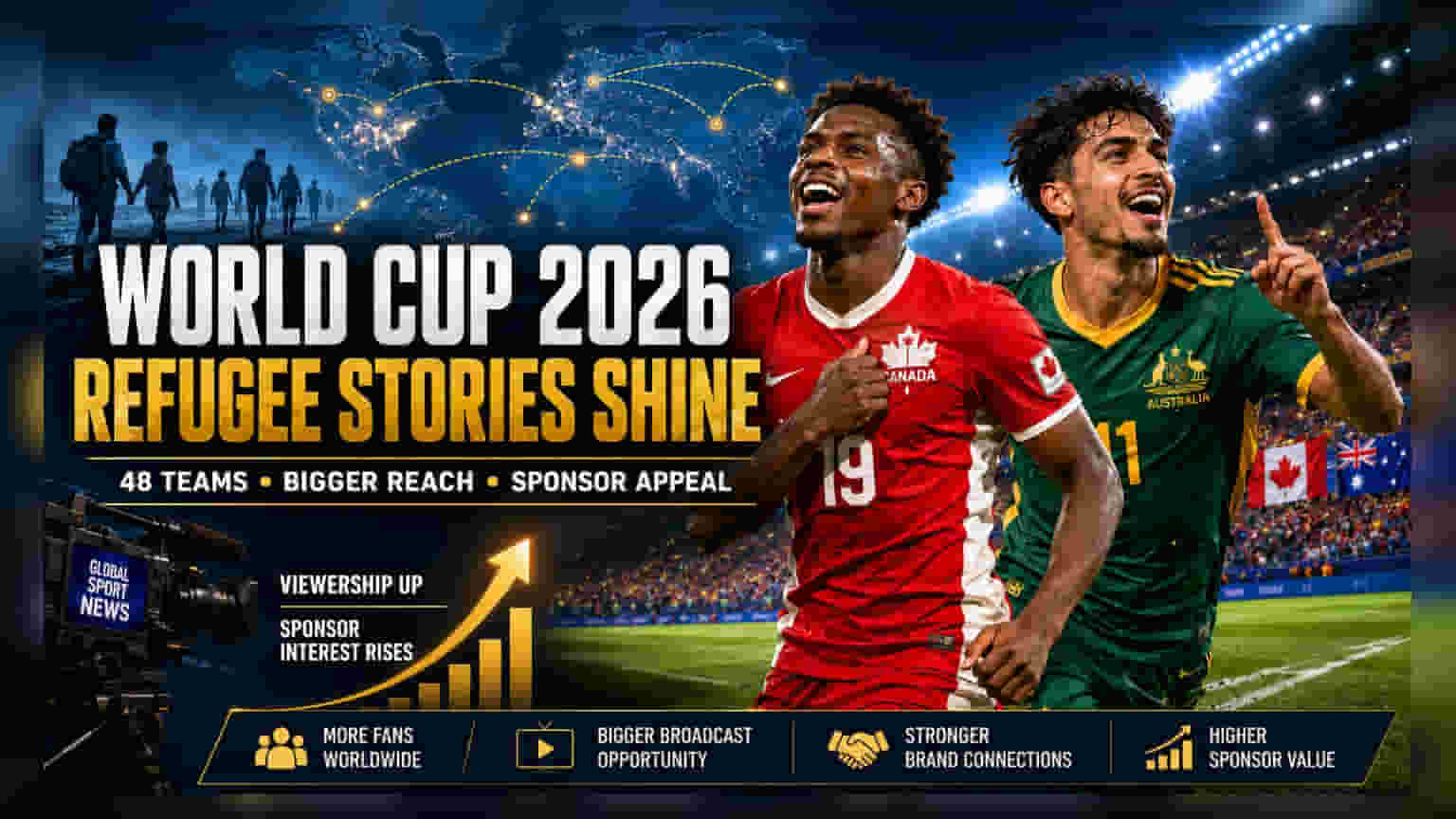
The 2026 FIFA World Cup, now expanded to 48 nations, features at least nine players with refugee backgrounds. For investors, these narratives align with modern corporate ESG and social engagement goals, potentially enhancing brand value for official sponsors and sports broadcasters in a high-revenue tournament format.
What Happened
The 2026 FIFA World Cup has spotlighted athletes with refugee or displacement backgrounds, a narrative supported by the UNHCR’s "Gamechanging Team" campaign. Players such as Canada’s Alphonso Davies and Australia’s Nestory Irankunda are competing on the global stage, drawing attention to their personal stories of overcoming displacement. This development coincides with the tournament's expansion to 48 teams, significantly increasing the event's scale, reach, and total match count compared to previous iterations.
The Commercial Value of Narrative
From a market perspective, the integration of these human-interest stories into the tournament's marketing strategy serves as a bridge for corporate sponsors. Major brands, particularly those in FMCG, sportswear, and consumer finance, heavily invest in FIFA World Cup sponsorships to drive global engagement. Stories of resilience—such as those highlighted by the UNHCR—are increasingly important for corporate ESG (Environmental, Social, and Governance) goals. By associating with these narratives, sponsors can deepen consumer connection and improve brand perception, which often translates into better marketing ROI during such large-scale events.
Broadcasting and Sponsorship Economics
For the sports media and broadcasting sector, the 2026 World Cup represents a massive commercial undertaking. With more nations participating, the total number of matches increases, providing broadcasters with more high-value inventory. In the Indian market, where sports broadcasting rights are a key driver for media companies like Reliance (Viacom18), the volume of content and the ability to attract diverse, engaged audiences are critical for justifying the high cost of rights. Increased viewer engagement through diverse athlete narratives helps maintain high viewership metrics, which is the primary driver for advertising revenue during the tournament.
The Risks of Tournament Expansion
Investors should note that the expansion to 48 teams brings both opportunities and risks. While more games mean more ad revenue, it also increases operational complexity and costs for the host nations and organizers. If the quality of matches or the organization faces issues due to the sheer size of the tournament, it could impact viewer sentiment and potentially affect sponsor satisfaction. Additionally, the reliance on high global demand for sports content makes this sector sensitive to broader economic slowdowns, which could dampen advertising spend if consumers pull back on discretionary spending.
What Investors May Track
For those following the media and sports entertainment sector, the key monitorable will be the viewership data and advertising yield throughout the tournament. Investors may also look for management commentary from major sponsors regarding their engagement metrics during the event. Furthermore, the ability of broadcasters to monetize the expanded match schedule without seeing a dilution in per-game viewership will be a critical indicator of the tournament’s overall financial success.