India's Iron Ore Imports EXPLODE to 6-Year High! Steel Giants Scramble Amidst Shortages and Price Wars

Overview
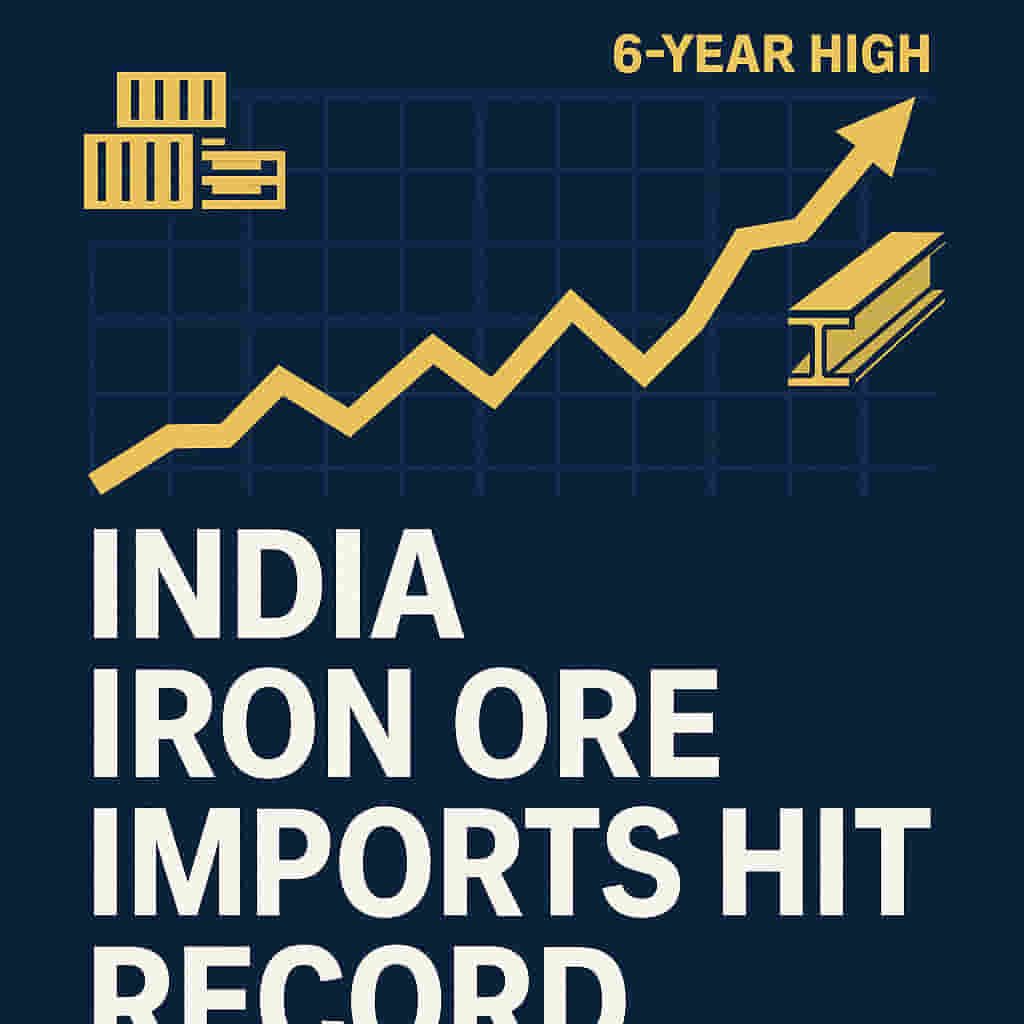
India's iron ore imports have surged to a six-year peak, surpassing 10 million metric tons in the first 10 months of 2025. Steel mills are aggressively seeking overseas supplies to combat domestic shortages of high-grade ore and capitalize on lower global prices. JSW Steel has emerged as the top international buyer, as factors like heavy rainfall in Odisha and delays in new mine production impact local availability.
Stocks Mentioned
India has witnessed an unprecedented surge in iron ore imports, reaching a six-year high as domestic steel manufacturers intensify their search for raw materials abroad.
Record Import Surge
- In the first ten months of 2025, India's iron ore imports more than doubled compared to the previous year, exceeding 10 million metric tons.
- This marks the highest import volume seen in six years, reflecting a significant shift in sourcing strategies by Indian steel mills.
- Average annual imports between 2019 and 2024 stood much lower, at approximately 4.3 million metric tons, highlighting the dramatic increase this year.
Driving Factors
- Steel mills have been compelled to increase overseas purchases due to shortages of high-grade iron ore domestically.
- Lower global prices for iron ore have made importing a more economically viable option for many companies.
- The proximity of some steel plants to ports, such as JSW Steel's facility in Maharashtra, further facilitates and encourages imports.
Key Players and Outlook
- JSW Steel, the largest steel producer in India by capacity, has been identified as the top international buyer of iron ore during the January-October 2025 period.
- Global miners like Brazil's Vale are preparing to meet India's growing demand, with the company's CEO indicating India's potential to double its steel production by the decade's end.
Domestic Challenges
- Production in Odisha, the primary iron ore producing state accounting for nearly 55% of India's total output, was significantly affected by heavy rainfall this year.
- Delays in commencing production at mines that have already been auctioned are contributing to a slowdown in domestic supply growth.
- The Ministry of Steel's top official previously stated there were no domestic shortages, a sentiment now challenged by import trends.
Future Projections
- Commodities consultancy BigMint forecasts that imports could surpass 11-12 million metric tons in the fiscal year ending March 2026 (FY26).
- These elevated import levels are expected to persist into the following year unless domestic production or captive sourcing methods see substantial improvement.
- India's total iron ore output did increase to 289 million metric tons in fiscal 2025, up from 277 million metric tons in fiscal 2024, but demand has outpaced this growth.
Government's Stance
- Earlier this year, the government encouraged steel mills to secure iron ore mines internationally.
- Concerns have also been raised regarding the slow pace of development in new, greenfield iron ore mining projects within the country.
Impact
- This surge in imports directly benefits Indian steel manufacturers by ensuring raw material supply and potentially lowering production costs, which could translate to improved profitability for companies like JSW Steel.
- It highlights ongoing challenges in India's domestic mining sector, including production constraints and development delays.
- The trend could also influence global iron ore prices and trade flows as India's demand plays a larger role.
- Impact Rating: 8/10
Difficult Terms Explained
- Iron Ore: A type of rock that contains iron, which is the primary raw material for producing steel.
- Metric Tons: A standard unit of mass used for measuring large quantities of bulk materials, equivalent to 1,000 kilograms.
- Steelmaking: The industrial process of producing steel from iron ore and other materials.
- Domestic Production: The output of goods or raw materials within a country's own borders.
- Captive Sourcing: When a company produces its raw materials internally for its own use, rather than buying them from external suppliers.
- Greenfield Mines: New mining projects developed on previously undeveloped land, typically involving significant initial investment and construction.
Other Sector

Rupee Breaches 90! Can RBI's Move Save India's Currency?
Banking/Finance Sector

RBI Unleashes Free Banking Boost: Your Savings Account Just Got a Major Upgrade!