 Whalesbook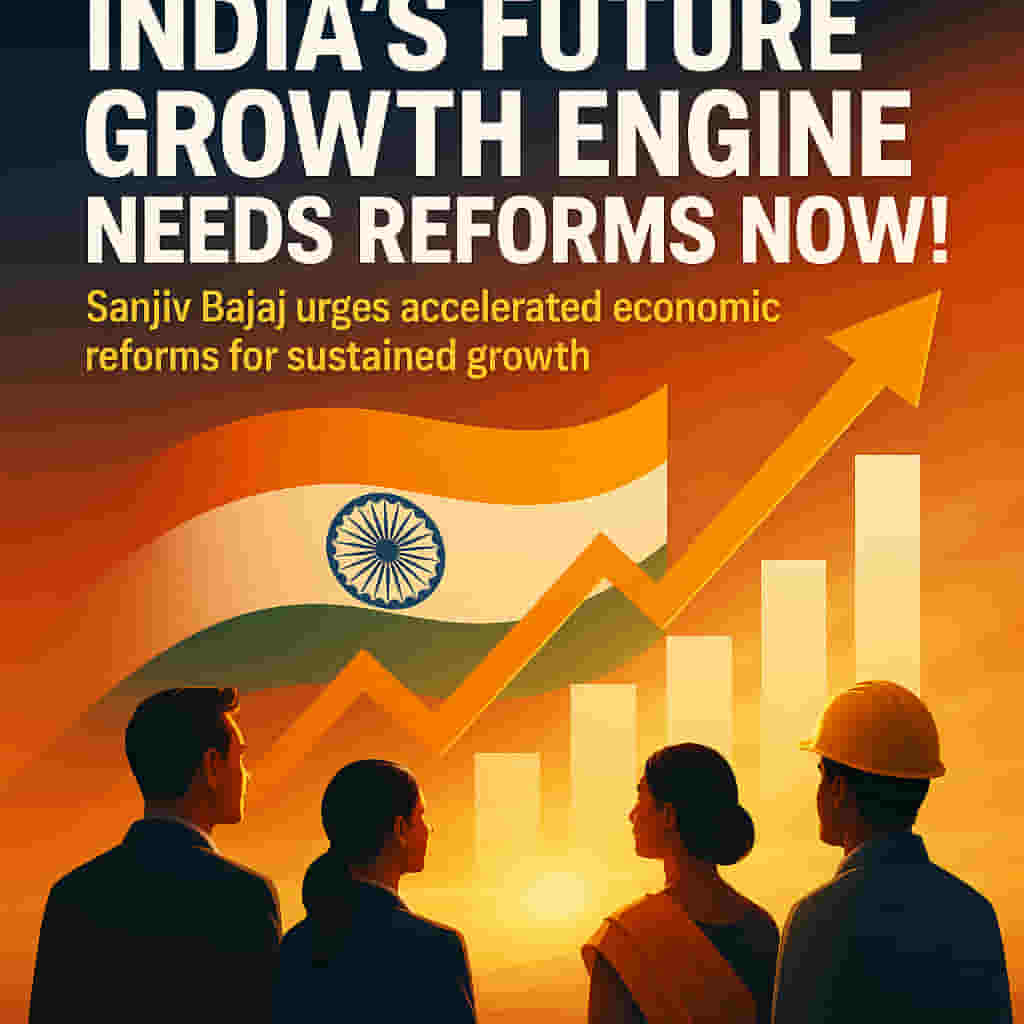


Sanjiv Bajaj, the esteemed Chairman of Bajaj Finserv, has issued a strong call for India to fast-track its next generation of economic reforms, emphasizing their critical role in sustaining long-term growth amidst a highly uncertain global economic environment.
Bajaj conveyed these views during an interaction, highlighting that while India's ability to grow at 7.5-8% is remarkable, policy planning must shift from short-term fixes to a strategic 5–10 year horizon. He believes India's vast demographic advantage, with 800 million working-age youth and a substantial domestic market, provides a strong foundation for growth over the next two decades, provided reforms continue.
Call for Next-Generation Reforms
- Bajaj urged the government to expedite reforms in crucial areas like labour laws, land management, and water resource management.
- He emphasized that improving the ease of doing business at the city level is vital for boosting national productivity.
- Dismantling the remaining elements of the "licence raj" was identified as a key step to accelerate investment.
- Bajaj stated that this is the opportune moment for implementing these foundational reforms.
Rupee Outlook Amidst Global Volatility
- The Indian rupee recently crossed the 90 mark against the US dollar, marking a record low and declining for the sixth consecutive session.
- However, Sanjiv Bajaj expressed a lack of worry regarding this depreciation, provided the movement remains steady and stable.
- He articulated that the Reserve Bank of India's primary role is to reduce currency volatility rather than rigidly pegging its value.
India's Growth Potential and NBFC Sector
- Bajaj described India's current growth rate of 7.5-8% in the face of global instability as "remarkable."
- He indicated that consumption trends remain steady and the impact of recent Goods and Services Tax (GST) rate cuts will become clearer in the coming quarters.
- The growing systemic importance of Non-Banking Financial Companies (NBFCs) was highlighted, noting they provide over a third of India's credit.
- Bajaj suggested that pressure in small-ticket unsecured loans has eased, positioning NBFCs to effectively support the next phase of economic growth.
Geopolitical and Trade Considerations
- On geopolitical matters, Bajaj commented that business outcomes from President Vladimir Putin's visit to India would hinge on governmental priorities.
- Discussing the delayed India-US trade deal, he acknowledged Washington as the world's "most innovative market."
- He also pointed out that the US stance creates opportunities for New Delhi to forge new regional partnerships.
Impact
- The call for reforms could significantly boost investor confidence and drive capital into sectors targeted for development.
- Positive developments in reform implementation could lead to sustained higher GDP growth and a stronger Indian economy.
- Clearer regulatory frameworks and improved ease of doing business are expected to benefit companies across various sectors, including NBFCs.
- A stable rupee, as advocated, would reduce import costs and dampen inflationary pressures, benefiting consumers and businesses alike.
- Impact Rating: 8/10
Difficult Terms Explained
- Economic Reforms: Changes in government policies aimed at improving economic efficiency, competitiveness, and long-term growth prospects.
- Rupee: The official currency of India.
- Volatility: The degree of variation of a trading price series over time, measured by the standard deviation of logarithmic returns.
- NBFCs (Non-Banking Financial Companies): Financial institutions that offer banking-like services but do not hold a full banking license, often specializing in specific financial products or sectors.
- GST (Goods and Services Tax): A comprehensive, multi-stage, destination-based tax that has been implemented in India on the supply of goods and services.
- Licence Raj: A term used to describe the complex system of government regulations, licenses, and permits that were pervasive in India, often criticized for fostering inefficiency and corruption.
- Geopolitics: The study of the influence of such factors as human and physical geography, demography, and natural resources on the politics and especially the foreign policy of states.
- Depreciation: A decrease in the value of a currency in relation to another currency.