 Whalesbook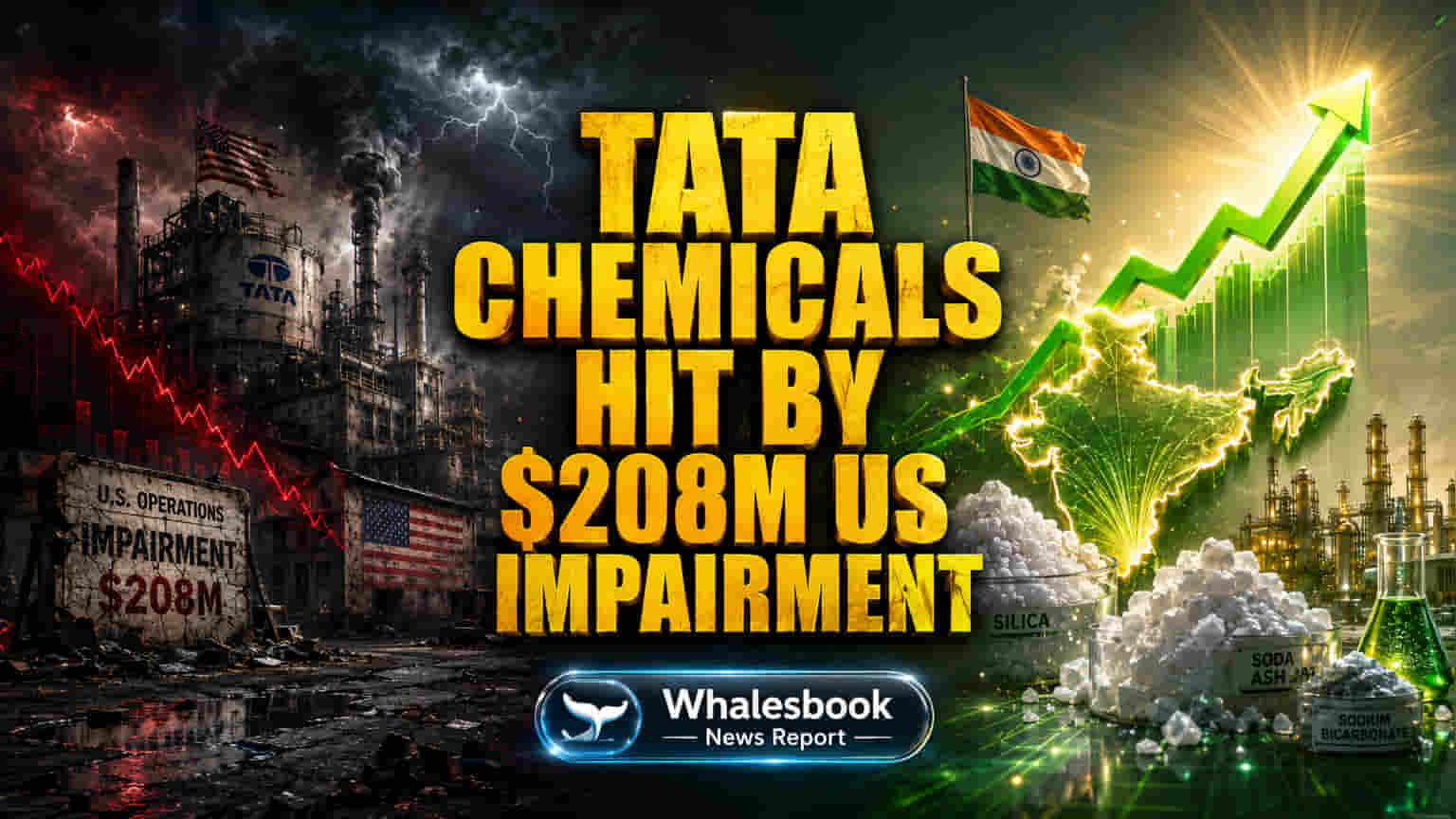


Tata Chemicals Navigates US Impairment Amid Non-Soda Ash Growth
US Operations Hit by Major Impairment
Tata Chemicals reported a substantial INR 1,837 crore ($208 million) goodwill impairment charge for its US operations covering the fourth quarter and full fiscal year 2026. The company attributes this significant write-down to challenging global market conditions.
Key factors cited include excess capacity within the global soda ash market, weak macroeconomic trends, and increased geopolitical risks that have raised energy and shipping costs. These pressures have led to a flat demand outlook for the commodity chemical.
Contrast: Non-Soda Ash Business Shines
While domestic operations saw the Gujarat facility achieve a milestone of 1 million tons in soda ash production, profits faced pressure from higher fixed costs and lower realizations, despite underlying robust demand.
In contrast, Tata Chemicals' strategic emphasis on its non-soda ash segments—including bicarbonate, salt, silica, and bromine—demonstrated strong performance. This diversified portfolio achieved 14% revenue growth in FY26, contributing INR 6,946 crores to the company's top line. Expansion efforts further bolster this segment, with operationalizing a 50 kiloton electric calciner in Kenya and increasing sodium bicarbonate output in India from 140,000 to 290,000 tons.
Strategic Pivot and Financial Impact
The INR 1,837 crore impairment charge directly impacts the company's reported financials, reducing its net worth and profits for the period. It highlights the significant headwinds affecting its legacy commodity chemical business, particularly in the US.
However, the strong performance and focused growth in non-soda ash products signal a deliberate strategy to diversify revenue streams and build a more stable business model with potentially higher margins.
Historical Context and Debt
Tata Chemicals acquired its US subsidiary, Genesis Alkali, in 2014 with the aim of strengthening its global soda ash market presence. The US business has encountered difficulties previously, including a significant goodwill impairment of approximately ₹900 crore in FY17, highlighting the cyclical volatility inherent in the sector. Over recent years, the company has consistently worked to expand its specialty and non-commodity chemical portfolio, seeking to reduce dependence on basic chemicals. Tata Chemicals' net debt has remained substantial, hovering around ₹6,000 crore across fiscal years 2023 to 2025.
Immediate Changes and Future Focus
Consequently, shareholders will observe a reduction in the company's book value due to the goodwill impairment. The company's future growth and profitability are expected to increasingly rely on its non-soda ash segments. Elevated input costs stemming from geopolitical factors will remain a key area for monitoring operational efficiency. Expansion projects, particularly in silica and other specialty chemicals, are key growth drivers.
Key Risks and Market Pressures
Global soda ash markets continue to face significant oversupply, which pressures international prices and realizations. The Kenyan unit's dependence on Middle Eastern Heavy Fuel Oil (HFO) for energy requires close monitoring given geopolitical tensions. Management has indicated that current Q4 margins may not represent the floor, suggesting potential for continued margin pressure in the short term. Furthermore, unremunerative export markets, such as Southeast Asia for US producers, pose a risk to profitability.
Competitive Landscape
In India, Tata Chemicals competes directly with peers like GHCL Ltd. in the soda ash market, which also operates substantial capacity. Both companies are navigating the global oversupply situation and are focusing on domestic demand robustness.
Financial Outlook and Capex
For fiscal year 2027, the company plans capital expenditure (capex) of approximately INR 1,300 crores, designated for maintenance and growth initiatives. Net debt is projected to remain around the current level of ₹5,961 crores for the upcoming year, influenced by prevailing business pressures.
What Investors Are Watching
Investors will be closely monitoring the performance and growth trajectory of the non-soda ash segments. Stabilization of global soda ash prices and supply chain costs, particularly for energy and shipping, will also be crucial indicators. Progress and financial returns from new expansion projects in India and Singapore, management's commentary on potential US market recovery, and the impact of competitor capacity shutdowns are key areas of interest. Strategies for debt reduction and overall leverage levels in the medium term will also be important.