 Whalesbook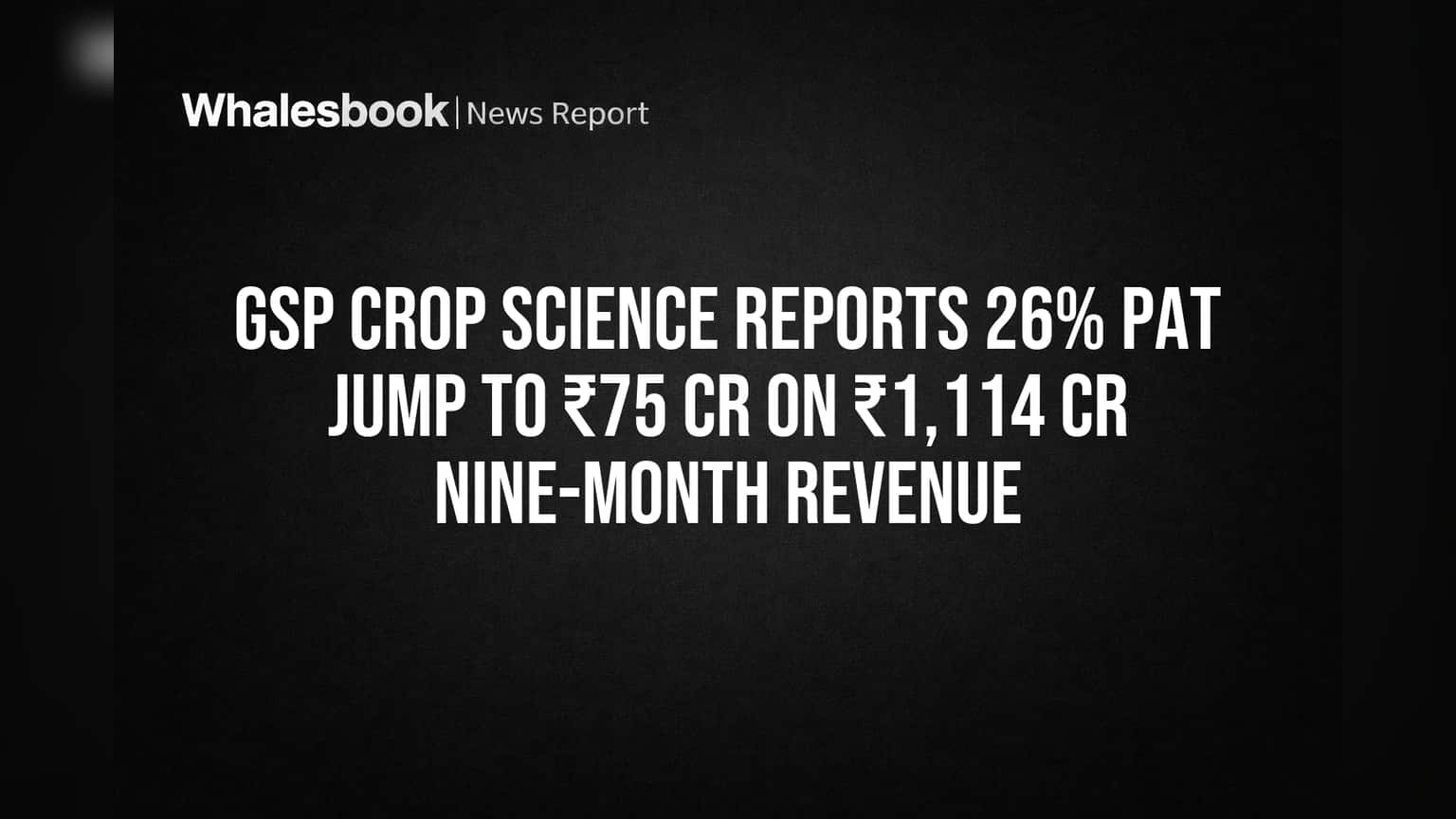


GSP Crop Science Reports Strong Nine-Month Performance
GSP Crop Science reported strong financial results for the nine months ending December 31, 2025. Revenue reached ₹1,114 crore, while Profit After Tax (PAT) rose 26% year-on-year to ₹75 crore, compared to ₹59.6 crore in the prior year. EBITDA also saw substantial growth, climbing 32% to ₹153 crore.
A key driver for this performance is the company's intensified focus on research and development. GSP Crop Science currently holds 102 granted patents and has another 108 in its pipeline. The company aims for patented products to represent 40-50% of its revenue within the next three years.
To support this growth and enhance supply chain resilience, GSP Crop Science is expanding its manufacturing capabilities. A new intermediate plant is being developed to reduce dependence on Chinese imports. The company is also pushing for global expansion, establishing a subsidiary in Brazil to tap into new international markets.
The strategic emphasis on patented products is designed to drive higher profit margins and create a more distinct market position. Competitors such as UPL Ltd., recognized for its R&D efforts, PI Industries, focusing on novel molecules, and Bayer CropScience, which is reorganizing for competitiveness, demonstrate the industry's R&D focus.
However, the company faces several challenges. Rising input costs, influenced by factors like increased crude oil prices and global conflicts, may necessitate price adjustments. Long registration processes for new patented products, typically taking around five years, can delay market entry. GSP Crop Science is also managing 17 criminal misbranding cases related to active ingredient specifications, which could affect its brand reputation. Potential impacts from climate events like El Nino on crop cycles are being monitored, though the company anticipates limited challenges for the paddy segment.
Looking ahead, investors will monitor GSP's progress in Brazil and the registration of its patented products in other overseas markets. The successful commercialization of new products, particularly for the paddy segment, and developments in the pending misbranding cases will be key indicators. Management commentary on demand-supply dynamics and the impact of global economic factors on input costs will also be closely observed.