 Whalesbook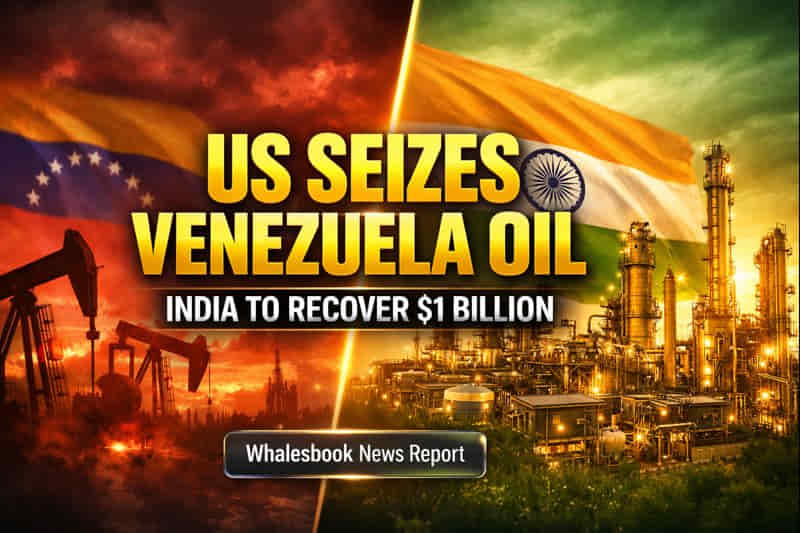
US Action in Venezuela Could Unlock $1 Billion for India's ONGC Videsh
A significant shift in Venezuela's oil sector, potentially orchestrated by the United States, could bring substantial benefits to India. Analysts and industry sources suggest this move could lead to the recovery of close to $1 billion in long-pending dues owed to India's ONGC Videsh Ltd (OVL) and accelerate crude oil production from fields it operates in the South American nation.
The Core Issue: Sanctions and Stalled Operations
India was once a major importer of Venezuelan heavy crude, processing over 400,000 barrels per day at its peak. However, sweeping US sanctions imposed in 2020, coupled with rising compliance concerns, forced Indian companies to halt these purchases. This abrupt halt severely impacted operations, particularly at the San Cristobal oilfield, jointly operated by OVL. The US restrictions blocked access to essential technology, equipment, and services, effectively stranding commercially viable oil reserves.
Financial Implications: Unpaid Dues and Future Recovery
ONGC Videsh has faced significant financial strain due to Venezuela's inability to pay its dues. The company is owed $536 million in dividends on its 40% stake in the San Cristobal field up to 2014, with a nearly equivalent amount for subsequent periods where Caracas has refused audits. This has frozen the settlement of these significant claims.
Market Reaction and Operational Revival
Analysts believe that sanctions could be eased following a hypothetical US operation that removes President Nicolas Maduro and places Venezuela's vast oil reserves under American oversight. Once sanctions are lifted, OVL would be able to deploy necessary equipment, potentially including rigs from its parent ONGC's fields in Gujarat, to San Cristobal. This could revive production from the current low of 5,000-10,000 barrels per day to an estimated 80,000-100,000 barrels per day.
Wider Indian Interests and Future Outlook
Beyond San Cristobal, Indian companies like Indian Oil Corporation and Oil India Ltd also hold stakes in the Carabobo-1 Area heavy oilfield. A US-directed overhaul of Venezuela's oil sector could lead to restructuring of the national oil company, Petroleos de Venezuela SA (PdVSA). While US majors are expected to return, international firms like OVL would likely retain their roles due to their expertise and market access.
India is expected to be a key buyer of Venezuelan crude once production is restored. This would offer Indian refiners, who are structurally configured for Venezuelan heavy crude, a strategic alternative to Middle Eastern supplies, thereby diversifying their crude basket and reducing dependence on any single region, particularly amidst ongoing trade discussions and a desire to lower exposure to Russian oil. Furthermore, renewed Venezuelan exports could help stabilize global oil prices, provided they do not fall below $60 per barrel, which would impact US shale production viability.
Impact
This development could significantly benefit Indian energy companies by enabling the recovery of substantial dues and securing future crude oil supplies. It strengthens India's energy security by diversifying its import sources and potentially provides better terms in price negotiations. The geopolitical implications include diluting China's influence in Venezuela and reducing global reliance on OPEC producers. This news has a direct positive impact on the Indian stock market, particularly for companies involved in oil exploration, production, and refining. The impact rating is 7/10.
Difficult Terms Explained
- Sanctions: Penalties or restrictions imposed by a country on another country, typically for political or economic reasons.
- ONGC Videsh Ltd (OVL): The overseas arm of India's state-owned Oil and Natural Gas Corporation, focused on exploration and production of oil and gas abroad.
- Petroleos de Venezuela SA (PdVSA): Venezuela's state-owned oil and natural gas company.
- OPEC: The Organization of the Petroleum Exporting Countries, an intergovernmental organization of oil-producing countries.
- Shale oil: Petroleum found in non-traditional reservoirs such as those in formations of shale rock, extracted through hydraulic fracturing.
- Crude oil grades: Different types of crude oil, often classified by density (light/heavy) and sulfur content (sweet/sour), which affect their refining process and end products.