 Whalesbook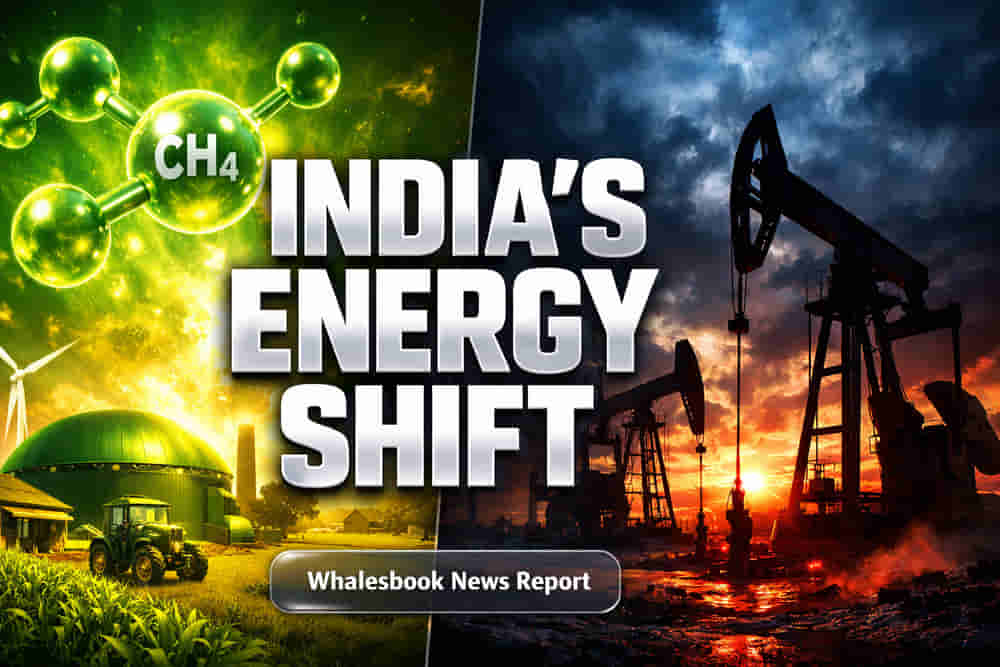
India's Green Energy Push Intensifies
India is making significant strides in its clean energy transition, with 132 Compressed Bio Gas (CBG) plants now operational across the nation. These facilities collectively produce 920 tonnes of bio-gas per day, a substantial increase driven by the Sustainable Alternative Towards Affordable Transportation (SATAT) initiative. Union Petroleum and Natural Gas Minister Hardeep Singh Puri announced the milestone, highlighting the program's dual benefit of generating clean fuel from waste and boosting rural economies.
The Rise of Compressed Bio Gas
The CBG program, launched in October 2018, aims to establish a robust ecosystem for producing bio-gas from agricultural residue, animal waste, and other organic matter. This waste-to-energy approach not only addresses waste management challenges but also provides a valuable source of income for farmers and rural communities. By converting what was once considered waste into a clean fuel alternative, India is simultaneously reducing its reliance on imported fossil fuels and lowering greenhouse gas emissions, contributing to national climate goals.
Oil and Gas Exploration Boost
In parallel with its bioenergy expansion, India is aggressively pursuing self-sufficiency in conventional energy sources. Minister Puri revealed that the country is offering 50 new exploration and production (E&P) blocks. This includes 25 blocks under the Open Acreage Licensing Policy (OALP-X), covering diverse terrains from onshore to ultra-deepwater, and 55 fields across nine contract areas in the Discovered Small Field Bid Round-IV (DSF-IV). Additionally, special bid rounds for coal-bed methane (CBM) are planned for 2025 and 2026, offering 3 and 13 blocks respectively.
Incentives and Regulatory Framework
To attract investment in these E&P blocks, the government is providing attractive incentives. These include flexible work programs, graded royalty rates, and specific benefits like zero royalty for the initial seven years in deepwater areas for DSF-IV. CBM rounds will offer pricing freedom and cost reimbursement for drilling. The introduction of the Oilfields (Regulation and Development) Amendment Act, 2025, and PNG Rules 2025 further aims to streamline regulations, enhancing the ease of doing business in the crucial oil and gas sector and reinforcing India's energy security.
Impact
This dual focus on bioenergy and conventional exploration signals a comprehensive strategy to bolster India's energy security and promote sustainable practices. The expansion of CBG production offers significant opportunities for companies involved in waste management, gas production, and fuel distribution. The increased E&P block offerings could attract substantial domestic and international investment, potentially leading to the discovery of new oil and gas reserves and reducing import dependency. This could positively impact related industries, from equipment suppliers to downstream refiners, and contribute to economic growth. The push towards cleaner fuels also aligns with global environmental trends, potentially attracting green finance and investment.
Impact Rating: 7/10
Difficult Terms Explained
- Compressed Bio Gas (CBG): A purified form of biogas, produced from organic waste, which is compressed to the same pressure as natural gas and can be used as a direct replacement for it. It is a clean fuel alternative.
- SATAT Initiative: Stands for Sustainable Alternative Towards Affordable Transportation. It is a government scheme to promote the production and use of CBG as a clean fuel.
- Exploration and Production (E&P) blocks: Specific geographical areas licensed by the government to companies for exploring and extracting oil and natural gas.
- Open Acreage Licensing Policy (OALP): A policy allowing companies to choose exploration blocks anywhere in the country that are not already awarded.
- Discovered Small Field (DSF): A bid round focused on developing smaller oil and gas fields that have already been discovered but are not yet producing.
- Coal-Bed Methane (CBM): Natural gas (primarily methane) trapped in coal seams. It is a distinct hydrocarbon resource from conventional natural gas found in sandstone or other rock formations.
- Energy Security: Ensuring a nation has reliable and sufficient access to energy resources.