

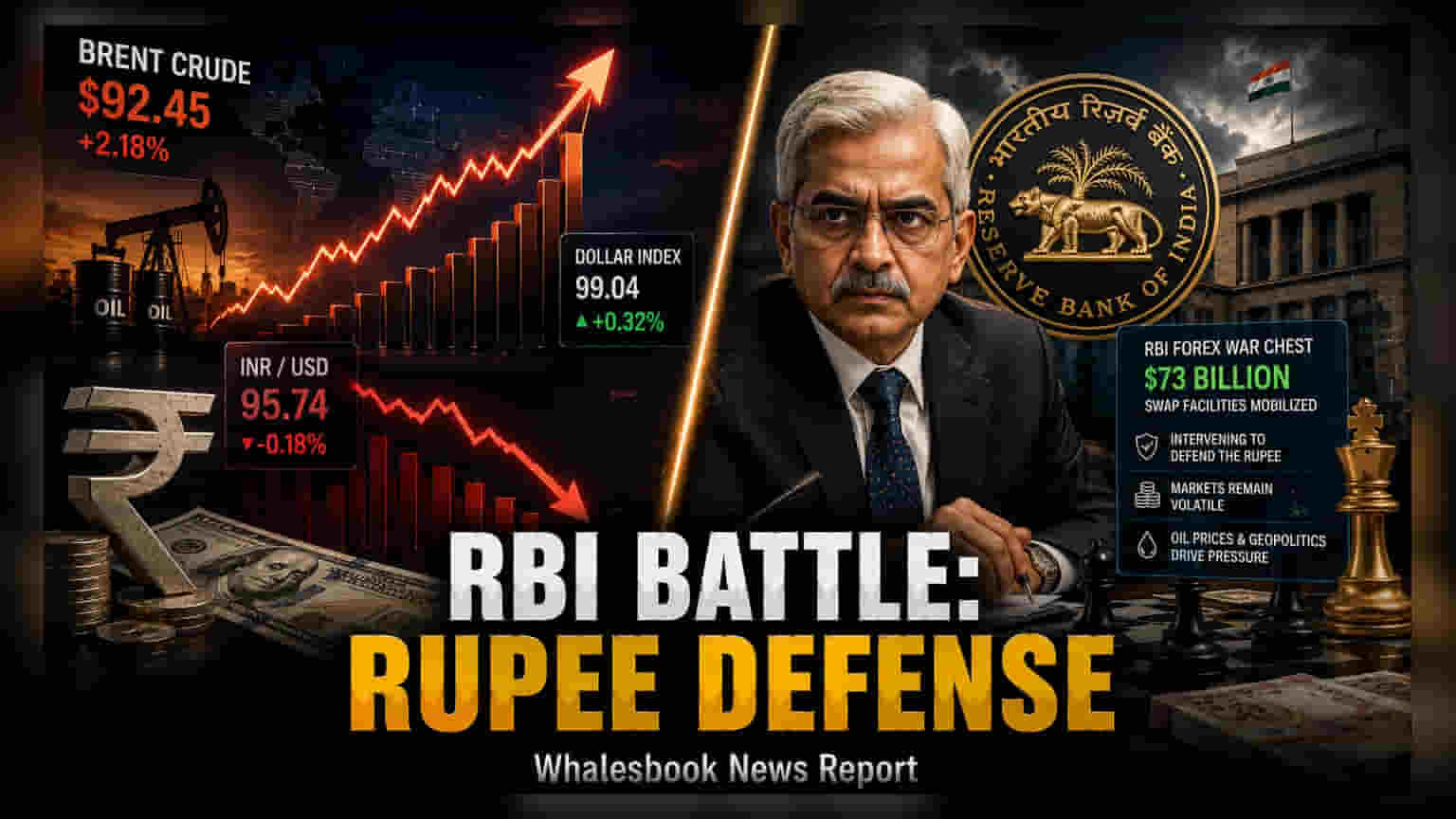
The Reserve Bank of India reportedly sold dollars through state-run banks on August 25, 2026, to shield the rupee from volatility. This move follows pressure from elevated Brent crude oil prices and strong corporate demand for foreign currency. The intervention comes as global geopolitical concerns continue to influence currency markets.
The Reserve Bank of India (RBI) is actively managing the rupee’s movement on Tuesday, August 25, 2026, as the currency remains under pressure. Traders observed state-run banks selling dollars in the market, a strategy typically used by the central bank to prevent the rupee from falling too sharply. This intervention kept the rupee trading within a very narrow range near 95.74 per dollar throughout the session.
The pressure on the rupee is primarily driven by external economic factors. Global oil prices have climbed, with Brent crude futures trading around $92.45 per barrel. Since India imports a significant portion of its oil, rising prices create a higher demand for dollars, which can weaken the local currency. Additionally, the U.S. dollar index, a measure of the greenback's strength against other major currencies, has stayed firm at 99.04. This strength is supported by safe-haven demand resulting from rising geopolitical tensions, including new sanctions on Iran.
The central bank appears well-equipped to manage this volatility. Reports from August 21, 2026, indicated that the RBI has successfully mobilized $73 billion through its special foreign exchange swap facilities. This massive reserve buildup gives the regulator a strong buffer to intervene when necessary to keep the currency market orderly and prevent sudden, disruptive drops in the rupee's value.
Indian stock indices reflected some of this broader market caution on Tuesday. The BSE Sensex opened lower by 30 points at 77,336.32, while the Nifty 50 dipped by 38.80 points to 24,179.50. Despite the early dip in the benchmarks, foreign institutional investors had remained net buyers of Indian equities in the previous trading session, suggesting some resilience in the market.
Investors should note that while central bank interventions help curb short-term volatility, the underlying risks remain. Persistent corporate demand for dollars, combined with unpredictable crude oil prices, creates a constant balancing act for the rupee. If geopolitical tensions worsen or oil prices continue to climb, the RBI may need to remain active in the forex markets. The key monitorable for investors will be how these macro factors—specifically currency stability and raw material costs—influence the financial performance of import-heavy sectors, such as manufacturing and energy, in the coming quarters.