 Whalesbook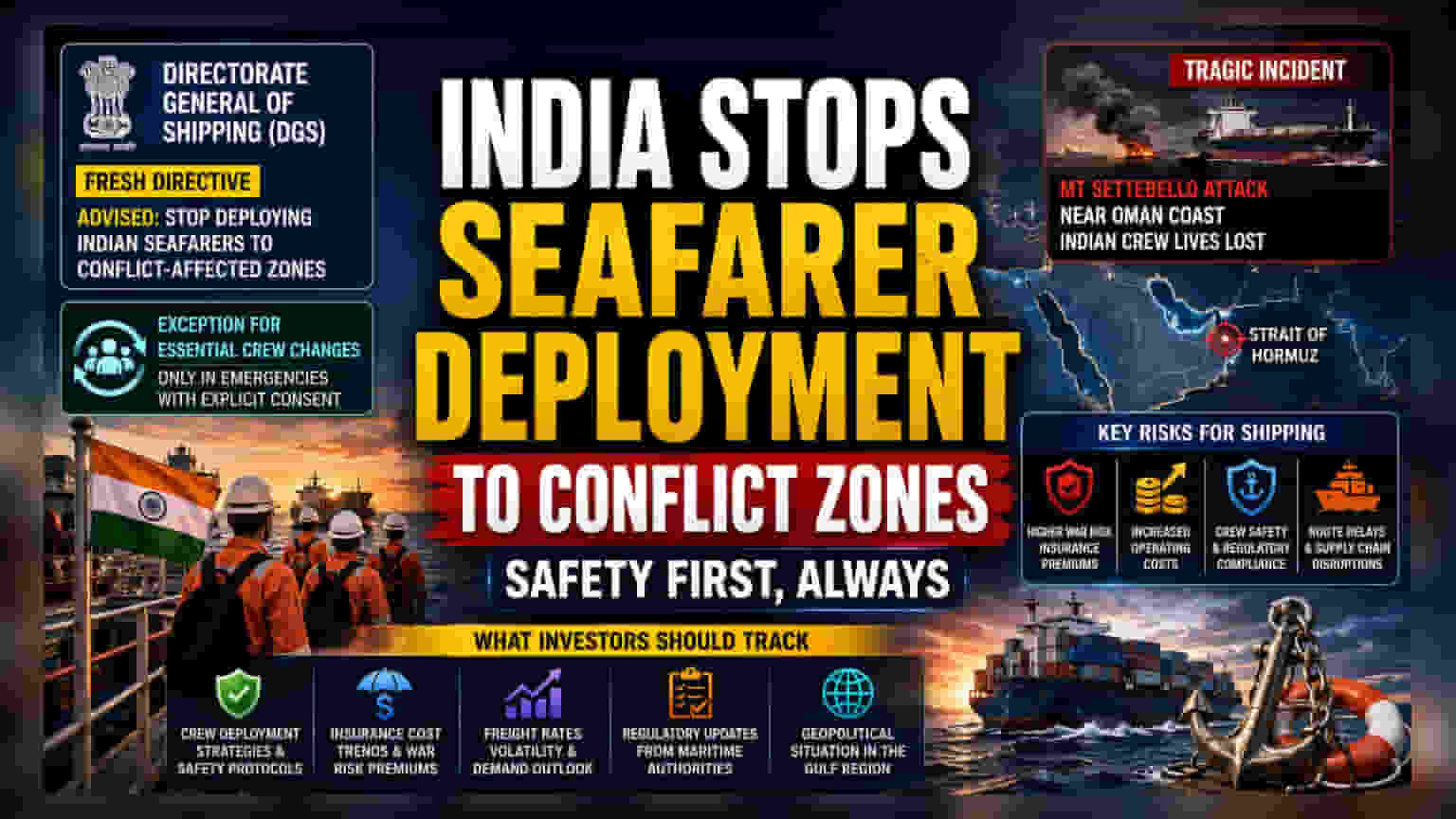


DG Shipping ne Indian seafarers ko conflict zones mein bhejna band kar diya hai. Yeh ek bade incident ke baad hua hai. Isse Gulf region mein shipping operations par asar padega. Investors ko dekhna hoga ki Indian shipping firms ke liye operational costs, insurance premiums, aur labor ki availability kaise change hoti hai.
Kya Hua?
Directorate General of Shipping (DGS) ne saaf saaf keh diya hai, jitni bhi recruitment agencies hain, Indian seafarers ko conflict waale areas mein deploy karna band karein. Yeh decision tab aaya jab Oman ke paas MT Settebello naam ke commercial vessel par military strike hua aur bad luck se kuch Indian crew members ki jaan chali gayi. Haalanki, DGS ne kaha hai ki agar emergency ho toh essential crew changes kar sakte hain, par uske liye un log ka explicit consent zaroori hai jo jaane wale hain.
Investors Ke Liye Yeh Kyun Important Hai?
Shipping aur logistics industry ka poora kaam logon ke steady movement par chalta hai. India duniya bhar mein seafarers ka ek bada source hai, toh unke deployment mein koi bhi rok lagne se poore maritime trade ecosystem par impact padta hai. Investors ke liye sabse badi chinta operational costs aur profit margins hai. Jab shipping routes dangerous ho jaate hain, toh companies ko zyada war risk insurance premiums, security measures, aur risky areas mein kaam karne ke liye taiyar crew ko zyada salary deni padti hai.
Operational Aur Financial Implications
Middle East aur Gulf region mein operate karne wali shipping companies ek alag hi mushkil mein pad gayi hain. Ek taraf toh unhein Indian authorities ke naye safety regulations follow karne pad rahe hain, jis se unka labor pool kam ho sakta hai ya phir unhein zyada mehnga manpower dhoondna pad sakta hai. Dusri taraf, region mein badhti hui geopolitical tension, jisme MT Settebello, MT Marivex, aur MV Jalveer jaise vessels par hue incidents bhi shamil hain, ne historically freight rates mein volatility aur insurance costs ko badhaya hai. Agar shipping firms yeh extra kharch customers par nahi daal paati hain, toh unke operating margins par pressure aa jata hai.
Sector Context Aur Risks
Global maritime trade geopolitical stability ke liye bahut sensitive hota hai. Middle East mein chal rahi tensions ne commercial shipping ke liye ek unpredictable mahaul bana diya hai. Insurance aur labor costs ke alawa, project delays aur supply chain disruptions ka bhi risk hai. Agar Indian shipping companies — ya foreign companies jo Indian crews par bahut depend karti hain — in regions se nahi guzar paati hain, toh vessels ko route badalna pad sakta hai. Isse fuel consumption aur transit time badh jaata hai, jo voyages ki profitability ko aur affect karta hai.
Investors Ko Kya Track Karna Chahiye?
Investors ko yeh dekhna chahiye ki shipping companies kaise crew deployment aur safety protocols manage kar rahi hain in naye regulations ke response mein. Kuch important cheezein hain: shipping lines se insurance costs ke updates, aur Gulf region mein operational efficiency maintain karne ki unki ability. Iske alawa, agar maritime regulators se high-risk zones ke baare mein koi extra guidance aati hai, ya maritime labor laws mein koi change hota hai, toh yeh operational costs mein potential shifts ka signal de sakta hai. Strait of Hormuz aur aas paas ke areas ki geopolitical situation par nazar rakhna bhi zaroori hai, kyunki agar tensions badhti hain toh poore shipping aur logistics sector ka risk profile affect ho sakta hai.