 Whalesbook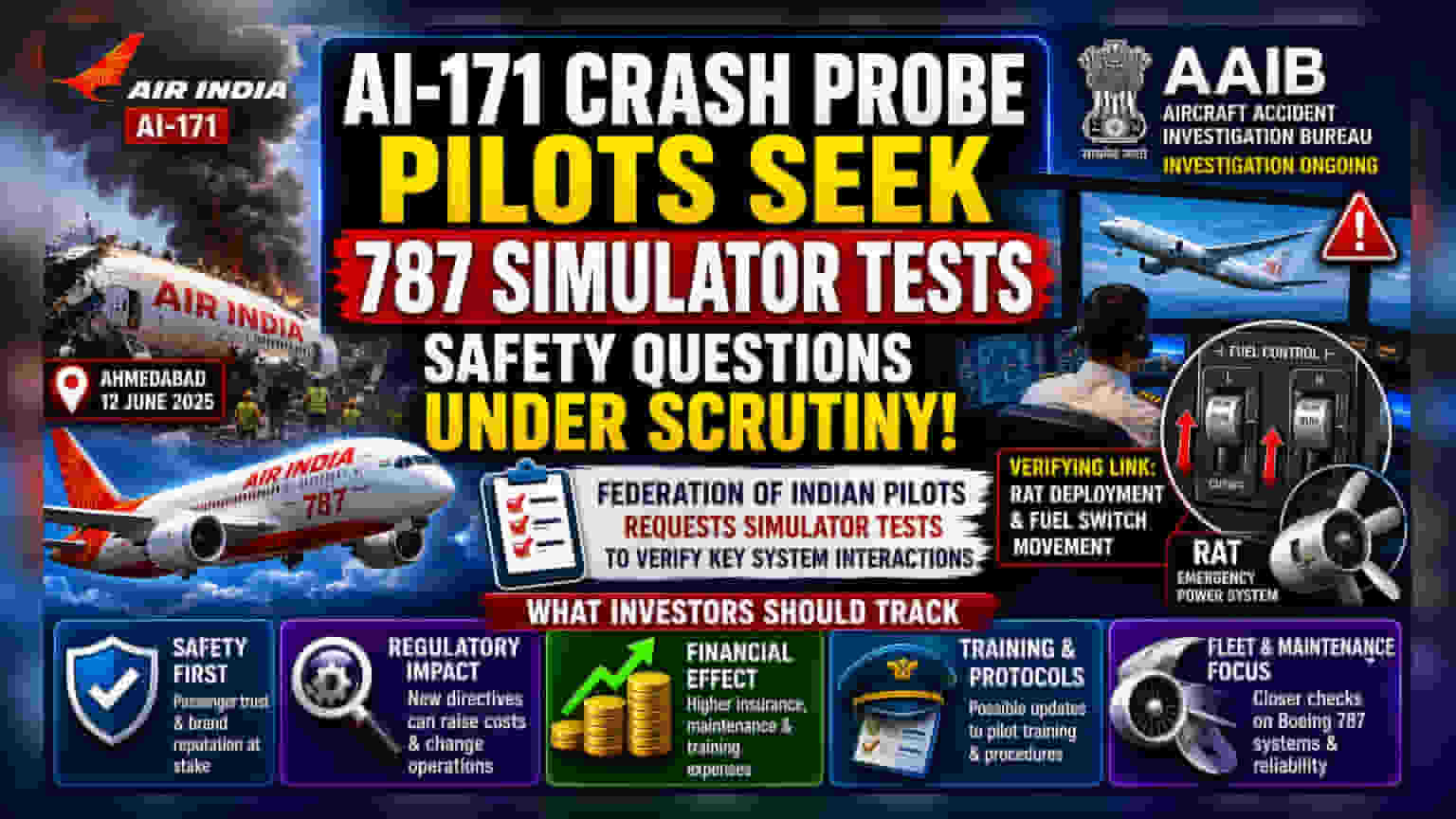


Air India ke crash case mein Pilots federation ne authorities se Boeing 787 ke simulator tests ki maang ki hai. Ye development aviation safety par regulatory focus dikhata hai, jisse investors ko airline sector aur Tata Group ke aviation business ke liye operational trust, insurance costs aur scrutiny par nazar rakhni hogi.
Kya hua?
Federation of Indian Pilots (FIP) ne Aircraft Accident Investigation Bureau (AAIB) se request kiya hai ki Boeing 787 aircraft ke liye specific simulator tests kiye jaayein. Ye sab June 12, 2025 ko Ahmedabad ke paas hue Air India Flight AI-171 ke tragic crash ki jaanch ka hissa hai, jisme 260 log maare gaye the. Pilots ka organisation chahta hai ki is test se woh Ram Air Turbine (RAT) — jo emergency power ke liye use hota hai — aur fuel control switches ke connection ko verify kar sakein. FIP ko lagta hai ki ye tests system interactions aur preliminary investigation mein report kiye gaye data ko clear karne ke liye zaroori hain.
Investors ke liye ye kyun important hai?
Aviation industry aur Tata Group ke aviation sector mein expansion ko track karne walon ke liye safety investigations bahut significant hote hain. Kisi bhi bade accident se airline par intensive regulatory scrutiny hoti hai, jo operational costs, insurance premiums aur brand reputation ko affect kar sakti hai. Hallanki Air India publicly traded company nahi hai, ye Tata Group ke airline business ka ek main hissa hai. Boeing 787 jaise widely used aircraft mein technical anomalies ya potential design interactions par continued focus aksar regulatory directives ko lead karta hai, jo poore aviation industry mein maintenance, training protocols aur fleet operations ko influence kar sakte hain.
Technical Context
Pilots ki request ka core point survivor accounts aur technical data ko correlate karna hai. FIP ne incident se pehle aircraft dwara transmit ki gayi cabin anomalies aur maintenance messages ko highlight kiya hai. Specific conditions ko simulate karke, investigation ka aim ye determine karna hai ki kya koi electrical ya software-related anomalies thi jinhone flight systems ko affect kiya ho. Request mein emergency scenarios ke under acceleration data aur system behavior ko verify karne ki importance par zor diya gaya hai taaki accident tak ki poori sequence of events ko build kiya jaa sake.
Regulatory aur Operational Scrutiny
Safety investigations aviation sector ka standard hissa hain, lekin ye time-consuming ho sakte hain aur aksar operating procedures mein bade changes late hain. Jab FIP jaise professional body investigation regulator ke saath actively engage karti hai, toh ye signal karta hai ki aircraft ke technical performance ya sequence of events ko lekar unresolved questions hain. Aviation sector ke liye, iska matlab aksar ye hota hai ki operators aur manufacturers ko pilot training enhance karne, maintenance schedules update karne, ya yahan tak ki hardware modifications implement karne ka pressure face karna pad sakta hai agar technical flaws identify hue.
Investors ko kya track karna chahiye?
Sabse important development AAIB dwara release kiye jaane wale final findings honge. Investors aur sector observers ko Boeing 787 fleet operate karne wali airlines ko issue ki jaane wali kisi bhi regulatory directive par nazar rakhni chahiye, kyunki inmein direct financial implications ho sakte hain. Iske alawa, pilot training protocols ya airworthiness standards mein kisi bhi update se affected airlines ki long-term operational stability aur cost structure ko gauge karne mein help milegi. Parent group se safety investments aur fleet maintenance ke regarding management commentary bhi ek key indicator hoga ki company incident ke baad apne operational reputation ko kaise manage kar rahi hai.