

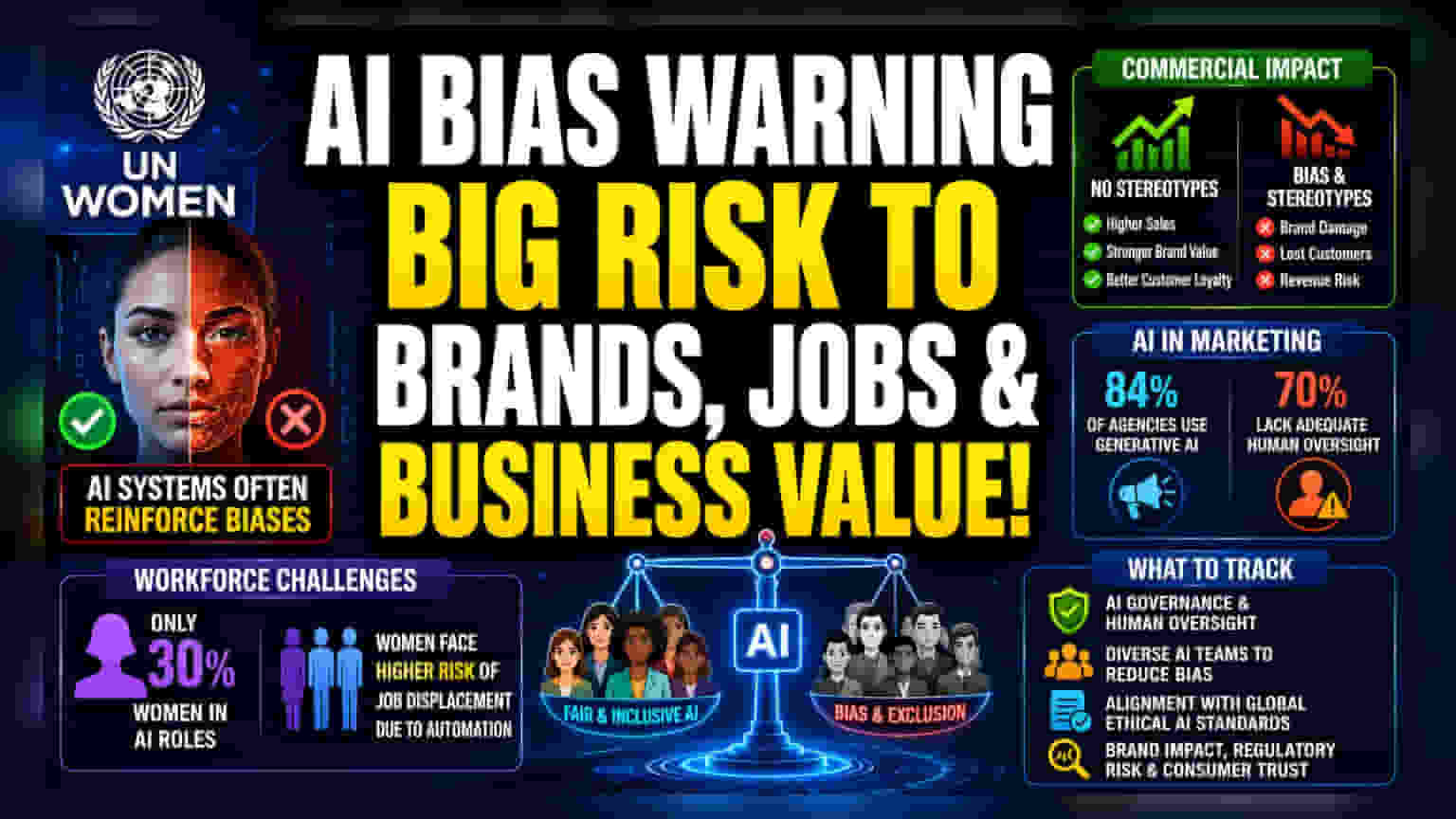
UN Women ne ek report mein warning di hai ki AI systems aksar gender stereotypes aur online harassment ko badhava dete hain. Isse businesses ke liye kaafi risks hain, khaas kar marketing, workplace automation aur governance mein. Companies ko ab ethical AI frameworks par dhyan dena hoga.
Kya hua?
UN Women ne AI par hone wali badi international discussions se pehle ek serious warning jaari ki hai. Unhone bataya ki Artificial Intelligence systems aksar gender aur race related biases ko badhava de rahe hain. Agency ka kehna hai ki yeh sirf technical errors nahi hain, balki AI models content kaise generate karte hain, online platforms kaise manage karte hain, aur workforce decisions ko automate kaise karte hain, yeh sab isi bias se affect ho raha hai. Yeh warning aise time par aayi hai jab generative AI par duniya bhar ka bharosa badh raha hai, aur agency ne zor dekar kaha hai ki AI design mein gender equality ko na shamil karna social aur commercial dono tarah ke risks la sakta hai.
Companies ke liye commercial risk kya hai?
Investors aur corporate leaders ke liye, yeh report ethical AI use aur business performance ke beech ek clear link dikhati hai. UN Women ne note kiya hai ki gender stereotypes se mukt advertising aur marketing campaigns aksar better sales, higher brand value aur strong customer loyalty laati hain. Iske vipreet, jo AI models biased, sexist, ya stereotypical content default karte hain, woh brand reputation ko damage kar sakte hain aur consumer segments ko alag-thalag kar sakte hain. Jaise-jaise companies generative AI ko customer-facing communication mein integrate kar rahi hain, public backlash aur consumer trust ke nuksan ka potential ek material business risk banta ja raha hai.
Marketing aur Oversight mein AI
Generative AI media aur advertising mein ek standard tool ban gaya hai. Agency dwara cite ki gayi research mein dikhaya gaya hai ki majority advertising aur media agencies already generative AI use kar rahi hain. Lekin, inmein se kaafi firms AI-generated content ko public tak pahunchane se pehle check karne ke liye sufficient human oversight ke bina operate kar rahi hain. Isse ek vulnerability paida hoti hai jahan biased, offensive, ya galat content anjaane mein distribute ho sakta hai. Jin businesses mein AI-generated materials ke liye rigorous review processes nahi hain, unhe regulatory scrutiny ya reputational damage ka saamna karna pad sakta hai.
Workforce aur Automation Challenges
Marketing ke alawa, report workforce representation aur automation ko lekar bhi significant concerns utha rahi hai. Global AI development workforce mein women ka representation kam hai, sirf 30% roles mein hain. Development teams mein diverse perspective ki kami ke karan aksar aise algorithms bante hain jo anjaane mein kuch groups ko exclude ya disadvantage karte hain. Report yeh bhi suggest karti hai ki AI sector ke bahar ki mahilaon ko automation ke karan naukri jane ka zyada risk hai, male counterparts ki tulna mein. Companies ko human capital risks ko carefully manage karna hoga jab woh AI technologies ko integrate karne ke liye roles ko restructure karengi.
Investors aur Companies ko kya track karna chahiye?
Investors yeh dekhna chahenge ki companies apne AI governance frameworks kaise build kar rahi hain. Key monitorables mein yeh shamil hai ki kya companies ne AI-generated content ke liye human-in-the-loop oversight establish kiya hai, woh algorithmic bias ko kam karne ke liye apne technical talent pools ko kaise diversify kar rahi hain, aur kya unki internal AI policies emerging global ethical standards ke saath align hoti hain. Jo companies proactively in gaps ko address karengi, woh global scrutiny of AI usage badhne ke saath brand erosion aur regulatory penalties ke risks ko mitigate karne ke liye behtar position mein hongi.