 Whalesbook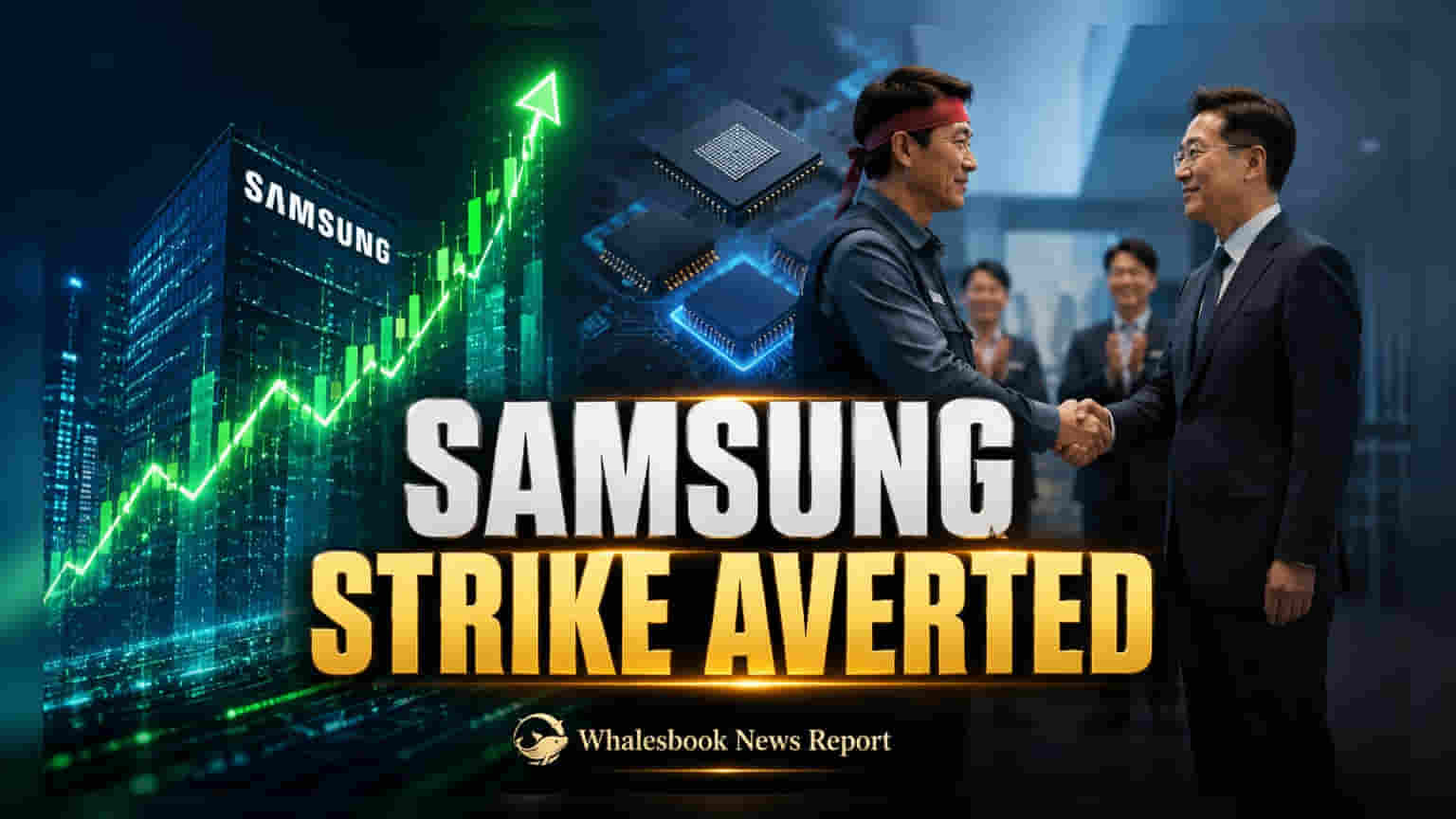


Samsung Aur South Korea Ki Jaan Mein Jaan Aayi!
Samsung Electronics ka stock aaj 8% tak chadha kyunki 48,000 employees ki potential 18-day strike tal gayi. Company aur labour union ke beech wage negotiations finally resolve ho gayi hain, jisse market aur South Korea ki economy ko badi relief mili hai. KOSPI index bhi upar gaya, ye sab averted labor action ki positive sentiment dikha raha hai. Ye news important thi kyunki Samsung ki economic footprint bahut badi hai, South Korea ke GDP mein 25% tak contribute karta hai aur memory chips mein global leader hai.
Bonus Deal Aur Future Cost Ki Fikar
Is tentative agreement mein Samsung ke crucial chip division ke employees ke liye kaafi bada bonus shamil hai, jo strike rokne ka main reason bana. Reports kehti hain ki ye bonuses division ke operating profit ke 10.5% se aayenge aur mostly company stock mein milenge, jo 10 saal tak chal sakta hai, agar ambitious operating profit targets achieve hue toh. Stock-based compensation se Samsung ko cash payout ke bajaye immediate financial flexibility milegi, par analysts ko long-term labour costs badhne ka dar hai. NH Investment & Securities ke senior analyst Ryu Young-ho ne kaha ki deal ne disruption toh roki hai, par "labour costs ko kaafi badha degi". Union pehle operating profit ka 15% bonus maang rahi thi, jo final deal se zyada tha.
Semiconductors Mein Competition Ka Scene
Ye labour dispute tab hua jab rivals jaise SK Hynix bhi apne workers ke saath compensation par baat kar rahe the. Samsung employees ko lagta tha ki unka compensation SK Hynix ke bonus structure ke muqable kam hai. South Korea ka semiconductor sector, jisme Samsung aur SK Hynix hain, global leader hai, khaas kar AI development ke liye zaroori high-bandwidth memory (HBM) chips mein. Ye market kaafi grow hone wali hai, isliye stable production bahut zaroori hai.
Stock Valuation Aur Analysts Ka View
Samsung Electronics ka Price-to-Earnings (P/E) ratio abhi 24.00 ke aas-paas hai, haalanki kuch reports TTM P/E 48.9 (May 2026 tak) bata rahi hain aur kuch 7.59 (May 19, 2026 tak), jo 10-year median se kaafi kam hai. Ye alag-alag P/E figures detailed analysis ki zaroorat batati hain. Stock ka recent rise market relief dikha raha hai, par badhti hui labour costs ek potential challenge ban sakti hain. Union ka agreement par vote 22 May se 27 May tak hoga, jo ek crucial next step hai. Agar vote fail hua toh aur labour tension ho sakti hai. Market ye dekhegi ki kaise ye higher labour expenses Samsung ke profit margins ko affect karte hain jab company AI chip market mein growth target kar rahi hai. Is deal mein profit-linked bonus structure South Korea mein future labour negotiations ke liye ek precedent set kar sakta hai, jo overall corporate costs ko influence kar sakta hai.