 Whalesbook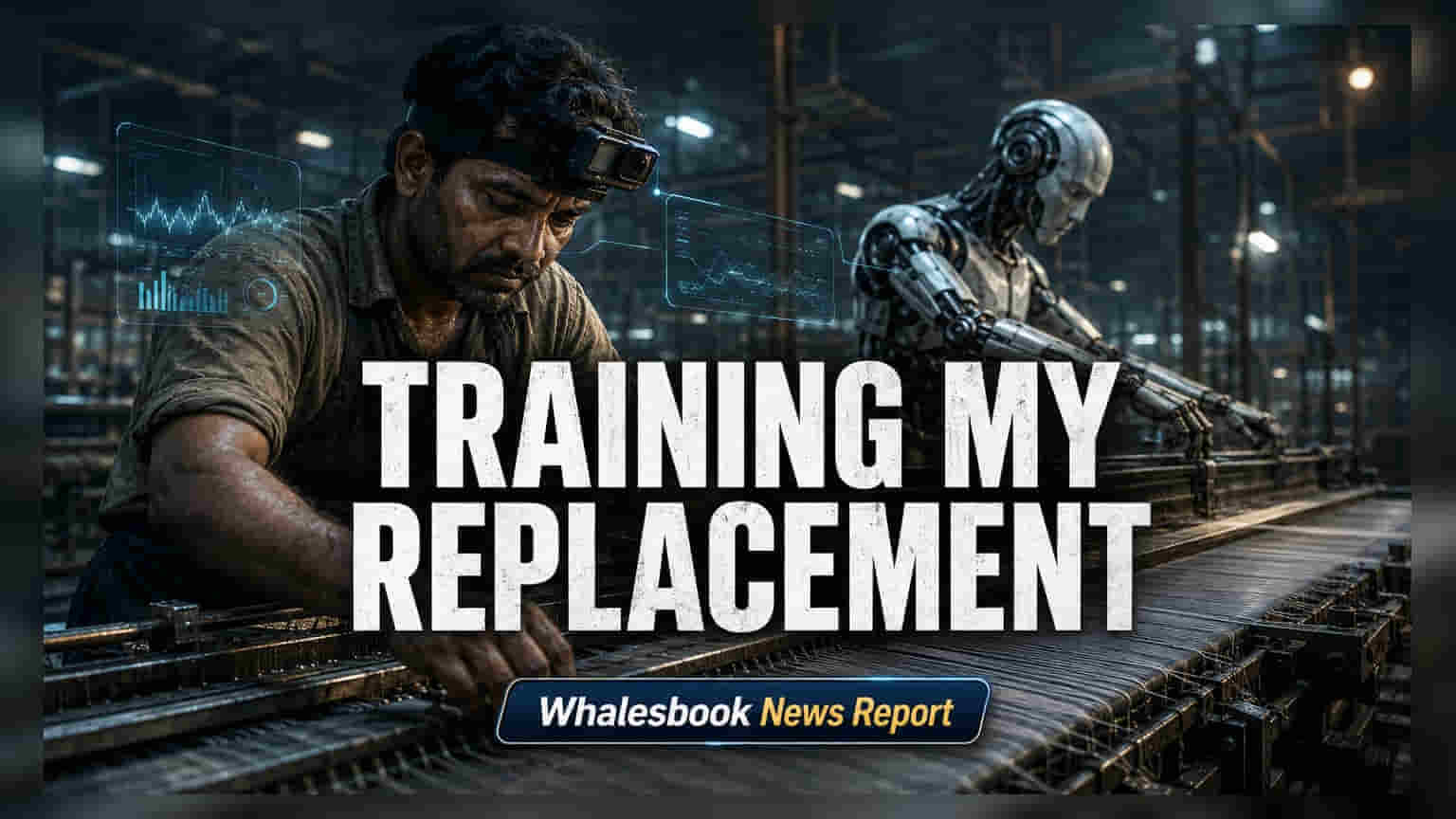


Automation ka Paradox: Khud hi bana rahe hain 'maut ka saman'
India ke textile industry mein workers ek ajeeb situation mein hain. Woh khud apni movements aur skills ko record kar rahe hain taaki advanced AI aur robots ko train kar sakein. Is process ko 'egocentric data' collection bolte hain. Ismein log head-mounted cameras pehen kar apne kaam ko first-person perspective se record karte hain. Yeh data machines ko woh subtle physical intelligence deta hai jo complex or unpredictable environments mein kaam karne ke liye zaroori hai.
Par yeh sab karte hue workers ko lag raha hai ki woh khud hi apni naukriyon ko khatam karne ka saman bana rahe hain. Ek technician ne toh kaha ki yeh 'apne kabr par kaam karne jaisa hai, jabki khud apna kafan bana rahe ho'.
'Embodied Intelligence' ki demand
Human-like AI banane ke liye bahut saara data chahiye hota hai. Kuch reports ke according, 100 million se lekar 1 billion ghante tak ke recorded human activity ka data lag sakta hai. Industry robots toh pehle se hi routine kaam kar sakte hain, par naye generation ke AI ko dynamic environments mein bhi kaam karna hoga. Is 'physical intelligence' ko collect karna bahut zaroori hai. Lekin is process mein aksar workers ko pata nahi hota ki unke data ka ultimate use kya hoga. Isse ethical sawal uthte hain ki kya human skills aur labor ko is tarah se monetize karna sahi hai.
Global Data Contributors ka Network
Objectways jaisi US-based companies, jo AI data solutions mein expert hain, is data acquisition mein aage hain. Woh India aur dusre deshon mein logon ko alag-alag activities record karne ke liye hire kar rahe hain – factory floor ke kaam se lekar kitchen mein khaana banane ya kapde istri karne tak.
India is specialized data ka ek bada source ban gaya hai. Workers ko per hour ₹250 se ₹350 tak mil rahe hain, aksar mobile apps ke through.
Humyn Labs jaisi ek company ne toh global data collection initiatives ke liye $20 million tak invest karne ka plan banaya hai.
Jaayaz Chintaayein aur Dusri Kahani
Is sector ke executives maante hain ki job displacement ko lekar workers ki chinta valid hai. Lekin ek dusri taraf yeh bhi kaha ja raha hai ki robots khatarnak ya boring jobs kar sakte hain, jis se humans ko zyada acche ya kam khatarnak kaam milenge.
Halanki, abhi ki reality yehi hai ki bahut se workers uncertain hain. Unhe dar hai ki unke recorded actions se aisi systems banengi jo end mein unko hi replace kar dengi. Yeh sab dekh kar lagta hai ki 'machine eventually jaan jayegi ki main kaun hoon'.