 Whalesbook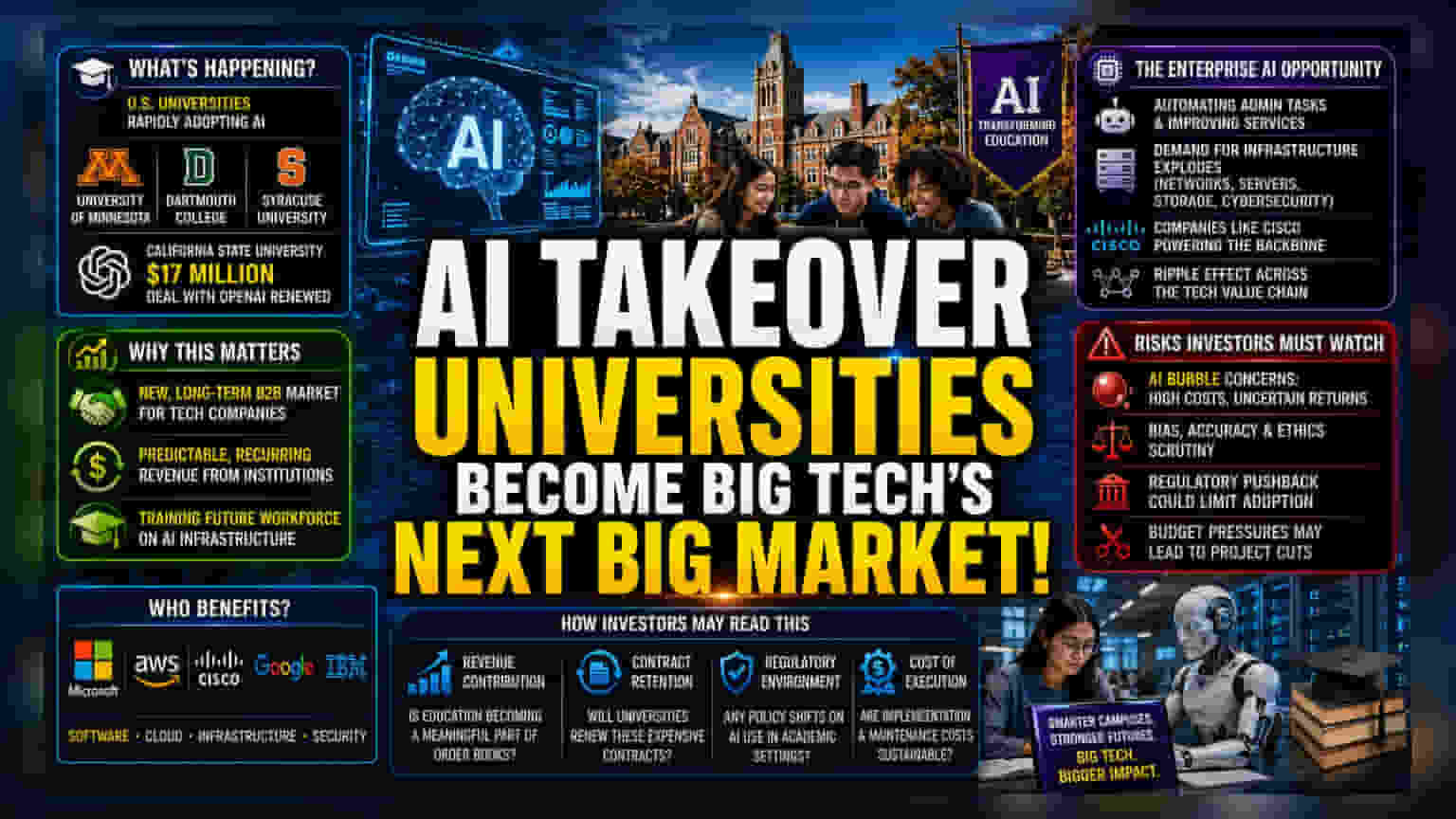


Universities ab AI ko adopt kar rahi hain, jis se tech giants aur software firms ke liye ek naya B2B market ban gaya hai. Yeh tech sector ke liye revenue ke naye raaste khol raha hai, lekin investors ko high adoption costs aur regulatory hurdles ka bhi risk dikh raha hai.
Kya Hua?
America ki universities ab AI ko apne operations aur padhai mein zyada use kar rahi hain. University of Minnesota, Dartmouth College, aur Syracuse University jaise institutions ne AI companies ke saath partnerships ki hain taaki administrative kaam aur services ko behtar banaya ja sake. Ek bada example California State University ka hai jinhone OpenAI ke saath $17 million ka deal kiya tha, jise haal hi mein renew bhi kiya gaya hai, faculty ki concerns aur budget issues ke bawajood. Yeh trend dikhata hai ki educational institutions ab AI technology providers ke liye bade enterprise customers ban rahe hain.
Investors Ke Liye Kyun Matter Karta Hai?
Investors ke liye, education sector tech infrastructure aur software companies ke liye ek naya, long-term B2B (business-to-business) market ban gaya hai. Tech giants aur specialized AI firms universities ko future workforce train karne ke liye important jagah bana rahi hain. Jab institutions AI services ke liye bade, multi-year contracts sign karti hain, toh technology providers ko predictable, recurring revenue milta hai – jo market ko pasand aata hai. Yeh trend tech companies ki koshishon ka hissa hai ki woh traditional corporate sectors se nikal kar public institutions aur higher education mein bhi apna reach badhayein.
Enterprise AI Ka Mauka
Cisco jaisi companies bhi is digital transformation ke infrastructure side se jud rahi hain, jo high-intensity AI operations ke liye networking aur connectivity provide karti hain. Jaise hi universities apne digital footprint ko modern karne ki koshish karti hain, high-end server capacity, data storage, aur cybersecurity solutions ki demand badh jaati hai. Isse tech value chain mein ek ripple effect banta hai, jisse hardware, cloud computing, aur software platforms ke providers ko fayda hota hai. Investors aksar institutional partnerships ko monitor karte hain yeh dekhne ke liye ki tech companies AI ko traditional corporate aur consumer markets ke bahar kitni acchi tarah monetize kar pa rahi hain.
AI Shift Mein Potential Risks
Commercial potential toh kaafi bada hai, lekin investors ko track karne ke liye kuch zaroori risks bhi hain. Critics aur academic observers ne in partnerships ki long-term viability par concerns uthaye hain. Ek bada risk 'AI bubble' sentiment hai – yeh chinta ki universities tech contracts mein sirf dikhawe ke liye invest kar rahi hain bina pure returns ya clear academic benefits ke. Agar yeh massive investments operational efficiency ya student outcomes ko improve nahi karte, toh universities ko budget cuts ka saamna karna pad sakta hai, jo in long-term contracts ki stability ko khatre mein daal sakta hai.
Iske alawa, teaching aur assessment mein AI ka implementation – jaise automated grading ya student identification systems – accuracy aur bias ko lekar scrutiny mein aaya hai. Education mein AI ke use ke khilaaf koi bhi regulatory pushback, ya system failures se reputational damage, project cancellations ya stricter oversight ko lead kar sakta hai, jo investors ke liye tech firms mein revenue predictability ko affect kar sakta hai.
Investors Yeh Kaise Dekh Sakte Hain?
AI sector mein dekhne wale investors ko 'hype' aur 'sustainable adoption' mein fark karna chahiye. Main sawaal yeh hai ki kya universities yeh kharch ko sustain kar payengi agar unke khud ke financial constraints tight ho jate hain. Investors yeh dekh sakte hain:
- Revenue Contribution: Kya education segment major tech players ke order books mein significant contribution dena shuru karta hai.
- Contract Retention: Kya universities in mehange contracts ko renew karti hain jab woh apne investment ka return assess karti hain.
- Regulatory Environment: Academic settings mein AI ke use ko lekar government policy mein koi bhi change, jo companies ko apne product offerings badalne ya unke addressable market ko limit karne par majboor kar sakta hai.
- Cost of Execution: Kya in systems ko implement karne aur maintain karne ka cost, provider aur client dono ke liye manageable rehta hai.