 Whalesbook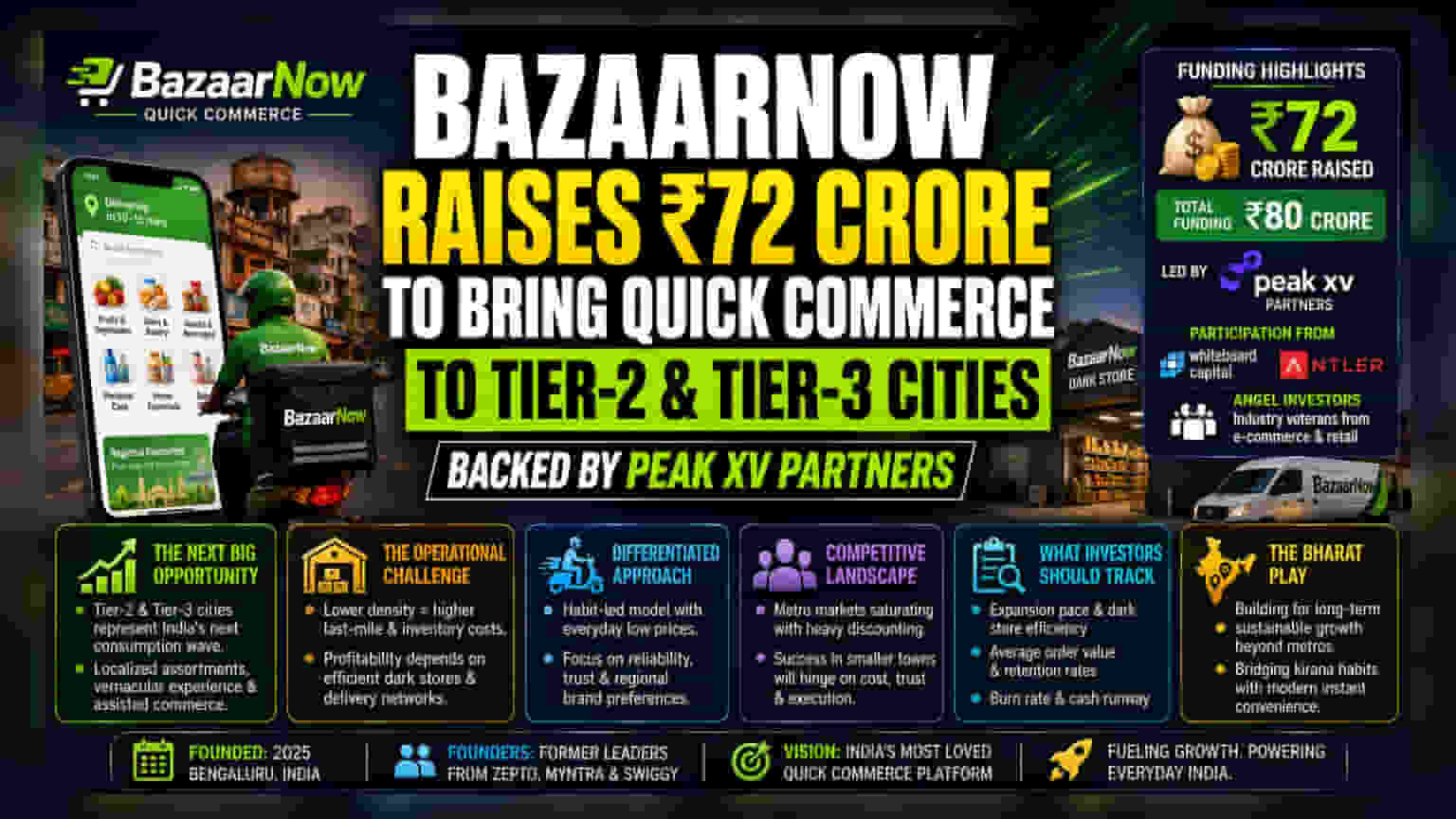


Quick-commerce wali startup BazaarNow ne mazboot funding judi hai, lagbhag ₹72 crore Peak XV Partners ke saath. Paisa use hoga Tier-2 aur Tier-3 cities mein grocery delivery expand karne ke liye. Yeh log metro cities wala model copy nahi karenge, balki local shopping habits par focus karenge, jismein regional products aur value-conscious customers ka dhyan rakha jayega. Investors ye dekh rahe hain ki company bina unit economics ko nuksan pahunchaye, kam density wale regions mein kaise operate karegi.
Kya Hua?
Bengaluru ki quick-commerce startup BazaarNow ne Peak XV Partners ki leadership mein ek funding round mein ₹72 crore successfully raise kiye hain. Is round mein existing investors Whiteboard Capital aur Antler ne bhi participate kiya, saath hi kai bade angel investors bhi shaamil the, jismein e-commerce aur retail sector ke veterans bhi hain. 2025 mein Zepto, Myntra aur Swiggy ke purane executives dwara start hui ye company ab tak total ₹80 crore raise kar chuki hai. Ye paisa Tier-2 aur Tier-3 cities mein expansion ke liye use hoga, jismein supply chain ko strong karne aur technology ko behtar banane ka plan hai.
Investors ke liye ye kyun important hai?
India mein quick commerce ka sector mostly Tier-1 metros mein booming raha hai, jahan high population density ke karan 10-minute delivery models feasible hain. Lekin BazaarNow chhote shaharon mein entry karke 'Bharat' ki consumption story par focus kar raha hai. Jahan metros mein high-frequency orders, premiumization aur heavy discounts chalta hai, wahi ye company alag consumer behavior wale markets ko target kar rahi hai. Regional assortments, local bhasha mein digital experience aur assisted commerce features par focus karke, ye platform kirana shopping aur modern instant delivery ke beech ki gap ko fill karne ki koshish kar raha hai.
Operational Challenge Kya Hai?
Chhote shaharon mein quick commerce ko expand karna, metro-first strategy se kaafi alag aur risky ho sakta hai, jaise Zomato ke Blinkit, Swiggy Instamart ya Zepto ke liye hai. Quick commerce operations ko profitable hone ke liye high order density ki zarurat hoti hai dark-store level par. Tier-2 aur Tier-3 cities mein population density kam hoti hai, jisse last-mile delivery aur inventory management ka cost per order badh sakta hai. Investors ye dekhte hain ki kya ye platforms heavy discounts aur coupon-based strategies par nirbhar hue bina healthy profit margins maintain kar sakte hain. BazaarNow ka asli test ye prove karna hoga ki unka 'habit-led' model, jo complex discount structures ko avoid karke everyday fair pricing offer karta hai, kya woh kam dense regions mein sustainable unit economics de sakta hai.
Sector aur Competitors Context
India mein quick commerce market bahut competitive hai, jahan top 10-15 cities mein bade players ka raaj hai. Jaise hi metro markets saturated ho rahe hain aur competition badh raha hai, chhote shaharon ki taraf shift ko sector growth ka agla phase mana ja raha hai. Bade players jo 10-minute delivery par focus karte hain, unse alag, chhote shaharon mein naye entrants ki success cost, reliability aur regional preferences par depend kar sakti hai, na ki sirf speed par. Infrastructure gaps, jaise road connectivity aur digital supply chain maturity, ko navigate karne ki startup ki ability hi decide karegi ki woh organised retail aur local kirana networks ke khilaf kaise compete karenge.
Investors Ko Kya Track Karna Chahiye?
Is venture ke liye sabse important factors honge expansion ki speed aur dark-store operations ko efficient rakhna jaise-jaise company pilot markets se bahar nikalti hai. Average Order Value (AOV), chhote shaharon mein customer retention rates aur supply chain establish karne mein lagne wala burn rate key metrics honge. Aage koi naye funding rounds ki updates ya nayi geographic clusters mein expansion ka pata chalega ki company apne initial pilot success ko replicate kar pa rahi hai ya nahi. Management ka organized retail aur traditional unorganized grocery players se competition ko navigate karne par commentary bhi critical rahegi yeh samajhne ke liye ki company ka long-term competitive advantage kya hai.