 Whalesbook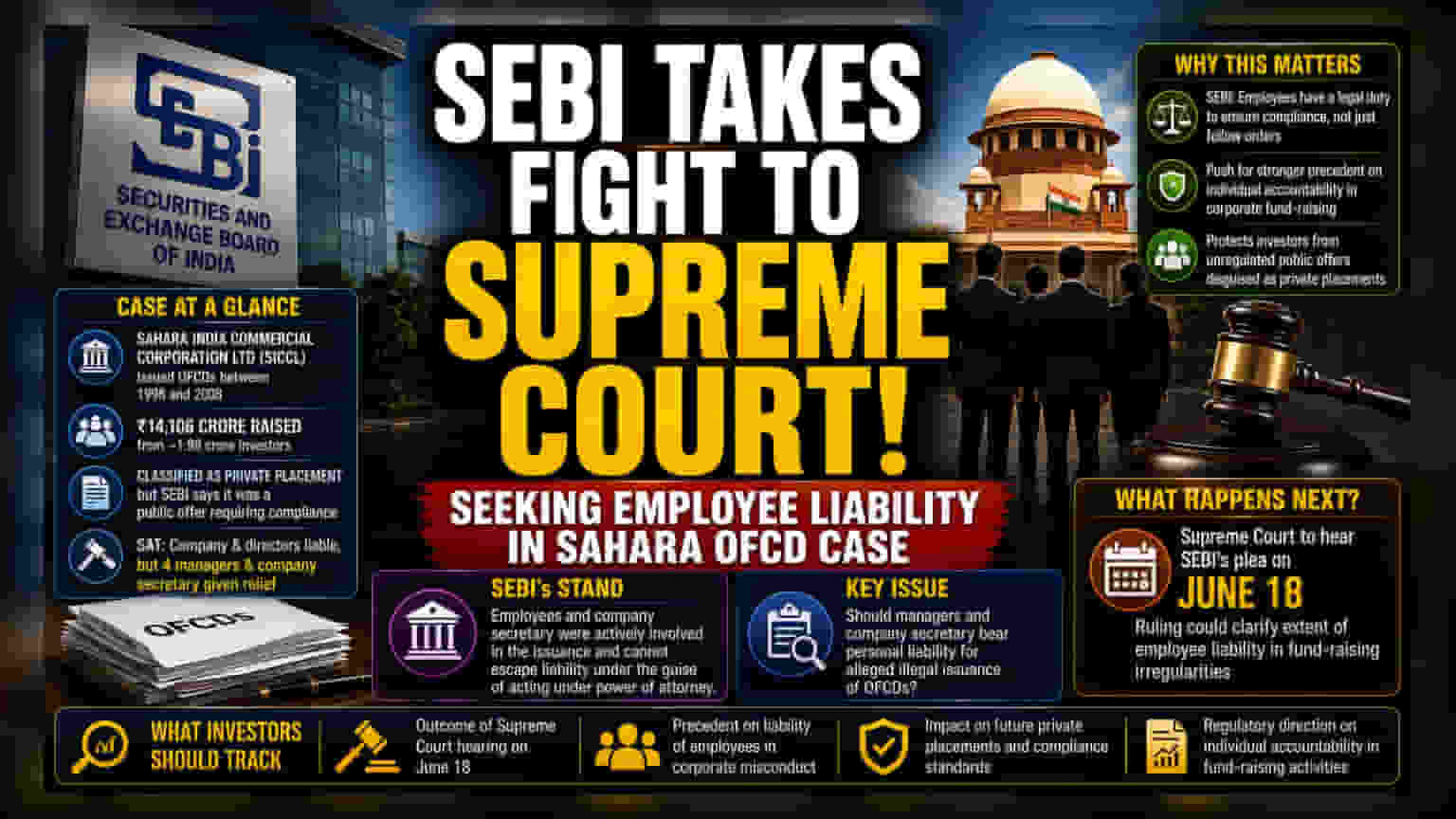


Arre bhaiyo, SEBI ne ek bada kadam uthaya hai! Supreme Court mein appeal kiya hai SAT ke decision ke khilaaf, jisme Sahara India Commercial Corporation ke kuch managers aur company secretary ko liability se chhut mili thi. Yeh poora mamla ₹14,000 crore se zyada ka hai jo Optionally Fully Convertible Debentures (OFCDs) se raise kiye gaye the. SEBI ab in employees ko bhi accountable banana chahti hai.
Kya Hua?
Securities and Exchange Board of India (SEBI) ne Securities Appellate Tribunal (SAT) ke ek order ko challenge karne ke liye Supreme Court ka darwaza khatkhataya hai. Yeh mamla Sahara India Commercial Corporation Ltd (SICCL) dwara 1998 se 2008 ke beech issue kiye gaye Optionally Fully Convertible Debentures (OFCDs) se related hai. Jabki tribunal ne company aur uske directors ke khilaaf SEBI ke action ko uphold kiya tha, unhone chaar managers aur company secretary ko personal liability se chhut de di thi. Ab SEBI in employees ko bhi zimmedar thahrane ki koshish kar rahi hai, unka kehna hai ki inko bhi is tarah ke financial instruments ke illegal issue mein responsibility leni chahiye.
OFCD Scam ko Samjho
Asal gadbad hai ki company ne public se paisa kaise raise kiya. SICCL ne OFCDs issue kiye, jo aise debt instruments hote hain jinhe investor ke choice par company shares mein convert kiya ja sakta hai. Company ne ise private placement bataya tha, jisme regulatory requirements kam hoti hain. Lekin SEBI ki investigation mein pata chala ki company ne lagbhag ₹14,106 Crore lagbhag 1.98 crore investors se collect kiye the. Regulator ka kehna tha ki itne zyada investors hone ki wajah se yeh practically ek public offer tha jisme zyada strict rules follow karne chahiye the. March mein, tribunal ne agree kiya tha ki company aur directors liable hain, lekin employees ke liye exception nikala, kaha ki woh company ki taraf se aur power of attorney ke under kaam kar rahe the.
Corporate Accountability ke Liye Kyun Hai Zaroori?
SEBI ka Supreme Court tak jaana corporate governance aur individual accountability par ek strong stand dikhata hai. Regulator ka argument hai ki employees, jisme company secretaries aur managers bhi shamil hain, unki bhi responsibility hai ki woh ensure karein ki paisa raise karne ke kaam kanoon ke mutabik ho rahe hain, chahe unka role kuch bhi ho. Agar Supreme Court SEBI ke saath jaati hai, toh yeh ek stronger precedent set kar sakta hai, jisse company ke andar ke individuals sirf orders follow karne ka bahana bana kar liability se bach nahi payenge.
Regulatory Angle
Yeh case SEBI aur Sahara group ke beech fund mobilization ko lekar lambe samay se chal rahe regulatory issues ka ek important hissa hai. Investors aur market ke liye, yeh India mein private placements ko lekar strict rules ki yaad dilata hai. Regulatory bodies aksar aise issuances ko scrutinize karte hain taaki retail investors ko un risks se bachaya ja sake jo public market disclosures aur protections ke bahar raise kiye gaye funds se judey hote hain. Employees par focus bhi ek critical observation hai ki regulatory bodies corporate law mein professional responsibilities ko kaise interpret karte hain.
Investors Ko Kya Dekhna Chahiye?
Supreme Court mein SEBI ki plea sunwai ke liye June 18 ko scheduled hai. Is hearing ka outcome is case ke liye sabse important monitorable hoga. Koi bhi ruling yeh clarify kar sakti hai ki employees corporate fundraising irregularities ke liye kis hadd tak liable ho sakte hain. Market participants aur legal observers dekhenge ki apex court company officers ki responsibilities ko directors ke muqable mein kaise dekhti hai. Koi bhi decision future mein companies ke private placements mein compliance ko lekar aur regulators dwara alleged fundraising misconduct cases mein liability pursue karne ke tarikon ko influence kar sakta hai.