 Whalesbook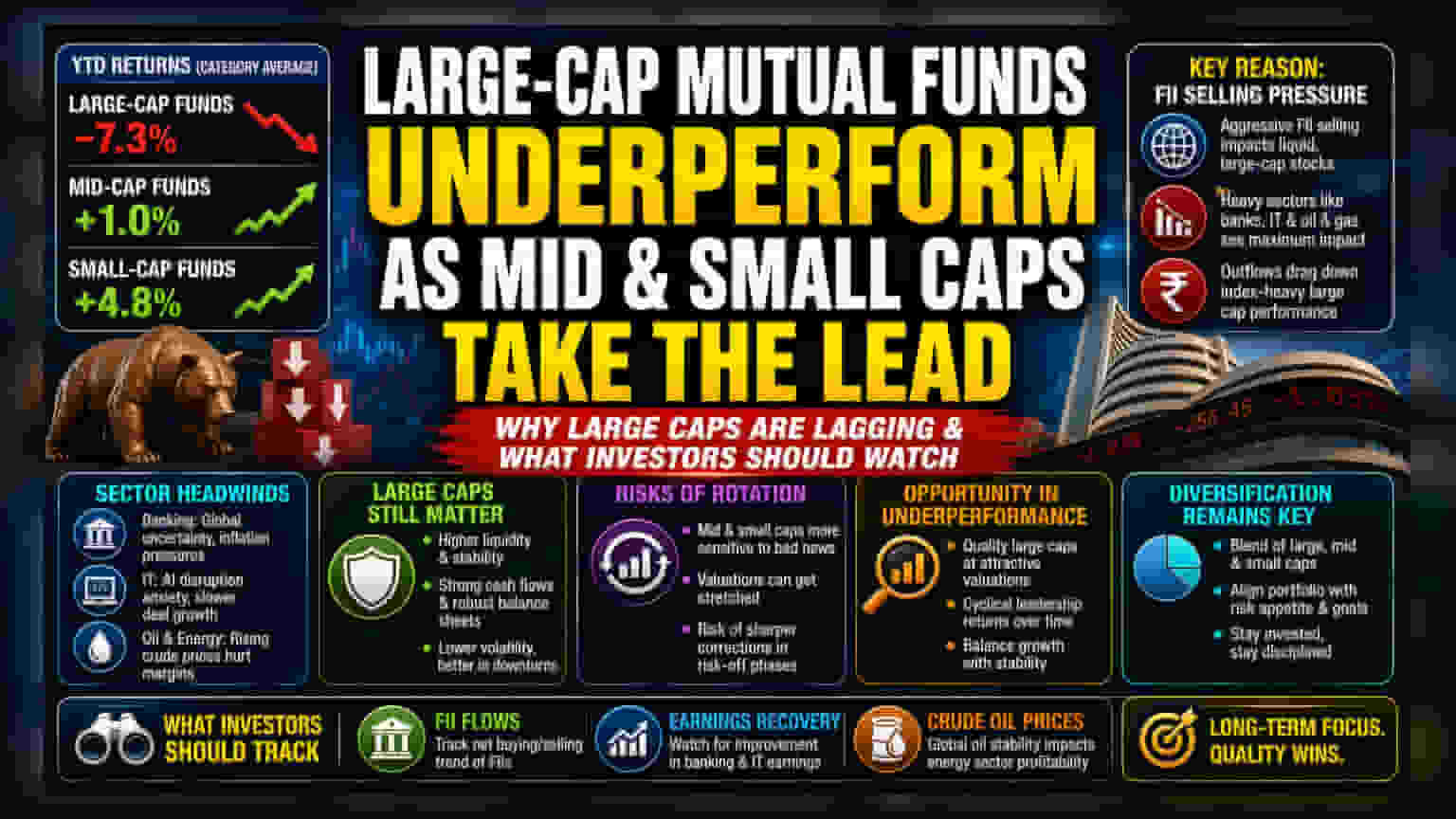


Bhai log, iss saal bade companies ke funds (large caps) chote companies (mid & small caps) se peeche reh gaye hain. Iska reason hai FIIs ka selling pressure, especially banking, IT aur energy stocks mein. Chalo dekhte hain aisa kyun ho raha hai aur investors ko kya karna chahiye.
Aakhir Hua Kya?
Iss saal bade companies ke mutual funds (large caps) ka performance theek nahi raha hai. Category average returns lagbhag -7.3% year-to-date hain. Dusri taraf, mid-cap funds ne average 1% ka return diya hai aur small-cap funds ne 4.8% ka. Matlab, abhi market mein chote companies zyada paisa bana rahe hain bade players ke comparison mein.
FIIs Ka Hath Kahan Hai?
Is underperformance ka sabse bada reason hai Foreign Institutional Investors (FIIs) ki aggressive selling. Ye log aksar liquidity aur stability dekhte hain. Jab woh apna paisa nikalte hain, toh sabse zyada impact bade stocks par padta hai. Banking, Information Technology (IT), aur Oil & Gas jaise heavy-weight sectors mein FIIs ka kafi stake hota hai, isliye unki selling se yeh stocks neeche khinch jaate hain aur large-cap funds ka performance bhi gir jata hai.
Sectors Par Dabav
Banking, IT, aur Energy sectors bhi apne challenges face kar rahe hain. Banking stocks global uncertainties aur inflation ki wajah se pressure mein hain. IT sector mein AI (Artificial Intelligence) ko lekar anxiety hai ki yeh business models ko kaise badlega. Energy sector mein, crude oil prices badhne se companies ke cost ko lekar chinta hai. Kyunki yeh sectors large-cap indices ka bada hissa hain, inki problems ka asar large-cap funds par bhi padta hai.
Phir Bhi Large Caps Kyun Zaroori Hain?
Halan ki abhi choti companies chal rahi hain, history batati hai ki market leadership cyclical hoti hai. Large-cap funds ko ek stable portfolio ka main pillar mana jata hai. Inme liquidity achhi hoti hai, cash flow stable rehta hai, aur business models mazboot hote hain jo economic downturns ko bhi handle kar sakte hain. Jab investors sirf mid-cap aur small-cap stocks ke momentum ke peeche bhagte hain, toh woh risk bhi zyada lete hain. Large-cap funds kam volatility ke saath wealth protect karne mein madad karte hain, chahe woh growth phases mein underperform kyun na karein.
Market Rotation Ka Risk
Investors ko yeh bhi samajhna chahiye ki mid-cap aur small-cap stocks negative news ya liquidity ki kami se zyada affect ho sakte hain. Haalanki unka performance achha raha hai, high demand mein unki valuations stretched ho sakti hain. Agar market sentiment risk-off ho gaya, toh yeh segments large-caps ke comparison mein tezi se gir sakte hain. Haal hi mein large caps ka underperformance kabhi-kabhi quality companies ko achhe valuation par kharidne ka mauka bhi de sakta hai.
Investors Ko Kya Dekhna Chahiye?
Jo investors in trends ko track kar rahe hain, unhe kuch cheezein dekhni chahiye. Pehla, FIIs ki buying ya selling trend mein koi change aata hai ya nahi. Dusra, banking aur IT sectors mein earnings recovery par nazar rakho, kyunki acchi profitability wapis interest jaga sakti hai. Aur teesra, global crude oil prices ki stability dekho, kyunki yeh energy companies ke cost ko seedha affect karta hai. Long-term aur disciplined approach hi sabse achha tareeka hai market ke yeh shifts navigate karne ka.