 Whalesbook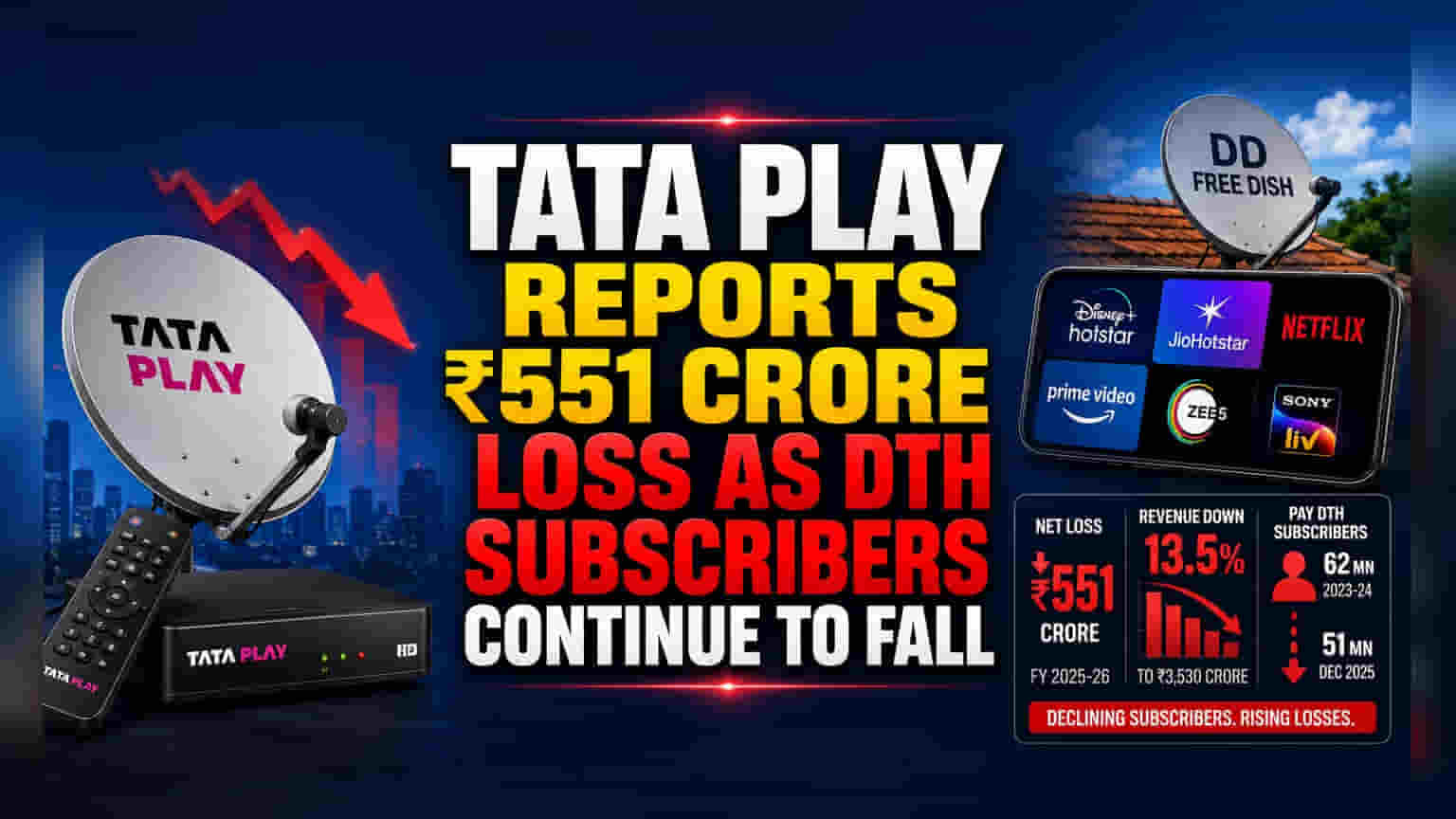


Tata Play ne FY26 ke liye ₹551 Crore ka net loss report kiya hai, revenue bhi **13.5%** gir kar ₹3,530 Crore ho gaya. Ye India ke DTH sector ke liye badi problem hai, kyunki log free-to-air platforms aur streaming apps ki taraf jaa rahe hain. Isse traditional cable aur satellite business par pressure dikh raha hai.
Kya Hua?
Tata Sons aur Walt Disney ke joint venture, Tata Play ne financial year 2025-26 mein ₹551 Crore ka net loss report kiya hai. Pichhle saal ye loss ₹529 Crore tha, matlab loss aur badh gaya hai. Sirf yahi nahi, company ka revenue bhi 13.5% gir gaya aur ₹3,530 Crore pe aa gaya. Ye figures aise time mein aaye hain jab India mein direct-to-home (DTH) industry mein paid subscribers ki sankhya lagatar kam ho rahi hai.
DTH Sector Ke Liye Yeh Kyun Important Hai?
Sabse badi wajah hai logo ki choice mein change. Log ab paid DTH connections chhod kar do main options ki taraf jaa rahe hain: ek toh DD Free Dish jaise free-to-air services, aur doosra subscription-based ya ad-supported streaming platforms.
Investors aur market observers ke liye ye trend bahut critical hai. Jab log paid DTH services chhodte hain, toh companies ke revenue models par seedha pressure padta hai. Tata Play ke subscriber base mein kami – jo industry ki broader trend ka hissa hai jismein national pay DTH subscribers ki sankhya 2023-24 mein 62 million thi aur December 2025 tak 51 million ho gayi – ye dikhata hai ki traditional cable aur satellite business model par kafi structural strain hai. Industry analysts jaise Crisil ne Average Revenue Per User (ARPU) mein thodi badhotri batayi hai, lekin users ki overall sankhya itni tezi se kam ho rahi hai ki purani growth levels maintain karna mushkil hai.
Content Dispute Ka Factor
Ek aur problem hai Sony Pictures Networks India ke saath chal raha content dispute. Ek saal se zyada ho gaya hai jab Sony ke channels Tata Play platform par available nahi hain. Isse subscribers ko pareshani ho rahi hai aur industry experts ke according, customers ke jaane ka ye bhi ek reason bana hai. Ye mamla Telecom Disputes Settlement and Appellate Tribunal (TDSAT) tak pahunch gaya hai. Ye dispute media distribution sector mein ek common risk dikhata hai: jab distributors aur content creators price agreements par nahi pahunch paate hain, toh end customer aksar platform chhodne ka decide karta hai, jisse long-term revenue ko nuksan hota hai.
Bigger Business Context
Yeh yaad rakhna zaroori hai ki ye sirf ek company ki problem nahi hai, balki ek badalte sector ka reflection hai. DTH industry mein, Dish TV India jaise doosre players ke saath bhi, companies users ko retain karne mein struggle kar rahi hain kyunki log ab streaming apps ki flexibility ya free-to-air satellite dishes ke zero-cost model ko prefer karte hain.
Jab kuch companies saal mein do baar prices badhane ki koshish karti hain, toh is strategy mein risk hota hai ki zyada price-sensitive customers saste ya free alternatives ki taraf chale jayenge. DTH ka business model bade scale par subscriptions par depend karta hai taaki operational aur content acquisition costs cover ho sakein. Jab subscriber base kam hone lagta hai, toh profitability maintain karna kaafi mushkil ho jata hai.
Investors Ko Kya Monitor Karna Chahiye?
Industry ke liye sabse important monitorable ye hai ki ye companies streaming era mein khud ko kaise adapt karti hain. Investors aur analysts ko in cheezon par nazar rakhni chahiye:
- Subscriber Retention: Kya users ke jaane ki raftaar kam ho rahi hai ya aur tez ho rahi hai.
- Content Deals: Bade broadcasters ke saath chal rahe disputes ka resolution, kyunki ye agreements channel packages ko attractive banane ke liye zaroori hain.
- Pivot to Hybrid Models: Kya traditional DTH players streaming apps ko apne platforms mein successfully integrate kar sakte hain taaki ek 'one-stop' service offer kar sakein jo customers ko retain kare.
- Pricing Power: Kya industry ARPU ko badhana jari rakh sakti hai bina free alternatives ke saamne aur market share khoye.