 Whalesbook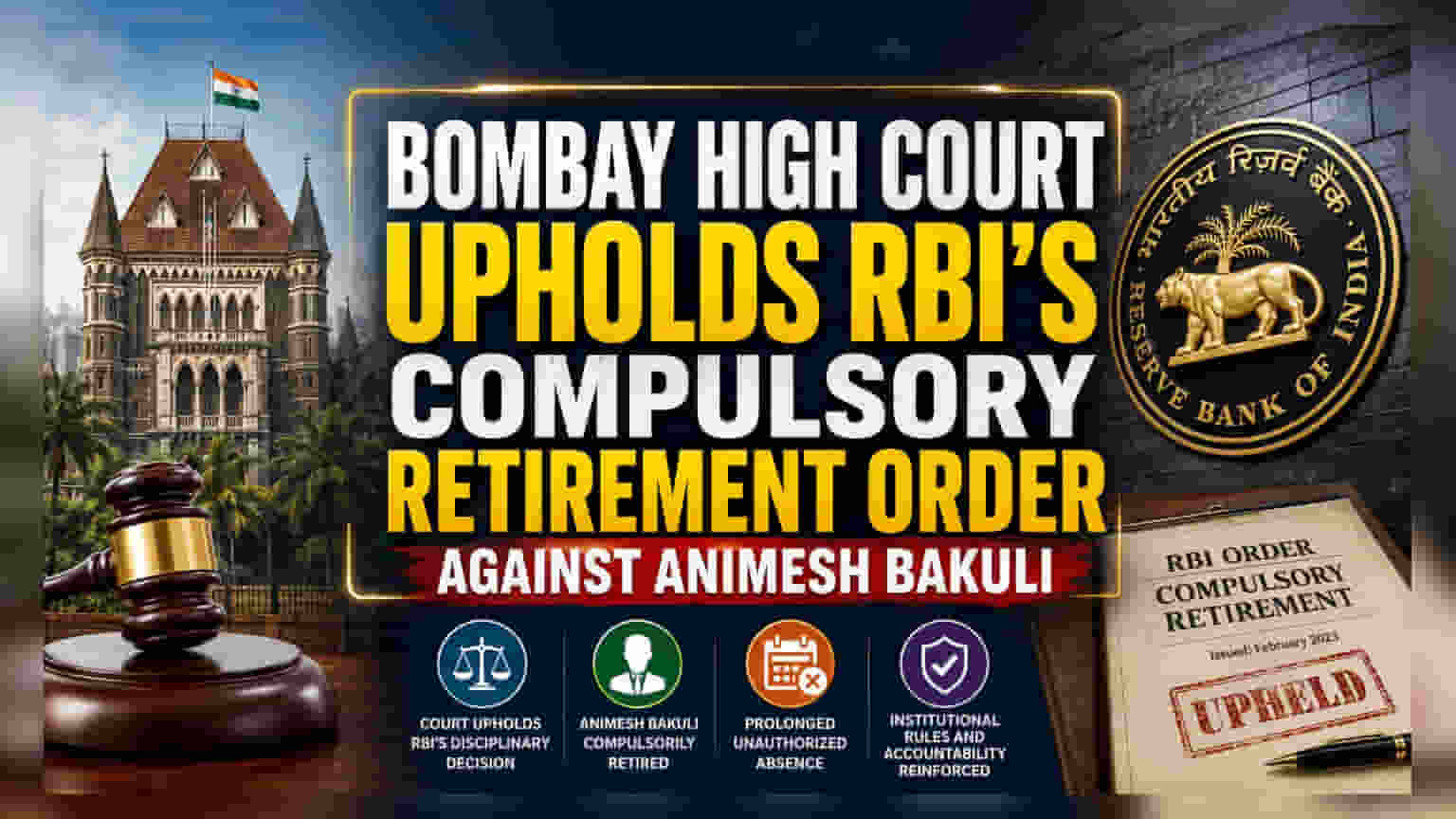


Bombay High Court ne RBI ke ek senior assistant ko compulsory retire karne ke decision ko confirm kar diya hai. Ye assistant lagbhag 3 saal se bina permission ke duty se gayab tha. Court ne employee ki plea dismiss kar di, kaha ki prolonged unauthorized absence grave misconduct hai aur public interest ke liye harmful hai.
Kya Hua?
Bombay High Court ne haal hi mein, June 10, 2026 ko, Reserve Bank of India (RBI) ke ek senior assistant, Animesh Bakuli ko compulsory retire karne ke decision ko sahi thahraya hai. Court ne petitioner ki us request ko dismiss kar diya jisme woh February 2023 mein aaye retirement order ko cancel karne ki maang kar raha tha. Justices R.I. Chagla aur Advait Sethna ki bench ne conclusion nikala ki RBI ki disciplinary action justified thi kyunki employee kaafi time se bina kisi authorization ke duty se absent tha.
Workplace Governance ke liye Yeh Kyun Important Hai?
Public institutions aur major financial organizations mein interest rakhne walon ke liye, yeh case dikhata hai ki aise places par conduct aur accountability ke liye kitne strict standards follow kiye jaate hain. Court ne observe kiya ki responsible post par kisi official ka unauthorized absence sirf personal matter nahi hai, balki yeh public interest ko bhi nuksan pahuncha sakta hai. Central bank ke disciplinary process ko support karke, judiciary ne yeh principle reinforce kiya hai ki attendance aur conduct ke institutional rules mandatory hain aur employees ko leave aur reporting ke liye banaye gaye procedures follow karne chahiye.
Case Ka Background
Animesh Bakuli ne 2013 mein RBI join kiya tha aur 2018 mein senior assistant bana. Court records ke mutabik, disciplinary action tab shuru hui jab employee ne Kolkata transfer ke liye repeatedly requests ki thi, jo RBI ne approve nahi ki. March 19, 2020 se, employee duty par aana band kar diya. RBI ka kehna hai ki unhone use email aur letters ke through communicate karne ki koshish ki, usse kaha ki ya toh kaam join kare ya valid leave application medical documents ke saath submit kare. Central bank ne report kiya ki employee ne na toh in communications ka jawab diya aur na hi departmental inquiries ke liye present hua. Is conduct rules ke breach ke baad, bank ne compulsory retirement ka order issue kiya.
Court Ki Findings
Petitioner ne argue kiya ki uski absence COVID-19 pandemic aur family health issues se related thi, aur usne claim kiya ki disciplinary inquiry ne natural justice violate kiya hai. Lekin, High Court bench ko in arguments mein koi merit nahi mila. Court ne note kiya ki employee ko inquiry proceedings ke dauran apna defense present karne ke liye multiple opportunities di gayi thi, lekin usne unka fayda nahi uthaya. Bench ne emphasize kiya ki woh competent authority ke findings mein interfere nahi karegi, kyunki disciplinary process sahi se follow hui thi aur prolonged unauthorized absence se grave misconduct ka charge prove ho gaya tha.
Investors aur Observers Kya Track Kar Sakte Hain
Halaanki yeh ek specific labor aur employment case hai, yeh major organizations mein robust internal governance aur disciplinary frameworks ke importance ki yaad dilata hai. Stakeholders aur organizational management mein interested logon ke liye, key monitorable staff regulations ka consistent application hai. Yeh case underscore karta hai ki major institutions ke liye, operational efficiency aur public trust maintain karne ke liye established staff policies ka adherence zaroori hai. Plea ka dismissal yeh reaffirm karta hai ki judiciary generally institutions ke internal disciplinary mechanisms ko respect karta hai jab woh processes fair tarike se aur law ke according conduct kiye jaate hain.