 Whalesbook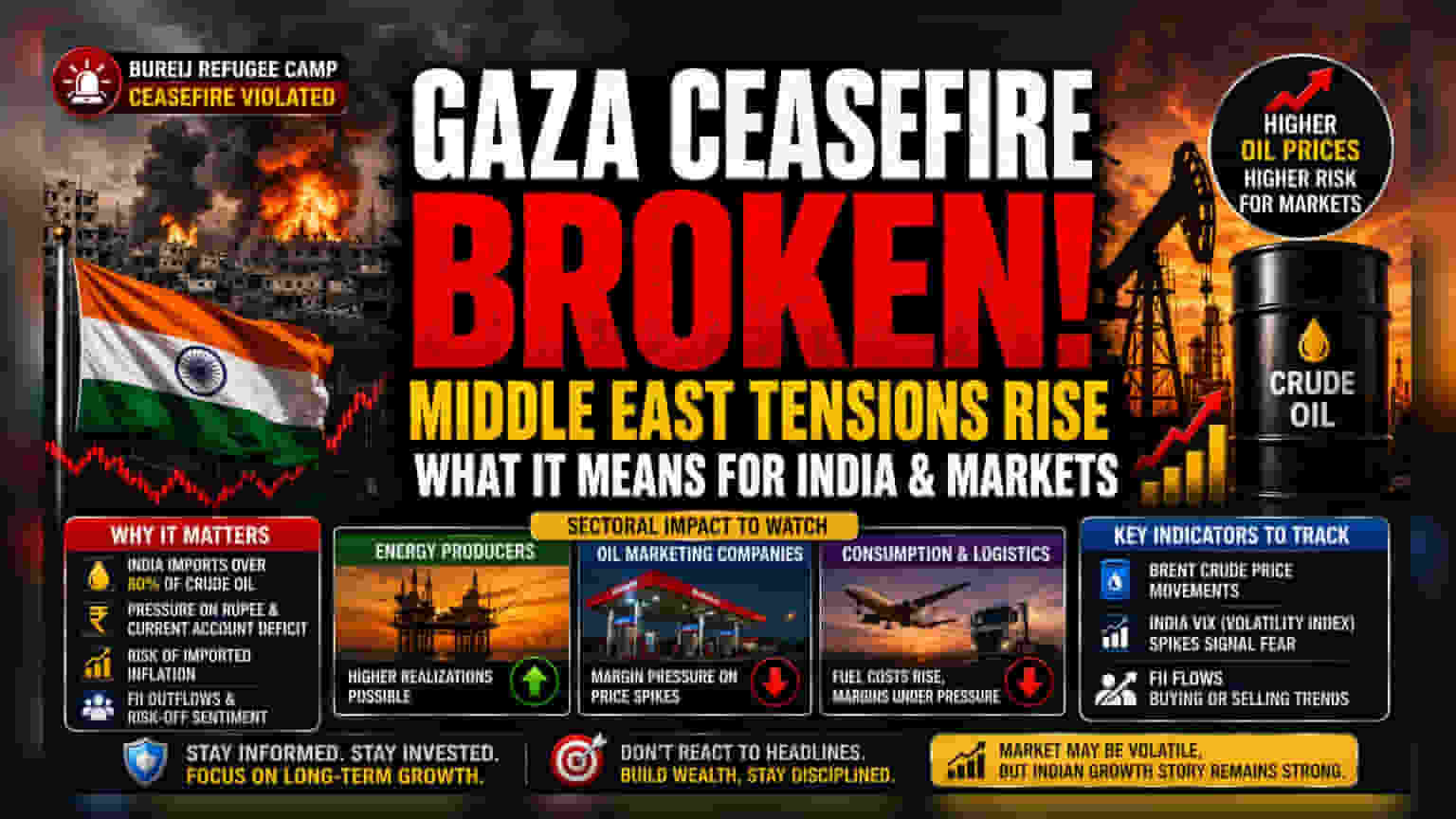


Gaza mein ceasefire tootne ki khabron ke baad, Indian investors ab global energy prices aur market sentiment par padne wale asar ko samajh rahe hain. Middle East mein badhti hui anishchitata aksar crude oil mein tezi laati hai, jo India ki import-dependent economy, inflation, aur alag-alag sectors ki profitability ke liye bahut matter karta hai.
Kya Hua?
Recent reports ke mutabik, Gaza Strip mein ceasefire tut gaya hai aur Bureij refugee camp mein wapas military activity shuru ho gayi hai. Ye escalation kuch samay ki shanti ke baad hua hai, jisne Middle East mein stability ko lekar naye concerns khade kar diye hain. Indian stock market participants ke liye, ye development ek reminder hai ki desh geopolitical risks se exposed hai, khas kar jab region global energy supply chain mein ek critical role nibhata hai.
Investors Ke Liye Ye Kyun Matter Karta Hai?
Indian stock market ke liye, Middle East sirf ek political hotspot nahi, balki ek crucial economic variable hai. India ek net crude oil importer hai, aur apni 80% se zyada energy requirements ke liye imports par depend karta hai. History mein, regional conflict mein koi bhi bada escalation oil prices mein 'geopolitical risk premium' dal sakta hai. Jab crude oil prices badhti hain, toh yeh ek chain reaction create karta hai jo Indian economy ko affect karta hai.
Investors usually aise samay mein teen main factors par nazar rakhte hain: Indian Rupee (INR) par impact, Current Account Deficit par pressure, aur imported inflation ka risk. Lagatar badhte oil costs se Indian companies ke profit margins kam ho sakte hain, khas kar un sectors ke liye jo raw material ke taur par oil par zyada depend karte hain. Iske alawa, geopolitical uncertainty aksar Foreign Institutional Investors (FIIs) ke beech 'risk-off' sentiment ko trigger karti hai, jo temporarily capital ko US Dollar ya gold jaise safer assets ki taraf shift kar sakte hain, jisse India jaise emerging markets se outflows ho sakte hain.
Crude Oil Aur Inflation Ka Connection
Crude oil ek primary industrial feedstock ka kaam karta hai. Jab prices spike karti hain, toh yeh poori economy mein production aur logistics ke cost ko badha deta hai. Reserve Bank of India (RBI) ke liye, higher oil prices inflation management ko aur complicated bana deti hain. Agar energy prices lambe samay tak zyada rehti hain, toh companies ko yeh costs consumers par pass karna pad sakta hai, jisse discretionary demand kam ho sakti hai. Iske vipreet, lower ya stable oil prices generally Indian economy ko fayda pahunchati hain, import bill kam karti hain aur dusre investments ke liye capital free karti hain.
Monitor Karne Ke Liye Sectoral Impact
Alag-alag industries oil-related volatility par alag-alag tarah se react karti hain. Investors aksar distinct exposures wale sectors par dhyan dete hain.
- Energy Producers: Upstream oil companies, jo crude extract aur sell karti hain, global oil prices badhne par apni realizations mein sudhar dekh sakti hain. Lekin, net impact government ki tax aur pricing policies par depend karta hai.
- Oil Marketing Companies (OMCs): Yeh companies crude buy aur refine karti hain. Achanak price spikes se margin pressure aa sakta hai agar woh fuel pump par consumers ko poori costs pass nahi kar paati hain. Lekin, kam hoti oil prices se unki marketing margins aur working capital health mein sudhar ho sakta hai.
- Consumption aur Logistics: Airlines, paint manufacturers, tyre makers, aur logistics firms fuel costs ke liye highly sensitive hain. Badhti oil prices aksar in sectors ke liye direct headwind ka kaam karti hain, jisse unke operating margins dabaav mein aa jaate hain. Iske vipreet, jab oil prices kam hoti hain, toh in industries ko apni profitability outlook mein sudhar milta hai.
Aage Investors Ko Kya Track Karna Chahiye?
Jaise situation fluid bani hui hai, investors market ke response ko gauge karne ke liye kuch key indicators monitor kar sakte hain. Pehle, Brent Crude prices ki movement ek critical gauge hogi ki market supply risk ko kaise perceive kar rahi hai. Dusre, India VIX, ya volatility index, aksar market ke fear levels ko reflect karta hai; sharp rise usually increased investor caution signal karta hai. Aakhir mein, FII buying ya selling patterns ka data dekhna important hoga, kyunki yeh flows Indian large-cap space mein liquidity ke primary drivers mein se hain. Daily headlines ke basis par market ko time karne ki koshish karne ke bajaye, long-term investors generally Indian corporates ki structural growth par focus karte hain, jisne historically alag-alag geopolitical cycles mein resilience dikhai hai.