 Whalesbook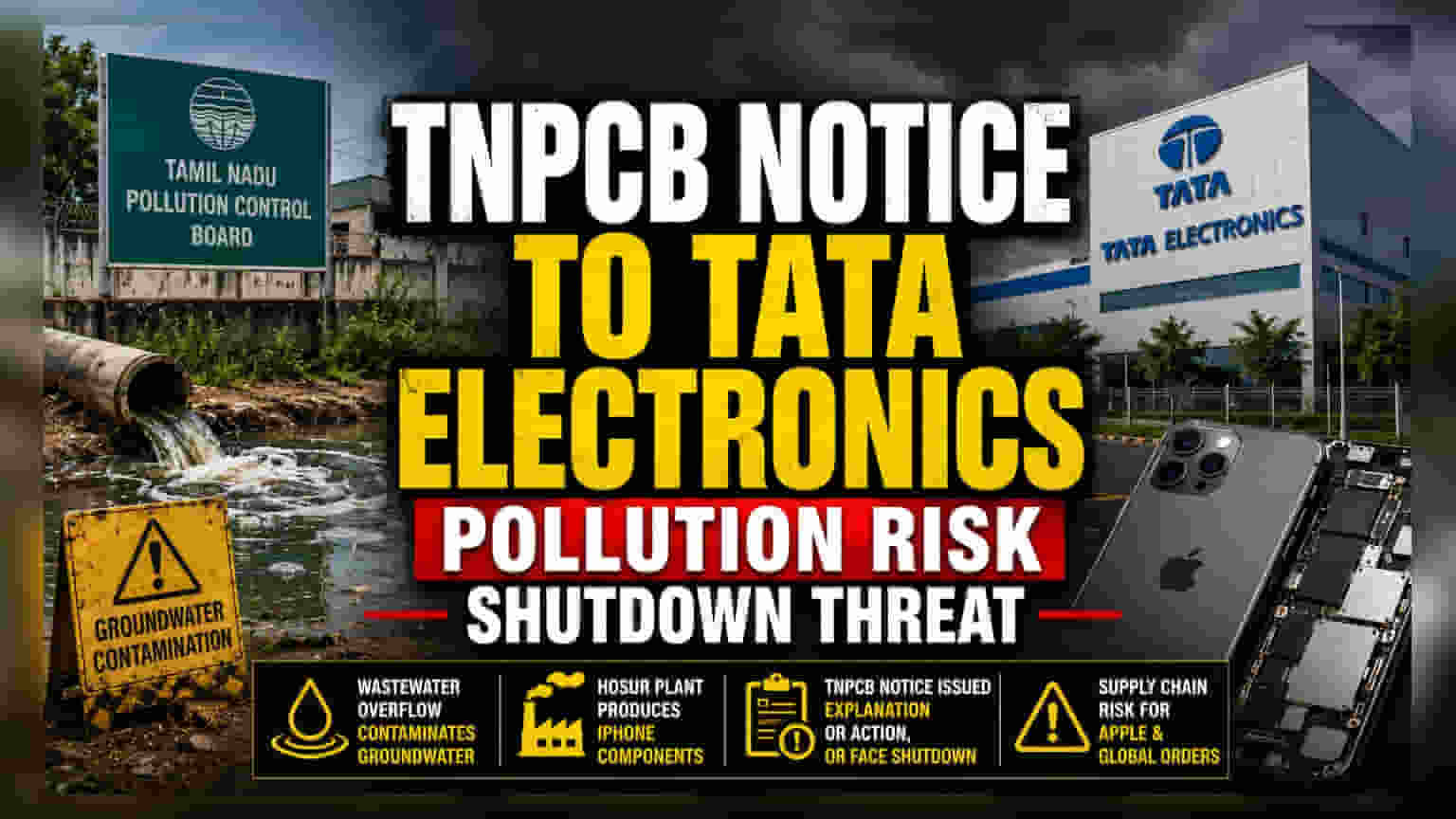


Arey yaar, Tata Electronics ke Hosur plant ka scene tight ho gaya hai! Tamil Nadu Pollution Control Board (TNPCB) ne warning di hai ki agar unhone wastewater se ground water contamination ka issue solve nahi kiya, toh plant band ho sakta hai. Yeh plant Apple ke iPhone components banata hai, toh investors ko dhyan dena padega.
Kya hua?
Tamil Nadu Pollution Control Board (TNPCB) ne Tata Electronics ko ek notice bheja hai, jisme kaha gaya hai ki Hosur mein unka plant groundwater ko contaminate kar raha hai. Reason diya hai ki rainwater harvesting pond se wastewater bahar nikal kar zameen mein mil raha hai. Board ne warning di hai ki agar company ne sahi explanation nahi diya ya problem solve nahi ki, toh plant ko band karna pad sakta hai. Yeh plant iPhone ke liye components, jaise back panels, banata hai, jo Apple ki supply chain ke liye bahut important hain.
Investors ke liye kyun important hai?
Market walon aur investors ke liye yeh situation electronics manufacturing mein operational risks ko highlight karti hai. Tata Electronics, Tata Group ka hissa hai aur India ko electronics manufacturing hub banane mein badi role play kar raha hai. Hosur jaisi badi facility mein agar koi disruption aata hai, toh poori supply chain par asar pad sakta hai. Apple jaise global companies ke suppliers ke liye strict environmental standards follow karna zaroori hota hai. Agar norms follow nahi kiye gaye, toh production delay, company ki reputation ko nuksan, ya contracts cancel ho sakte hain. Isliye, company ka regulatory issues ko jaldi solve karna bahut zaroori hai.
Environmental Compliance ka angle
Electronics manufacturing mein, especially chemical processes mein, wastewater ko safely dispose karna bahut zaroori hota hai. Reports ke mutabik, local farmers ne apne kuanon mein paani ki quality kharab hone ki complaint ki thi, jiski wajah se TNPCB ne December 2025 aur May 2026 ke beech mein inspections kiye. Regulator ka kehna hai ki company ne pehle diye gaye corrective actions ko poori tarah se implement nahi kiya hai. Halanki Tata Electronics ka kehna hai ki unke internal analysis ke hisab se woh norms follow kar rahe hain, phir bhi state regulator ke saath yeh dispute plant ki operations ke liye uncertainty paida kar raha hai.
Business ka bada picture
Yeh sab India ke uss effort ka hissa hai jahan global electronics firms ko attract karne ki koshish ki ja rahi hai. Jaise-jaise Apple aur doosri tech companies apni manufacturing India mein shift kar rahi hain, operations ka scale bhi badh raha hai. Is growth ke saath hi government regulators aur local communities ki taraf se land, water, aur resources par hone wale asar ko lekar scrutiny bhi badh rahi hai. Companies se expect kiya jata hai ki woh rapid expansion ke saath sustainable practices ko bhi balance karein. Jab yeh balance bigadta hai, toh regulatory bottlenecks aa sakti hain jo manufacturing ki speed aur cost ko affect karti hain.
Kya galat ho sakta hai?
Sabse bada risk toh yeh hai ki agar TNPCB company ke explanation se satisfy nahi hua, toh plant ko temporary band kar diya ja sakta hai. Thodi der ke liye bhi band hone se production backlog aur costs badh sakte hain. Iske alawa, aise issues company ke bade clients ke saath relationship ko bhi affect kar sakte hain, jo ESG (Environmental, Social, and Governance) targets ko prioritize karte hain. Agar problem solve nahi hui, toh zyada strict oversight ya aur regulatory penalties lag sakti hain, jo company ke production plans ko complicated bana degi.
Investors ko kya track karna chahiye?
Sabse important hoga ki TNPCB se agli official communication kya aati hai aur Tata Electronics wastewater discharge process ko theek karne ke liye kya steps uthata hai. Investors aur industry observers dekhenge ki company ne future leaks ko rokne ke liye required infrastructure upgrades kiye hain ya nahi. Iske alawa, management ki taraf se production continuity ko lekar koi bhi public statement bhi important hogi yeh samajhne ke liye ki company ke order fulfillment aur business stability par kya asar pad sakta hai.