 Whalesbook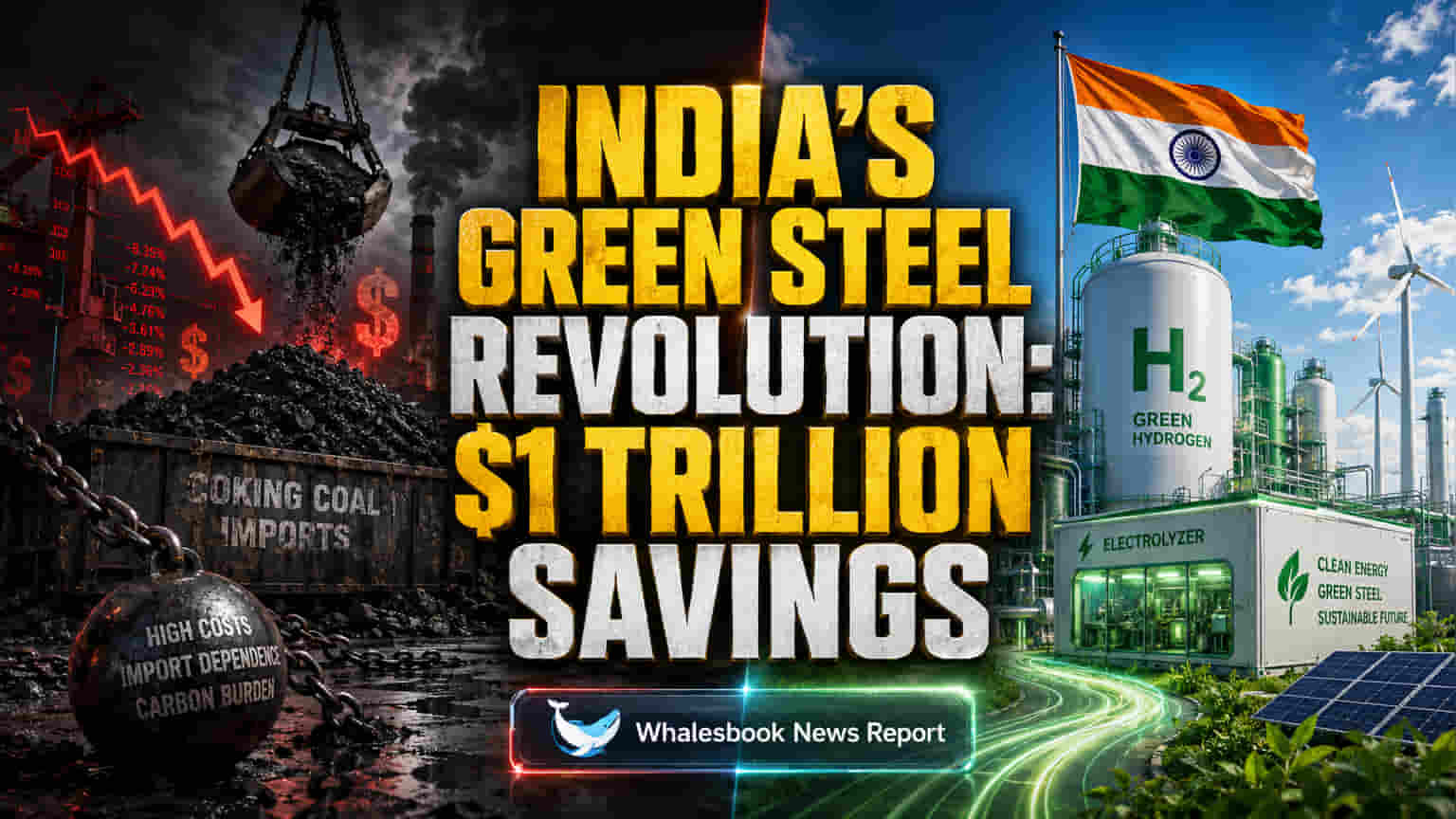


Socho, India ka steel sector aane wale 10 saal mein apni capacity lagbhag double karne wala hai. Lekin IECC ki report kehti hai ki agar woh traditional blast furnaces par hi depend rahe, toh next 40 saal mein unko 6 billion tonnes coking coal import karna padega, jispar lagbhag $1 Trillion kharch ho sakta hai! Yeh dependency Indian steel industry ko global market ke fluctuations aur currency ke bada swings ke liye vulnerable bana deti hai. Example ke liye, May 2026 mein coking coal prices $238 per tonne the, jo pichle saal se 26.60% zyada the.
Ab yeh log ek smart alternative dekh rahe hain: 'Green Steel', jo green hydrogen se banega. India mein renewable energy ki koi kami nahi hai, toh green hydrogen domestic level par produce ho sakta hai. Umeed hai ki 2030 tak iski cost $3 per kilogram ho jayegi, aur India's National Green Hydrogen Mission toh $1.5 per kilogram ka target rakhe hue hai! Green steel production shuru mein traditional methods se sirf 5-10% zyada mehnga ho sakta hai, par long term mein faayda hi faayda hai.
Sabse bada advantage: currency ka. Coking coal ko humesha US dollars mein buy karna padta hai, jis se currency risk badhta hai. Lekin green hydrogen ke liye renewable energy contracts rupees mein ho sakte hain, matlab stable long-term costs!
Aur yeh shift sirf paisa bachane ke liye nahi hai. European Union ka Carbon Border Adjustment Mechanism (CBAM) jaise rules aa rahe hain. Iske under, agar India se high-carbon steel export hua, toh 2034 tak unhein $210-$243 per tonne tak ka carbon levy dena pad sakta hai. EU toh 2028 tak 180 se zyada steel products par bhi CBAM lagane wala hai. India ki apni National Steel Policy 2017 bhi keh rahi thi ki 2030 tak coking coal imports ko 50% tak kam karna hai.
Magar bhai, yeh transition itna bhi easy nahi. Naye green steel infrastructure mein bahut paisa lagana padega (CapEx), aur technology abhi develop ho rahi hai. Issi wajah se, Tata Steel (P/E 39.17), JSW Steel (P/E 41.90), aur SAIL (P/E 27.75) jaise stocks abhi se hi expensive lag rahe hain. Jabki industry average P/E 28.02 hai, JSW Steel ka 41.90 hona yeh dikhata hai ki market ko bahut umeed hai. Agar green steel adoption mein koi delay hua toh yeh valuations gir bhi sakte hain. Aur haan, abhi bhi India apna 90% coking coal import karta hai. Australia mein koi flood aa jaye (jaise January 2026 mein Queensland mein aaya tha, jab coal prices $252.5/tonne pahunch gaye the) toh bhi prices jump kar sakte hain.
Anyway, government policies ke support se India ka steel production 2030 tak 300 million tonnes tak pahunchne ka target hai. Strong demand aur sustainable production ka push industry ko aage badha raha hai. Green hydrogen initiatives successful ho gaye, toh India global steel leader ban sakta hai.