 Whalesbook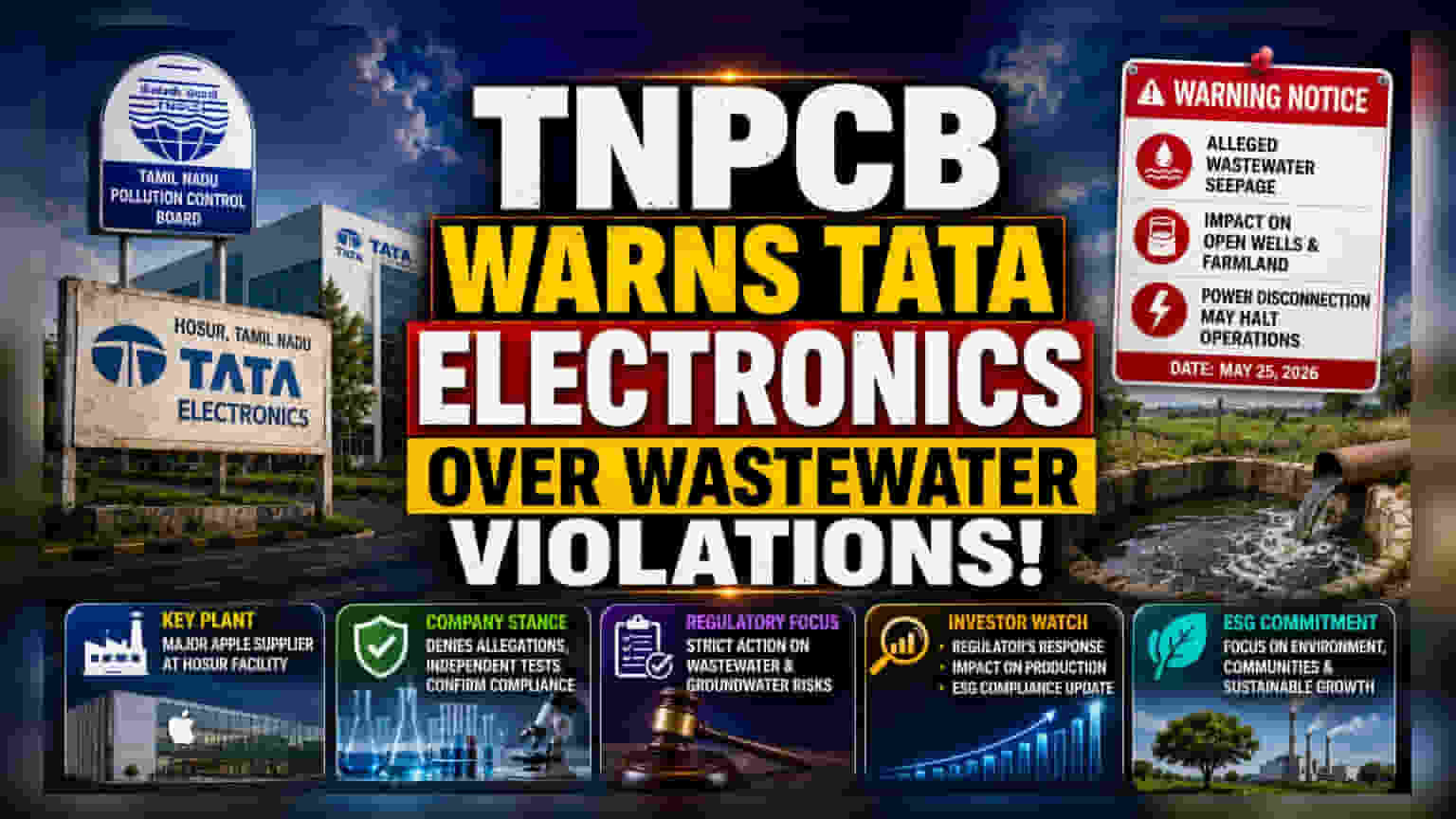


Tata Electronics ka Hosur wala plant mushkil mein hai. Tamil Nadu Pollution Control Board ne warning di hai, keh rahe hain ki factory se nikla pani local zameen mein mil raha hai. Agar baat nahi bani toh bijli ka connection kaat denge! Company ne in sab baaton ko 'deny' kiya hai.
Kya hua?
Tamil Nadu Pollution Control Board (TNPCB) ne Tata Electronics ke Hosur, Tamil Nadu wale manufacturing plant ko ek warning notice bheji hai. Ye notice 25th May, 2026 ko di gayi hai aur isme plant mein wastewater management ko lekar kuch alleged galatiyon ka zikr hai. Board ka kehna hai ki plant se nikla hua contaminated water aas-paas ke kheton mein maujood khule kuon mein jaa raha hai, jis se zameen ke pani mein milavat ka khatra hai. Board ne ye bhi kaha hai ki agar mamla theek nahi hua toh factory ki bijli ka connection bhi kaata ja sakta hai, jisse production band ho jayegi.
Investors ke liye ye kyun matter karta hai?
Investors ke liye sabse badi chinta yahi hai ki kya plant ka kaam rukega ya nahi. Hosur plant India ke electronics manufacturing sector ka ek important hissa hai, aur yeh Apple ke iPhone ecosystem ke liye components supply karta hai. Apple jaise bade global companies apne suppliers se strict environmental, social, aur governance (ESG) standards follow karne ki ummeed rakhte hain. Agar production mein koi bhi rukawat aati hai ya environmental issue lamba chalta hai, toh critical electronic components ki supply mein uncertainty aa sakti hai.
Company ka kya kehna hai?
Tata Electronics ne in saare aaropon ko poori tarah se kharij kar diya hai. Company ne kaha hai ki unhone ek independent laboratory se analysis karwaya hai, jiske results confirm karte hain ki facility saare regulatory norms ko follow kar rahi hai. Tata Electronics ne responsible business practices, environment protection, aur local communities ki well-being ke liye apne commitment ko bhi highlight kiya hai. Unhone official taur par authorities ko apni side explain kardi hai aur claim ko contest kiya hai.
Regulatory aur ESG Context
India mein bade industrial projects ke liye environmental compliance bahut important hai. Regulators ab wastewater discharge aur iska local agriculture aur groundwater par hone wale impact ko lekar kaafi serious hain. Jab bade manufacturing units par environmental rules todne ka aarop lagta hai, toh state board inspections karta hai aur serious cases mein utility connection kaatne ki dhamki bhi de sakta hai. Investors ke liye, ye is baat ko underscore karta hai ki companies apne environmental footprint ko kaise manage karti hain aur local regulatory scrutiny ko kaise deal karti hain. Ismein fail hone se legal problems, fines, aur reputation damage ho sakta hai jo investor sentiment ko affect kar sakta hai.
Investors ko kya track karna chahiye?
Is situation mein investors ko kuch cheezon par nazar rakhni chahiye. Sabse pehle, TNPCB ka agla response dekho, company ke submission ke baad. Investors ye jaanana chahenge ki kya regulator company ke independent test results ko maanta hai ya koi aur action leta hai. Dusra, Hosur facility se production capacity ya shipping schedules par koi bhi potential impact monitor karna chahiye, kyunki iska supply chain par effect pad sakta hai. Aur teesra, company ke environmental management systems aur global ESG standards ke saath continued alignment par future updates investors ka confidence banaye rakhne ke liye zaroori honge.