

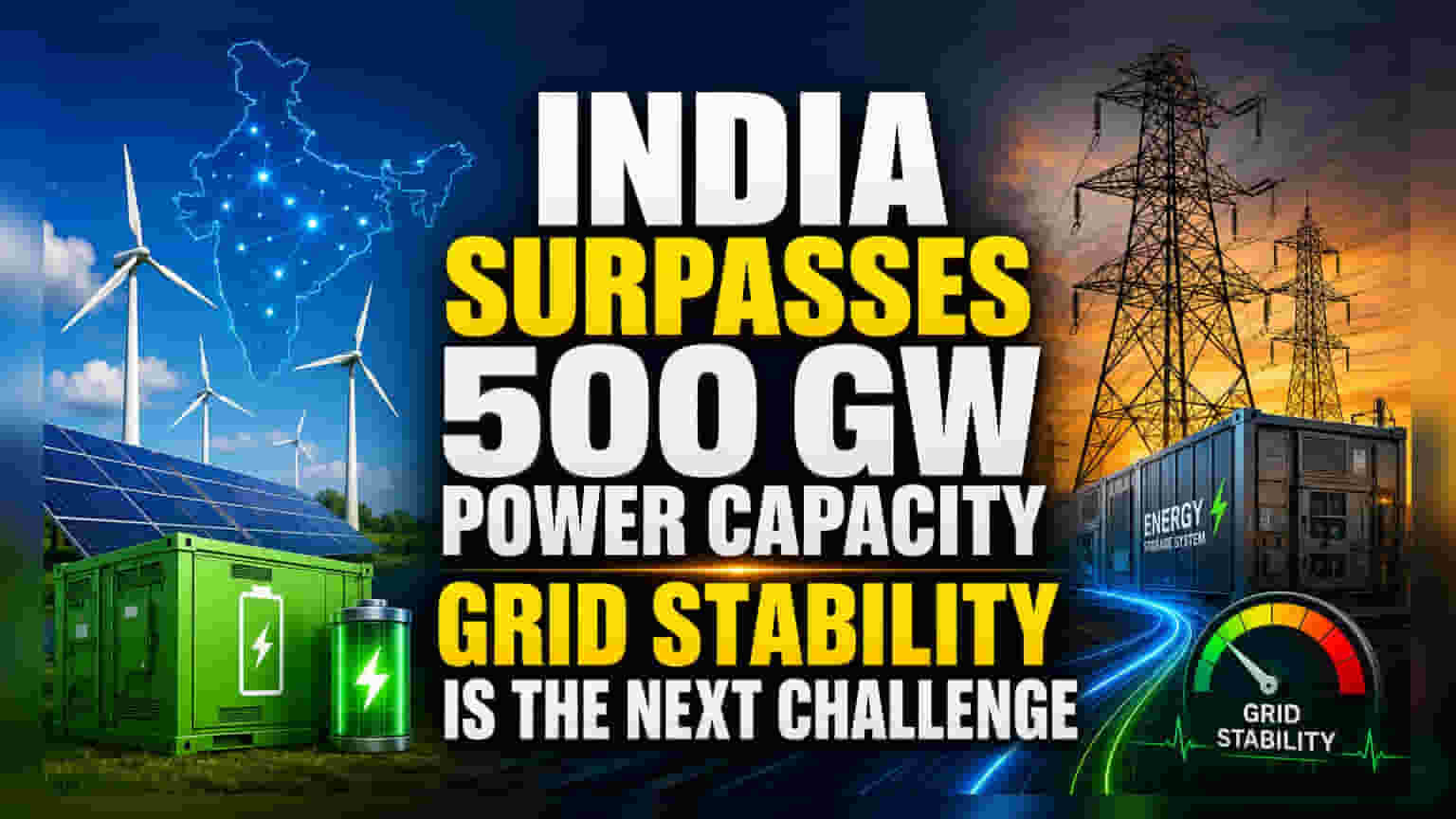
India ka power grid ab thoda pressure mein hai kyunki renewable energy capacity **500 GW** cross kar gayi hai. Old infrastructure ko variable energy manage karne mein dikkat aa rahi hai, isliye ab focus battery storage jaise solutions par ja raha hai. Investors ko transmission companies, renewable energy firms, aur power distribution utilities par nazar rakhni chahiye.
Kya Hua?
India ne 500 GW installed power capacity ka milestone paar kar liya hai, jisme se 50% se zyada low-carbon sources jaise wind aur solar se aa raha hai. Lekin, Power Ministry ki committee ne bataya hai ki national grid is rapid growth ko handle karne mein struggle kar raha hai. Existing transmission infrastructure, jo mostly thermal power ke liye bana tha, renewable energy ke intermittent flow ko sambhalne mein dikkat mehsoos kar raha hai. Isse grid stability ko lekar chinta badh gayi hai, khaas kar un states mein jahan power curtailment (energy supply kam karna) ek risk ban gaya hai.
Investors Ke Liye Kyun Important Hai?
Renewable energy ki taraf badhta trend power sector mein paisa kahan lagaya ja raha hai, yeh badal raha hai. Data centers aur semiconductors jaise sectors ki fluctuating demand ko green energy ki uneven supply ke saath balance karna ek challenge hai, jiske liye grid-forming technology ki zaroorat pad rahi hai. Ye shift transmission infrastructure aur energy storage solutions mein involved companies ke liye faydemand ho sakta hai. Renewable energy producers ke liye, grid stability bahut zaroori hai kyunki agar grid unki generated power nahi le paata, toh curtailment se unke revenue par asar pad sakta hai.
Storage Aur Transmission Ki Taraf Shift
Is volatility ko address karne ke liye, policymakers Battery Energy Storage Systems (BESS) aur pumped hydro projects ko dekh rahe hain. Ye technologies din mein excess energy absorb karti hain aur peak demand ke time release karti hain, jisse grid stable rehta hai aur thermal plants ko back down karne ki zaroorat kam hoti hai. Business sector ke liye, iska matlab hai ki future capital spending pure power generation se hatkar energy delivery support karne wale infrastructure par shift hoga. Grid-forming inverters, STATCOMs (voltage stability improve karne wale devices), aur storage solutions provide karne wali companies focus mein rahne wali hain kyunki government ek resilient grid ke liye push kar rahi hai.
Cost Aur Operational Risks
Sabse badi concerns mein se ek hai distribution utilities (Discoms) par financial strain. Jab grid stressed hota hai, Discoms ko peak shortages ke dauran mehngi power kharidni pad sakti hai, bhale hi unke paas alag samay par excess renewable power ho. Power kab generate ho rahi hai aur kab zaroorat hai, iske beech ka mismatch—jise 'Duck Curve' bhi kehte hain—value chain mein cost pressure create karta hai. Agar transmission infrastructure renewable projects ke saath pace nahi rakhta, toh project delays aur cost overruns ka risk badh jaata hai, jo large energy developers ke return on investment ko affect karta hai.
Investors Ko Kya Track Karna Chahiye?
Investors BESS aur transmission projects ke liye aane wale government tenders par nazar rakh sakte hain, jo grid modernization ki speed ko signal denge. Storage services ke liye regulatory frameworks, grid-forming equipment ke liye updated technical standards, aur curtailment face karne wale renewable producers ke liye compensation mechanisms par policy updates critical hongi. Iske alawa, state-level transmission networks ka large-scale renewable integration handle karne ke liye ready hona, renewable energy projects ki long-term viability ke liye ek key factor hoga.