 Whalesbook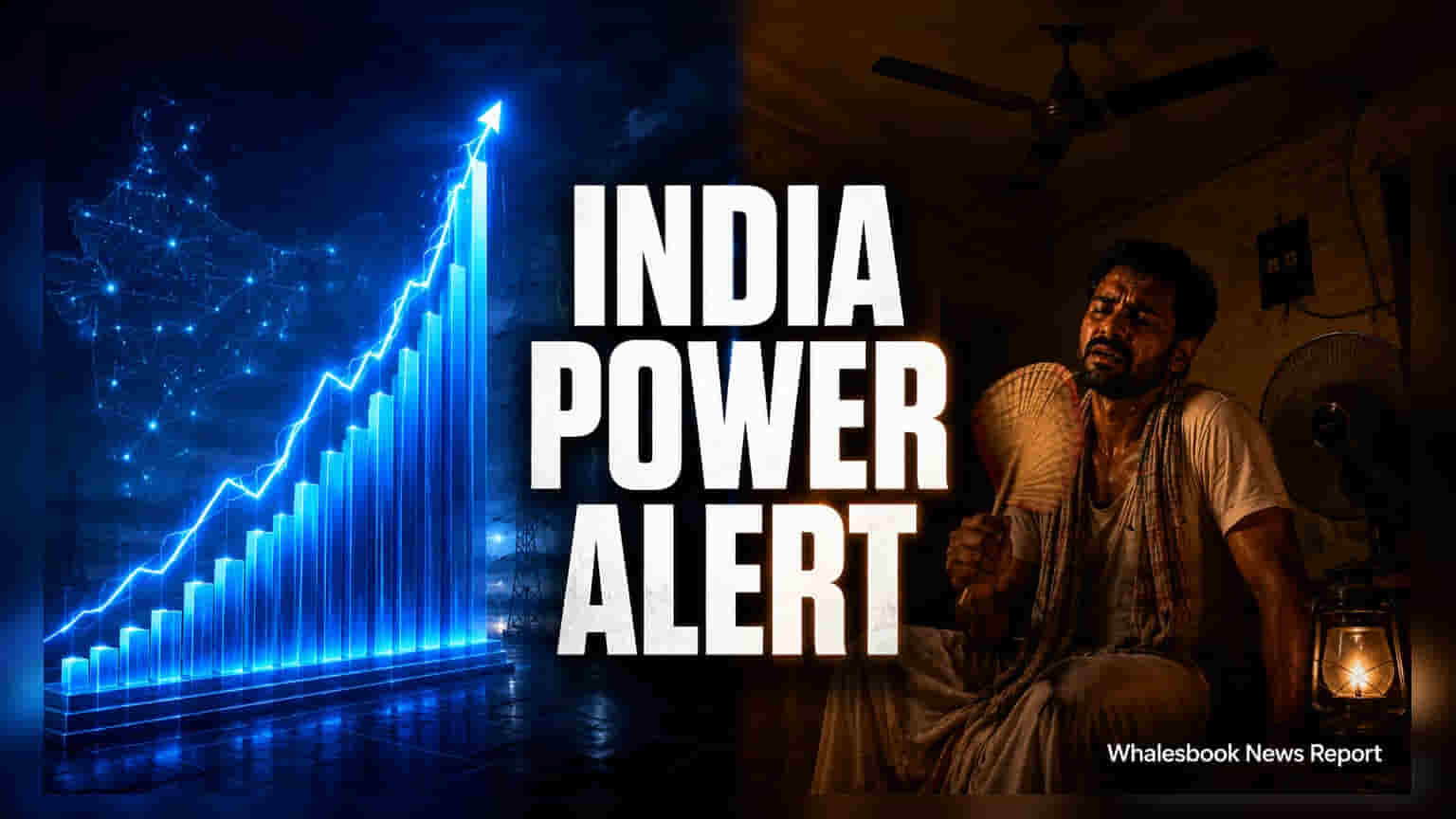


Grid par pressure, garmi ka effect!
Iss baar India ki electricity grid ki tight condition hai. Ekdum se bijli ki maang 271 Gigawatts tak pahunch gayi hai, kyunki ekdum se bahut tez garmi pad rahi hai. Is wajah se, Ministry of Power ne sabko request kiya hai ki woh electricity ka use thoda kam karein. Is demand ka sabse bada reason hai AC ka bharpoor istemaal, jo bade shehron se lekar chote gaon tak mein ho raha hai. Isse India ke energy consumption ka pattern badal gaya hai.
Solar nahi, toh Coal chahiye!
Officials keh rahe hain ki grid maang poori kar sakti hai, lekin ye situation dikha rahi hai ki hum coal power plants par kitne zyada depend karte hain. Din mein solar energy lagbhag 150 GW supply karti hai, jo almost 1/3rd load sambhal leta hai. Lekin jaise hi solar band hota hai, toh peak demand ke liye 2/3rd se zyada reliance coal par aa jata hai. Iske alawa hydro, wind, aur nuclear bhi hain. Yeh dependence energy mix mein ek vulnerability dikhaati hai.
Capacity hai, par supply cut!
Sabhi regions mein power supply kam nahi hai, lekin phir bhi kai jagahon par bijli cut ho rahi hai. Ministry ke ek senior official ne explain kiya hai ki yeh cut overall power supply ki kami se nahi, balki local distribution network mein problems ki wajah se ho rahe hain. Data dikhata hai ki Thursday shaam ko peak demand ke time 2.6 GW ka temporary shortfall tha jab solar power nahi tha. Iska matlab hai ki grid mein total capacity toh hai, par bijli pahunchane ka infrastructure har jagah strong nahi hai.
Naye consumption patterns, naye challenges
Semi-urban aur rural areas mein AC ka badhta istemaal India ke energy consumption mein ek bada change hai. Yeh badhti hui maang, zyada AC units aur badhte temperatures ki wajah se, grid operators ke liye stability maintain karna ek mushkil task ban gaya hai. Lambe samay ke liye infrastructure mein investment aur adaptive energy policies ki zaroorat hai. Ministry of Power states ke saath energy conservation aur power assets ke behtar use par discuss kar rahi hai.
Global scenario aur energy security
Yeh sab tab ho raha hai jab poori duniya mein energy ki maang badh rahi hai aur extreme weather events power grids ko affect kar rahe hain. Countries apni energy security aur infrastructure ko climate change ke impacts ke liye re-assess kar rahe hain. India ka experience ek case study hai ki kaise badhti energy needs ko manage kiya jaye aur saath hi clean sources ki taraf transition kiya jaye, woh bhi climate change ke threat ke beech. Desh ki future energy strategy mein reliable power aur decarbonization goals ko balance karna hoga.