 Whalesbook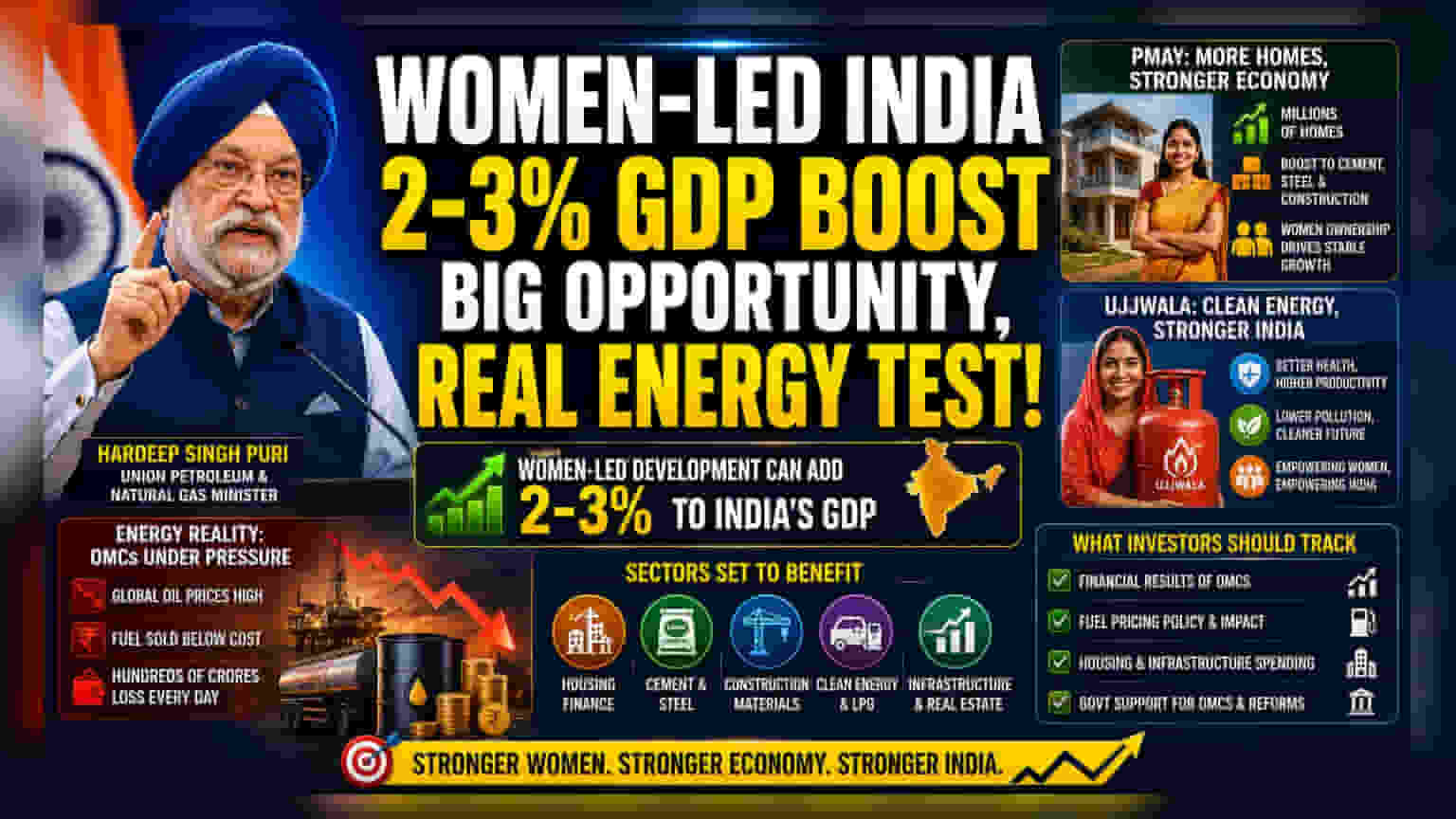


Union Minister Hardeep Singh Puri ne bola hai ki "women-led" development se India ki GDP mein **2-3%** ka boost aa sakta hai. Housing aur clean energy par focus hai, par investors ki nazar state-run oil companies par hai jo fuel prices stable rakhne ke liye apna nuksaan jhel rahi hain.
Kya Hua?
Union Petroleum aur Natural Gas Minister Hardeep Singh Puri ne bataya ki India ab "women-centric" se "women-led" development ki taraf ja raha hai. Unka kehna hai ki isse desh ki GDP 2-3% tak badh sakti hai. Government ka focus Pradhan Mantri Awas Yojana (PMAY) aur Ujjwala scheme par hai, jisse women ko asset ownership aur clean energy mile.
Investors Ke Liye Kyun Hai Khaas?
"Women-led" development ka yeh focus India ke stock market ke liye important sectors se juda hua hai. Jaise PMAY ke under naye housing units banne se housing finance, cement, steel aur construction materials ki demand badhegi. Jab women owner hoti hain, toh consumption patterns change hote hain, jo long-term investment decisions ko stable karte hain.
Ujjwala scheme se bhi energy consumption mein fark aayega. Clean energy use karne se households ki health aur productivity badhegi, jisse overall economy strong hogi.
Energy Sector Ki Sachchai
Minister ki vision long-term growth ki hai, lekin energy sector filhaal mushkil financial pressure mein hai. Minister Puri ne energy security par bhi baat ki aur kaha ki government ne global oil prices ki volatility se Indian households ko bachaya hai.
Par iska ek financial cost hai. Indian Oil Corporation (IOC), Bharat Petroleum Corporation (BPCL), aur Hindustan Petroleum Corporation (HPCL) jaise public sector Oil Marketing Companies (OMCs) financial strain mein hain. Reports ke according, ye companies roz hundreds of crores ka under-recovery jhel rahi hain, yani ki fuel ko cost se kam price par bech rahi hain, taaki prices stable rahe. Investors ke liye ye situation difficult hai - consumer ke liye toh relief hai, par OMCs ke profit margins aur balance sheets par pressure aa raha hai.
Kya Galat Ho Sakta Hai?
Sabse bada risk hai ye subsidies kitne time tak chalengi. OMCs ki financial health global crude oil prices par depend karti hai. Agar prices lambe time tak high rahe, toh OMCs ka daily loss badh sakta hai, jisse government ko intervene karna padega ya phir fuel prices badhani padengi. Aisa hua toh inflation aur consumer spending par asar padega, jo poore stock market ke liye important hai.
Investors Ko Kya Track Karna Chahiye?
Investors ko ye dekhna hoga ki government social aur energy goals ko state-owned companies ki financial health ke saath kaise balance karti hai. Kuch important points ye hain:
- OMCs ke financial results: Dekhna hoga ki wo under-recovery burden kaise manage kar rahe hain.
- Fuel pricing par policy announcements: Ye seedha energy sector ki profitability ko affect karega.
- Infrastructure aur housing spending updates: Ye construction aur real estate sectors ki demand ka signal denge.
- Government ke measures: Koi special support ya excise duty adjustments jo OMCs ka financial pressure kam kar sakein.