 Whalesbook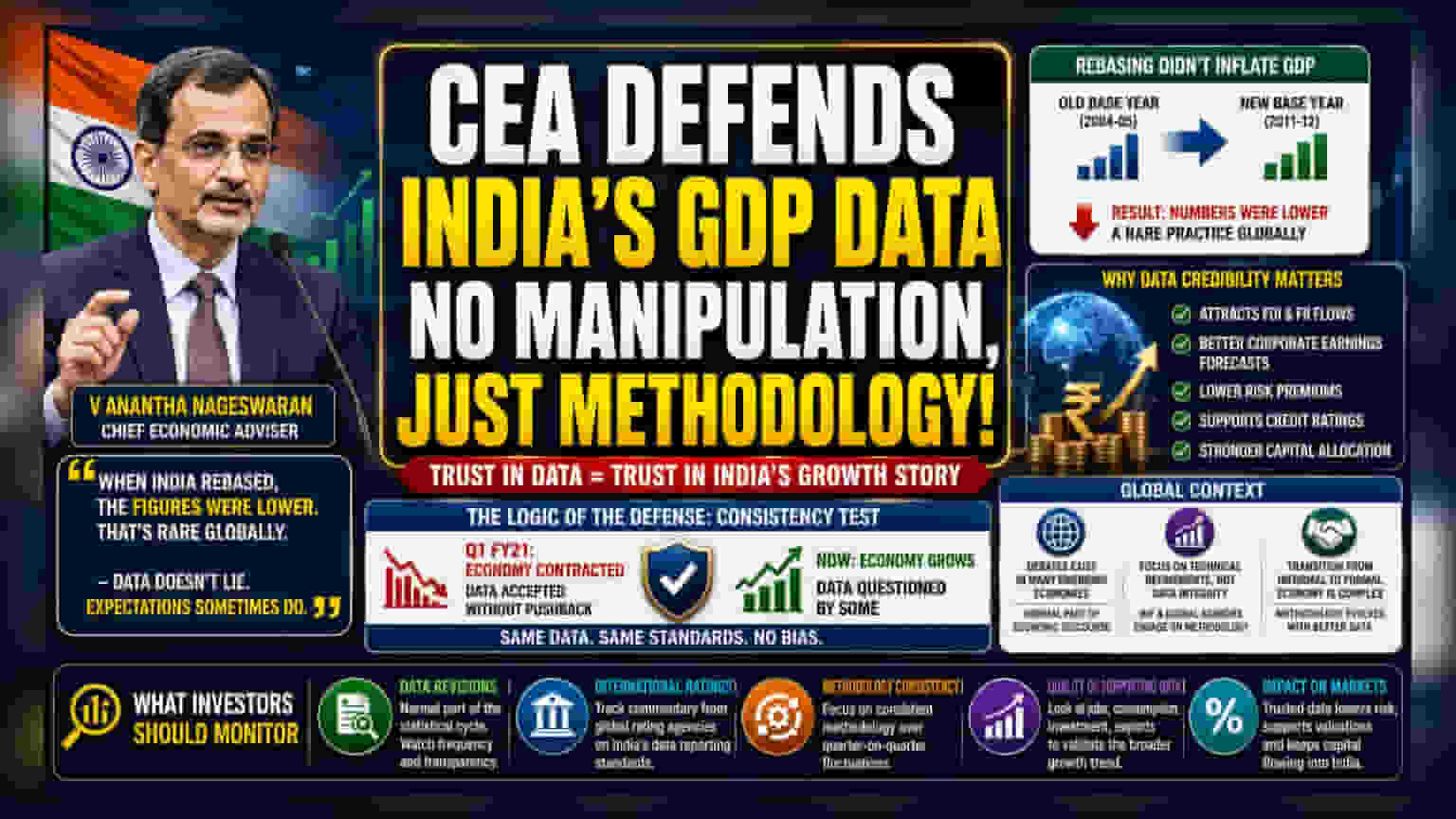


Chief Economic Adviser V Anantha Nageswaran ne kaha hai ki India ka GDP calculation ekdum sahi hai, koi jhoot moot ka figures nahi dikhaye ja rahe. Investors ke liye yeh sahi data bahut important hai taaki foreign investors ka bharosa bane aur country ka risk premium sahi estimate ho sake.
Kya Hua?
Chief Economic Adviser (CEA) V Anantha Nageswaran ne India ke economic growth figures ke credibility par chal rahe debates par sakht jawab diya hai. Recent statement mein, CEA ne is baat ko reject kiya ki government statistical methodology ya base years ko manipulate karke Gross Domestic Product (GDP) numbers ko artificially badha rahi hai. Unhone bataya ki jab India ne pehle rebasing exercise kiya tha, toh figures actually kam ho gaye the, jo ki international statistical practices mein rare hai. Unka kehna hai ki India globally recognized frameworks follow karta hai aur criticisms tab aate hain jab data external observers ki expectations poori nahi karta, na ki methodology mein koi genuine flaw hone ki wajah se.
Investors ke liye iska kya matlab hai?
Stock market investors ke liye, national economic data ki integrity sirf ek theoretical debate nahi hai. Yeh determine karta hai ki foreign aur domestic capital kaise allocate hoga. Jab economic statistics transparent aur trusted hote hain, toh foreign institutional investors (FIIs) aur global rating agencies ke liye perceived risk kam ho jata hai. Reliable data se corporate earnings, interest rate trajectories aur overall market risk ka better forecast lagana mumkin hota hai. Agar international investors ko lage ki economic data manipulate ho raha hai, toh 'trust deficit' create ho sakta hai jisse higher risk premiums ho sakte hain, jiske chalte capital outflows ho sakte hain ya country ke liye borrowing costs badh sakte hain, jo finally corporate sector tak pahunchta hai.
Defense ka Logic?
Data reliability ke argument ko support karne ke liye, CEA ne difficult times mein India ke statistical reporting ki consistency par focus kiya. Unhone note kiya ki jab Indian economy 2020-21 fiscal year ke pehle quarter mein pandemic ki wajah se significantly contract hui thi, toh data ko international bodies ne bina kisi bade pushback ke accept kar liya tha. Unke argument ka core ek consistency test hai: agar market data ko tab accept karta hai jab woh ek negative economic reality dikhata hai, toh logicaly use tab bhi utna hi trust karna chahiye jab data growth dikhata hai. Unhone suggest kiya ki skepticism aksar bias se aata hai jahan critics sirf tab doubt karte hain jab numbers negative narrative ko contradict karte hain.
Global Context
Methodological debates sirf India mein nahi hain; yeh kai emerging markets mein economic discourse ka ek standard part hain. Investors aksar dekhte hain ki countries informal se formal economies mein kaise transition karti hain, kyunki yeh shift GDP measurement ko complex bana sakta hai. Historically, Indian GDP data par criticism informal sector ke measurement aur real growth versus nominal growth calculate karne ke liye different deflators ke use par focus karta raha hai. Jabki IMF jaisi international agencies ne Indian authorities ke saath discussions ki hain, yeh dialogues usually technical refinements par focus karte hain, na ki data ki fundamental honesty par question karne par. Investors usually in technical adjustments ko ek developing economy ke reporting standards ka natural evolution maante hain.
Investors ko kya monitor karna chahiye?
Aage chal kar, market participants ko headline GDP numbers ke beyond bhi dekhna chahiye. Investors data revisions ko track kar sakte hain, jo statistical cycle ka ek normal part hain jab zyada comprehensive information available hoti hai. Market stability ke liye ek key indicator in revisions ki frequency aur transparency hai. Iske alawa, India ke data reporting standards par major international credit rating agencies ki commentary par nazar rakhna faydemand hai, kyunki yeh institutions country ke sovereign credit rating ko directly impact karte hain, jo badle mein Indian companies ke liye cost of capital ko influence karta hai. Methodology ki consistency par focus karna, na ki individual quarter-on-quarter changes par, aksar actual economic trend ka zyada clear picture deta hai.