 Whalesbook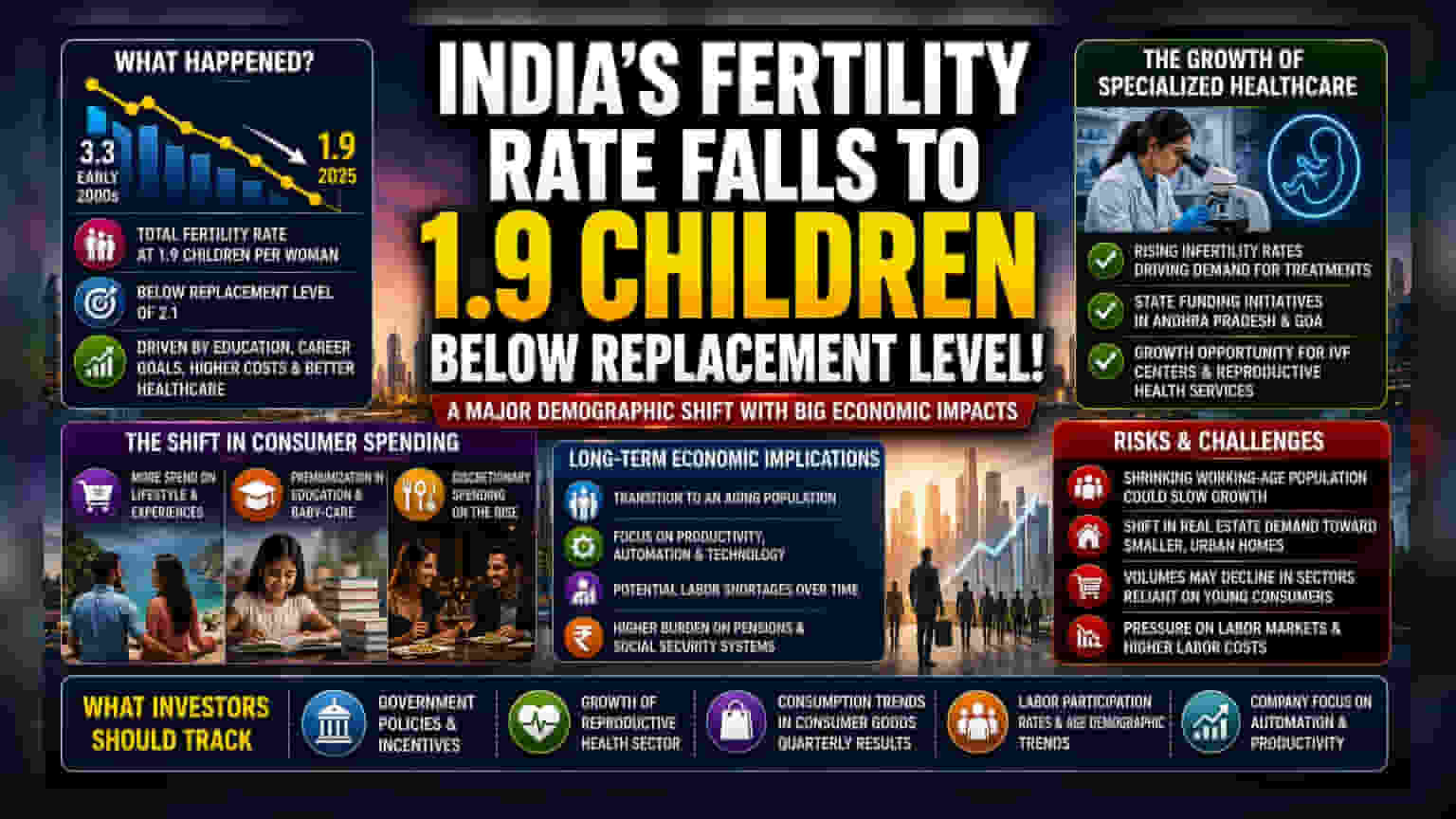


Bhai log, suno! India ki fertility rate ab **1.9** ho gayi hai, jo **2.1** ke replacement level se kam hai. Iska matlab hai ki aane wale time mein logon ke kharch karne ka tareeka badlega, labor market mein changes aayenge, aur kuch special services ki demand badhegi. Investors ko ab premium consumer goods, reproductive healthcare, aur urban housing sectors par nazar rakhni hogi kyunki desh ab fast population growth se mature economy ki taraf ja raha hai.
Kya Hua Hai?
Latest data ke hisaab se, India mein ab har lady 1.9 bachhe paida kar rahi hai. Yeh figure 2.1 ke replacement level se neeche hai, matlab population ab stable rahegi. Pehle early 2000s mein yeh 3.3 tha, toh yeh kaafi bada change hai.
Iske peeche reasons hain education ka badhna, career goals ka change hona, badhti hui mehngai, aur better healthcare access.
Kharch karne ke tareeke mein badlav (Consumer Spending Shift)
Investors ke liye yeh ek long-term signal hai ki logon ka paisa kahan kharch hoga. Jab kam bachhe honge, toh families ka kharch bhi badlega. Aajkal log bachhon par kharch karne ke bajaye travel, dining out, aur experiences par zyada dhyan de rahe hain. Isse discretionary spending sector mein growth dikh sakti hai.
Education aur baby-care sectors ko bhi volume ke bajaye premium, high-value products par focus karna padega, kyunki parents ab quality ko zyada importance denge.
Specialised Healthcare Ka Growth
Report ke mutabik, infertility cases bhi badh rahe hain, isliye reproductive healthcare ek important area ban gaya hai. Andhra Pradesh aur Goa jaise states toh state-funded fertility treatments ke baare mein soch rahe hain. Isse clinics, IVF centers, aur reproductive health services dene wali companies ke liye ek bada business opportunity create ho raha hai.
Jaise-jaise log der se family plan karenge, family planning mein medical help ki zaroorat badhegi.
Long-Term Economic Asar
Economic point of view se, India ab fast population growth wale phase se nikal kar ek mature phase mein enter kar raha hai. Kam fertility rate ka matlab hai ki population dheere dheere age karegi, jisse labor market par asar padega. Start mein current working-age population par focus rahega, but long-term mein companies ko labor pool ke bajaye productivity improvements par zyada depend karna padega. Iske liye automation aur technology mein investment zaroori hoga.
Risks Aur Challenges
Investors ko yeh bhi dhyan rakhna chahiye ki kam birth rate ke apne risks hain. Jaise-jaise population age karegi, pension aur social security systems par pressure badhega. Agar working-age population kam hui toh economic growth bhi slow ho sakti hai.
Real estate mein bhi changes aa sakte hain. Bade, family-sized homes ki jagah ab chhote, urban, aur lifestyle-oriented homes ki demand badh sakti hai. Jo companies zyada young consumers par depend karti hain, unko demand slow hone se dikkat ho sakti hai.
Investors Ko Kya Track Karna Chahiye?
Aage chal kar, investors ko government policy updates (demographic incentives) aur healthcare sector mein ho rahe changes ko monitor karna chahiye. Consumer goods companies ke results mein premiumization trend continue ho raha hai ya nahi, yeh bhi dekhein. Specialized health service chains ki growth aur labor participation data ko track karne se bhi yeh samajhne mein madad milegi ki yeh demographic changes economy ko kaise shape kar rahe hain.