 Whalesbook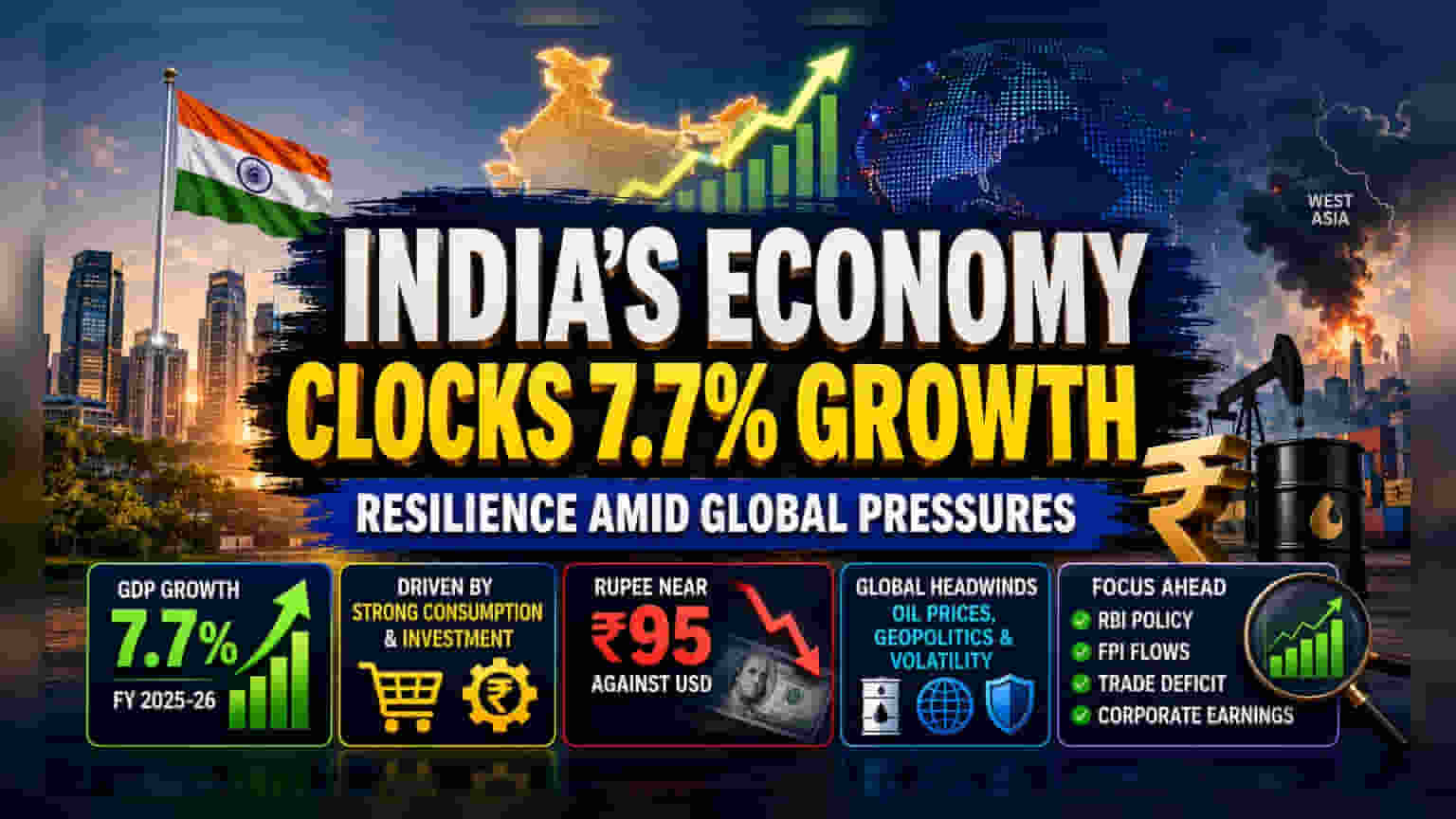


FY26 mein India ki economy ne zabardast **7.7%** ka GDP growth dikhaya hai, woh bhi global uncertainties aur rupee par pressure ke beech. Growth toh duniya mein sabse tez hai, par investors ko energy costs aur currency volatility jaise headwinds par nazar rakhni hogi.
Kya Hua?
Fiscal year 2025-26 mein India ki economy ne 7.7% ki solid growth rate record ki hai, aur ye global peers se kaafi behtar perform kiya hai, woh bhi mushkil international mahaul mein. Government sources ke data ke according, ye momentum strong domestic consumption aur consistent investment activity se aaya hai. Lekin, economic situation complex hai, jisme West Asia mein geopolitical instability aur currency volatility jaise external pressures ne market sentiment ko affect kiya hai.
Economic Resilience vs. Global Pressures
Headline growth figures toh acche lag rahe hain, par overall economic situation ek balancing act dikha rahi hai. Indian Rupee par kaafi pressure raha hai, aur abhi ye ₹95 per US Dollar ke aas paas trade ho raha hai. Ye girawat zyada tar crude oil jaise import costs badhne aur capital flow trends ki wajah se hai. Market analysts dekh rahe hain ki manufacturing aur services sectors strong rahe hain, par global uncertainties investors ke liye ek cautious environment bana rahi hain.
Investors Kaise Dekh Rahe Hain?
Investors ke liye, current economic story mein divergence dikh raha hai. Ek taraf, domestic macroeconomic indicators jaise GDP growth aur corporate earnings structural strength dikha rahe hain. Dusri taraf, external macroeconomic variables jaise exchange rate aur global energy prices volatility la rahe hain. Investors abhi ye analyze kar rahe hain ki kya domestic consumption kamzor currency aur global energy imports se inflation pressure ko offset kar paayega. Market participants ke liye main takeaway ye hai ki long-term growth potential aur global macro factors se hone wale short-term operational risks ke beech difference samajhna zaroori hai.
Currency Aur Energy Ka Impact
Rupee ka depreciation un sectors ke liye ek critical monitorable hai jo imports par depend karte hain, jaise electronics aur energy. Import bills zyada hone se un companies ke profit margins par impact pad sakta hai jo foreign inputs par zyada depend karti hain. Iske opposite, export-oriented sectors jaise IT aur pharmaceuticals, currency fluctuations se alag tarah se react karte hain. Market observers closely track kar rahe hain ki Reserve Bank of India kaise growth priorities ko balance karte hue in external imbalances ko manage karta hai.
Risks Aur Market Context
India ke ek fastest-growing major economy rehne ki projection ke bawajood, risks abhi bhi hain. Jinmein shaamil hain: agar global interest rate environment restrictive raha toh investment slow ho sakti hai, aur West Asia mein chal rahe conflict ka commodity prices par impact. Iske alawa, overall growth robust hone ke bawajood, kuch analysts rural aur urban consumption patterns ko monitor karne ki importance par zor de rahe hain, kyunki ye current economic cycle ke primary engines hain.
Investors Ko Aage Kya Track Karna Chahiye?
Aage dekhte hue, investors kuch key indicators par focus kar sakte hain. Inmein Reserve Bank of India ki policy updates shaamil hain jo currency management aur inflation control se related hain. Iske alawa, foreign portfolio investment (FPI) flows ke trends aur trade deficits ke monthly updates economy kaise external headwinds manage kar rahi hai, iske baare mein clear signals denge. Input costs ki wajah se margin pressure ke signs ke liye corporate earnings ko monitor karna, aane wale quarters mein navigate karne ke liye ek essential strategy bani hui hai.