 Whalesbook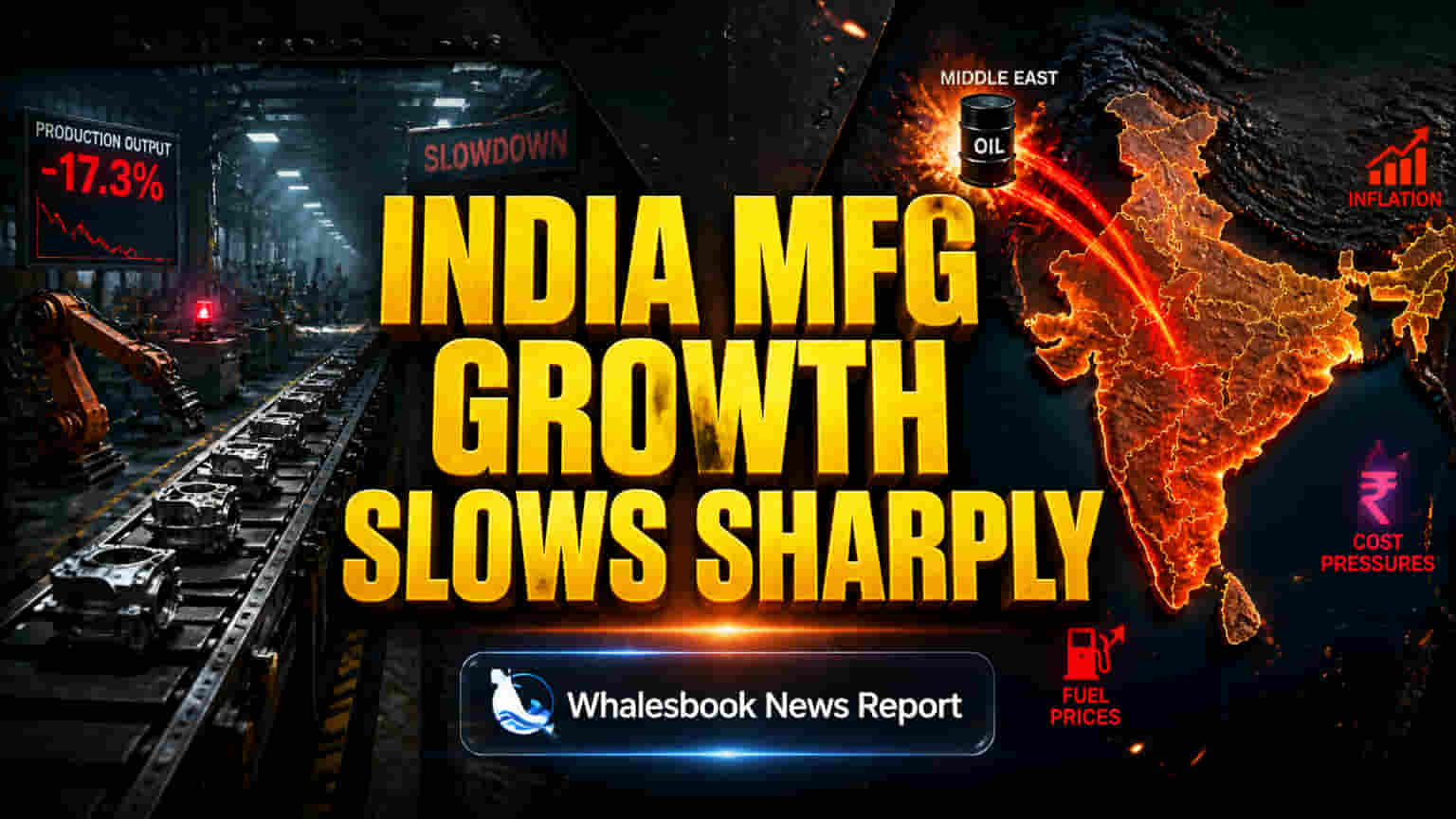


Toh bhaiyon aur behnon, kya chal raha hai India ke manufacturing sector mein? April ka data dekhne par ek mixed picture milta hai. Ek taraf jor-shor se export orders aa rahe hain, jo growth ko boost de rahe hain. Lekin doosri taraf, andar ki demand (domestic demand) abhi bhi slow hai, aur lagatar badhte costs manufacturers ki tension badha rahe hain.
A Tale of Two Demand Drivers
Asal mein, company log ab exports par zyada depend kar rahe hain. April mein export orders 7-month high par pahunch gaye, poori duniya se demand aa rahi hai. Yeh global demand ekdum sahi time par aayi hai, kyunki India ke andar se jo naye orders aa rahe hain na, woh toh 3.5 saal se bhi zyada time mein sabse slow hain. Production bhi usi hisaab se manage ho raha hai.
Soaring Input Costs Fuel Inflation
Ab aate hain sabse bade tension par - costs! Middle East mein jo chal raha hai na, uska seedha asar yahan ho raha hai. Commodities jaise aluminium, chemicals aur fuel ke daam aise bhade hain ki August 2022 ke baad se costs itni tezi se kabhi nahi badhi thi. Iske chalte, manufacturers ko bhi apne products ke daam 6-month peak par badhane pade hain. Lekin market mein competition aur clients ki wajah se woh saare badhe hue kharch recover nahi kar pa rahe, jisse unke profit margins par pressure aa raha hai.
Global Context: Similar Pressures
Ye sirf India mein nahi ho raha, duniya bhar mein manufacturing mein cost pressure dikh raha hai. China mein bhi situation stable hai, par overall global PMI thoda slow hua hai. US aur Europe mein bhi inflation badh raha hai, energy prices aur supply chain issues ki wajah se.
Looking Back: Past Challenges and Outlook
Past mein bhi aise shocks aaye hain, aur ab bhi output price inflation 6 months high par hai. Lekin companies future ko lekar cautiously optimistic hain. Experts ka kehna hai ki India ka manufacturing output 2026 tak 5% grow kar sakta hai. Toh long-term outlook toh positive lag raha hai, agar beech mein koi badi gadbad na ho.
Future Growth Prospects
Aur numbers dekho, India ka manufacturing sector FY26 tak US$1 Trillion ka ho sakta hai, aur 2026 tak market size USD 1.74 Trillion pahunchne ka chance hai, jo 2031 tak 7.26% CAGR se grow karega. Aise projections hain.
Key Risks and Domestic Weakness
Par dhyan rakhna hoga. Exports par itna depend karna risky hai. Agar global demand kam hui ya koi geopolitical tension badhi toh dikkat ho sakti hai. Domestic demand ka slow rehna bhi ek bada concern hai. 'Make in India' initiative ko bhi operational issues aur market volatility se ladna pad raha hai.
Overall
Toh overall, exports ke dum par sector chal raha hai, employment bhi badh rahi hai, lekin companies ko costs manage karni padegi aur domestic demand ko boost karna hoga taaki ye growth sustainable rahe. Dekhte hain aage kya hota hai!