 Whalesbook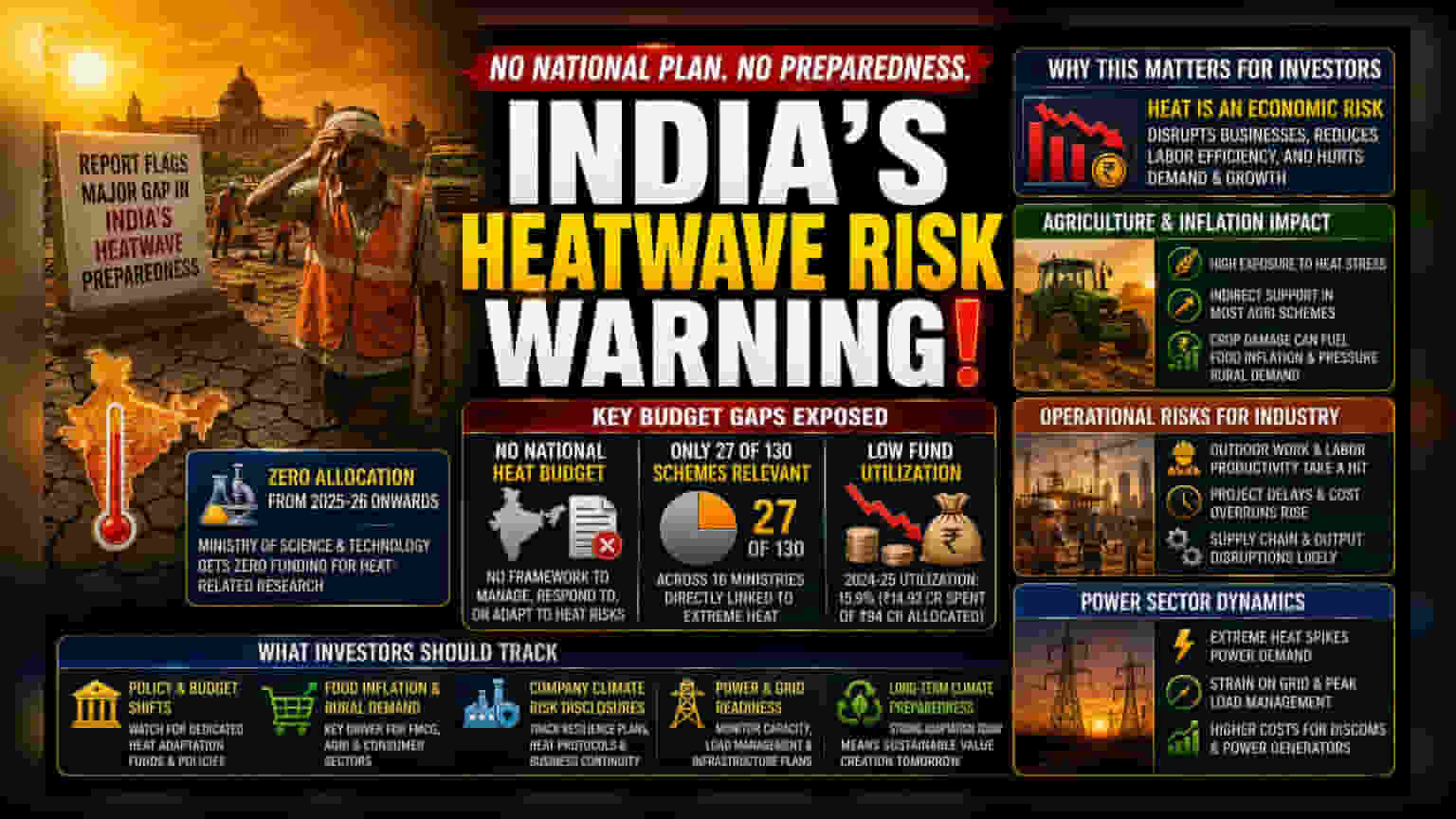


Yaar, ek latest report ke mutabik, India ke budget mein heatwaves ko tackle karne ke liye zyada paisa nahi hai. Jo schemes hain bhi, unmein bhi paisa use nahi ho raha. Isse agriculture, labor, aur public health par impact pad sakta hai. Investors ko ab inflation, manufacturing costs, aur power demand par nazar rakhni hogi.
Kya hua hai?
Centre for Budget and Governance Accountability, Greenpeace India, aur Budget Analysis and Research Centre Trust ne milkar ek report nikali hai. Ismein bataya gaya hai ki India ke budget mein heatwaves ko handle karne ke liye koi specific plan nahi hai. Budget 2020-21 se 2026-27 tak ki analysis mein, koi national framework nahi mila jo heat-related risks ko manage kar sake.
Government ke paas kai development programs hain, lekin report kehti hai ki 130 schemes mein se sirf 27 hi extreme heat se related hain. Aur usmein bhi paisa theek se use nahi ho raha. Jaise, 2024-25 mein Health Sector Disaster Preparedness and Response scheme mein sirf 15.9% utilization hua, matlab ₹14.92 Crore hi kharch hue allocated ₹94 Crore mein se. Ministry of Science and Technology ne toh 2025-26 se aage heat-relevant schemes ke liye koi allocation hi nahi rakha, jisse climate adaptation par research kam ho sakti hai.
Investors ke liye yeh kyun important hai?
Indian stock market aur economy ke liye, heatwaves ab sirf environment ka issue nahi, balki economic risk ban gaye hain. Lambi heatwaves business operations ko disrupt kar sakti hain, labor efficiency kam kar sakti hain, aur consumer demand ko badal sakti hain. Ek centralized, well-funded adaptation strategy ki kami ka matlab hai ki private sector par risk ka bojh badh sakta hai ya phir economy mein inefficiencies aa sakti hain.
Agriculture aur Inflation par asar
Kheti-baadi, jo rural economy ka backbone hai, heat stress ke liye bahut vulnerable hai. Report kehti hai ki agricultural schemes sirf indirect support deti hain. Investors agriculture-related challenges ko food inflation ka signal mante hain. Heatwaves se crops damage hone par staple crops ki yield kam ho sakti hai, jisse FMCG companies ke input costs badh sakte hain aur rural income kam ho sakti hai, jisse consumer sectors mein discretionary spending kam hogi.
Industry ke liye Operational Risks
Extreme heat manufacturing aur construction sectors ko bhi significantly affect karti hai. Outdoor work, jismein labor zyada involve hota hai, intense heatwaves ke dauran productivity kam ho jati hai. Isse projects delay ho sakte hain, costs badh sakti hain, aur supply chain mein disruptions aa sakte hain. Infrastructure aur manufacturing companies jinmein labor kaafi zyada hai, unhe operational costs badhti hui dikh sakti hain kyuki unhe behtar working conditions mein invest karna padega ya peak summer months mein kam output manage karna padega.
Power Sector mein kya hoga?
Jabki report budget allocations par focus karti hai, broader climate trend rising power demand dikhata hai. Extreme heat se cooling ki requirement badhti hai, jisse bijli ka consumption spike karta hai. Power sector (generation aur distribution dono) ko monitor karne wale investors ko pata hona chahiye ki unpredictable heat patterns grid infrastructure par pressure dal sakte hain aur efficient load management ki zarurat padegi. Jin companies ke paas robust infrastructure nahi hai, unhe peak demand seasons mein higher costs face karni pad sakti hain.
Investors ko kya track karna chahiye?
Aage chal kar, market participants ko kuch key indicators par dhyan dena chahiye. Pehla, government ki climate adaptation policies mein changes, jaise future budgets mein heat resilience ke liye naye, dedicated funds, risk management mein shift ka signal de sakte hain. Dusra, food inflation aur rural demand trends consumer-focused companies ki health assess karne ke liye zaroori hain. Aur teesra, companies ki disclosures ko monitor karna climate risk aur unke operational resilience ke liye kiye gaye upaayon par, taaki long-term climate-related challenges handle karne ki unki ability ka pata chal sake.