 Whalesbook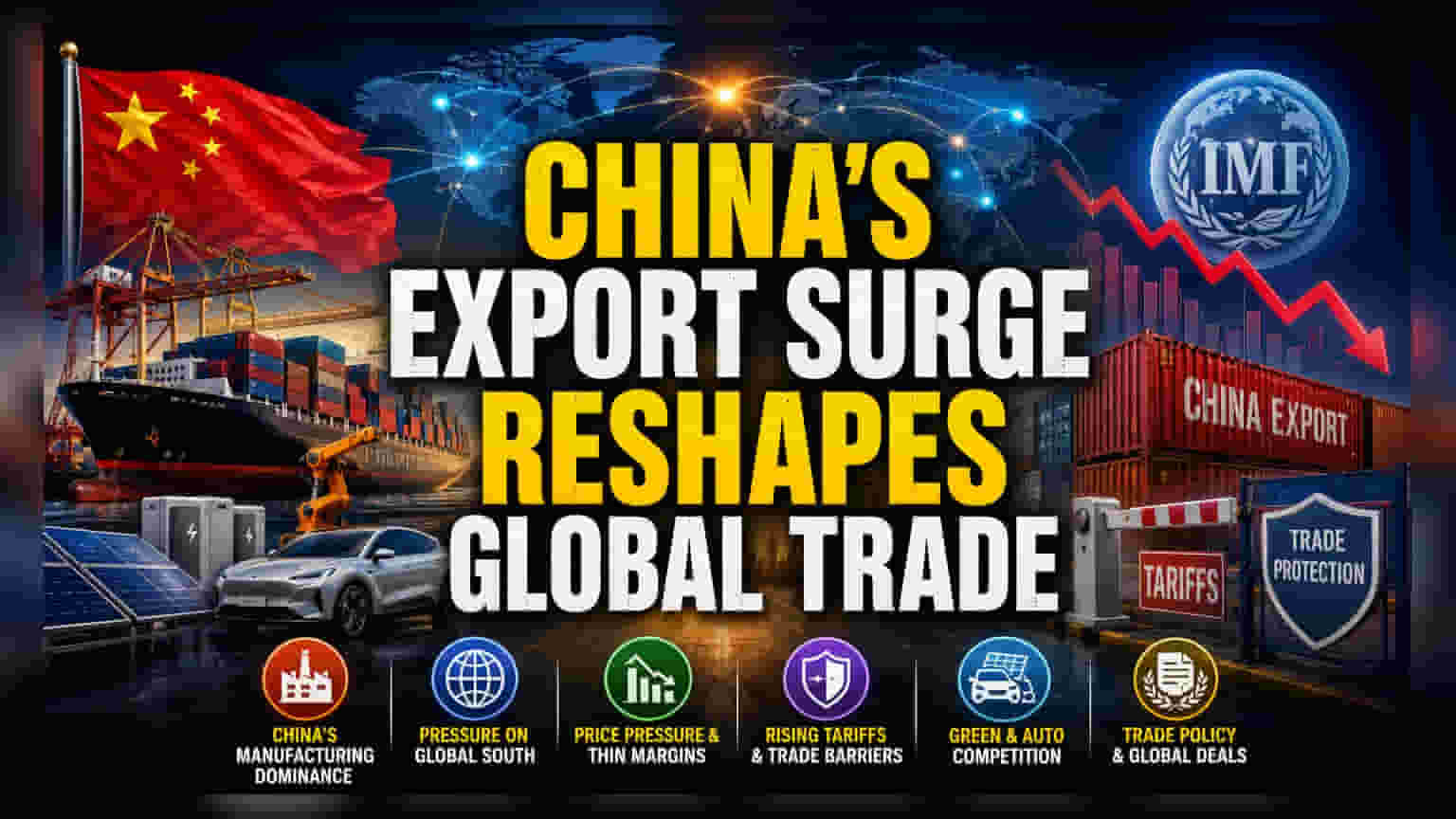


IMF ne bataya hai ki China ka manufacturing export par zor kaise global economy ko badal raha hai. China, EVs aur solar panels jaise products ko export toh kar raha hai, but import kam rakhe hue hai. Isse developing nations ko apni industries grow karne mein dikkat aa rahi hai. Aur China khud bhi internal issues se deal kar raha hai, toh emerging economies ke liye situation kaafi tricky ho gayi hai.
Kya Hua?
International Monetary Fund (IMF) ne global trade ke haal par recent insights diye hain, aur bataya hai ki major economies kaise interact kar rahi hain. Report kehti hai ki China ka manufacturing strategy kaafi aggressive hai, jahan woh goods ki huge quantities bana raha hai, especially high-tech cheezein jaise electric vehicles, batteries, aur solar panels. IMF ke according, yeh approach Western nations ke historical patterns se alag hai. Woh countries jab develop ho rahi thi, toh zyada import karke global trade ko encourage karti thi. Lekin China ka current model export par bahut focus kar raha hai, aur import levels kam rakhe hue hai.
Investors Ke Liye Yeh Kyun Matter Karta Hai?
Trade dynamics mein yeh shift developing nations, jinko Global South bhi kehte hain, unke liye ek challenging environment bana raha hai. Jab yeh countries apni manufacturing base build karne ki koshish kar rahe hain, toh unhein Chinese products se tough competition mil rahi hai. Investors ke liye yeh important hai kyunki yeh directly global trade policies, anti-dumping duties, aur baaki emerging markets (India including) ki companies ke competitive landscape ko affect karta hai. Jab ek badi economy huge volumes mein export karti hai, toh alag-alag sectors mein price pressure aa sakta hai, jisse companies ko thin margins par compete karna padta hai.
China Ke Internal Economic Pressures
Bade picture ko samajhne ke liye, China ke andar ki challenges ko dekhna zaroori hai. Country bahut significant economic headwinds se deal kar rahi hai, jaise ki sluggish property market aur low household consumption. Wage growth bhi slow ho gaya hai. Yeh internal issues aksar Chinese companies ko international market share ko aggressively capture karke growth paane par majboor karte hain. Global investors ke liye, yeh signal hai ki chemicals, steel, aur electronics jaise sectors mein low-priced competition se pressure continue ho sakta hai.
Global Manufacturing Par Asar
Historically, developing nations isi idea par depend karti thi ki woh rich countries ko goods export karke value chain mein upar aa sakti hain. Lekin, IMF report suggest karti hai ki China ki current strategy, jo low-to-mid-skilled goods ko export karne par depend karti hai, doosri countries ke liye industrialize hone ki space ko limit karti hai. Yeh sirf policy issue nahi hai; yeh duniya mein goods ke move hone ke tareeke mein ek structural change hai. Jab yeh products international markets mein flood ho jaate hain, toh deflationary pressure aa sakta hai, jahan manufactured goods ki prices kam rehti hain, aur doosre countries ke manufacturers ke profit margins ko nuksan pahunch sakta hai jo un production costs ko match nahi kar paate.
Investors Ko Kya Track Karna Chahiye
Investors ko aage chal kar kuch key indicators par nazar rakhni chahiye. Sabse pehle, trade policy ek major monitorable hai. Jaise hi zyada countries in imports se competition face karengi, governments local manufacturing ko support karne ke liye higher tariffs ya anti-dumping duties jaise protectionist measures introduce kar sakti hain. Dusra, green energy aur automotive components jaise sectors ke liye demand trend ko watch karna essential hai. Agar China in markets mein high volumes push karna jari rakhta hai, toh doosre regions ke local manufacturers ko profitable rehne ke liye efficiency aur niche, high-value products par focus karna hoga. Finally, global trade agreements mein kisi bhi change ke regarding trade regulators ke official commentary par dhyan dein, kyunki yeh multinational corporations ke liye competitive environment ko directly dictate karega.