 Whalesbook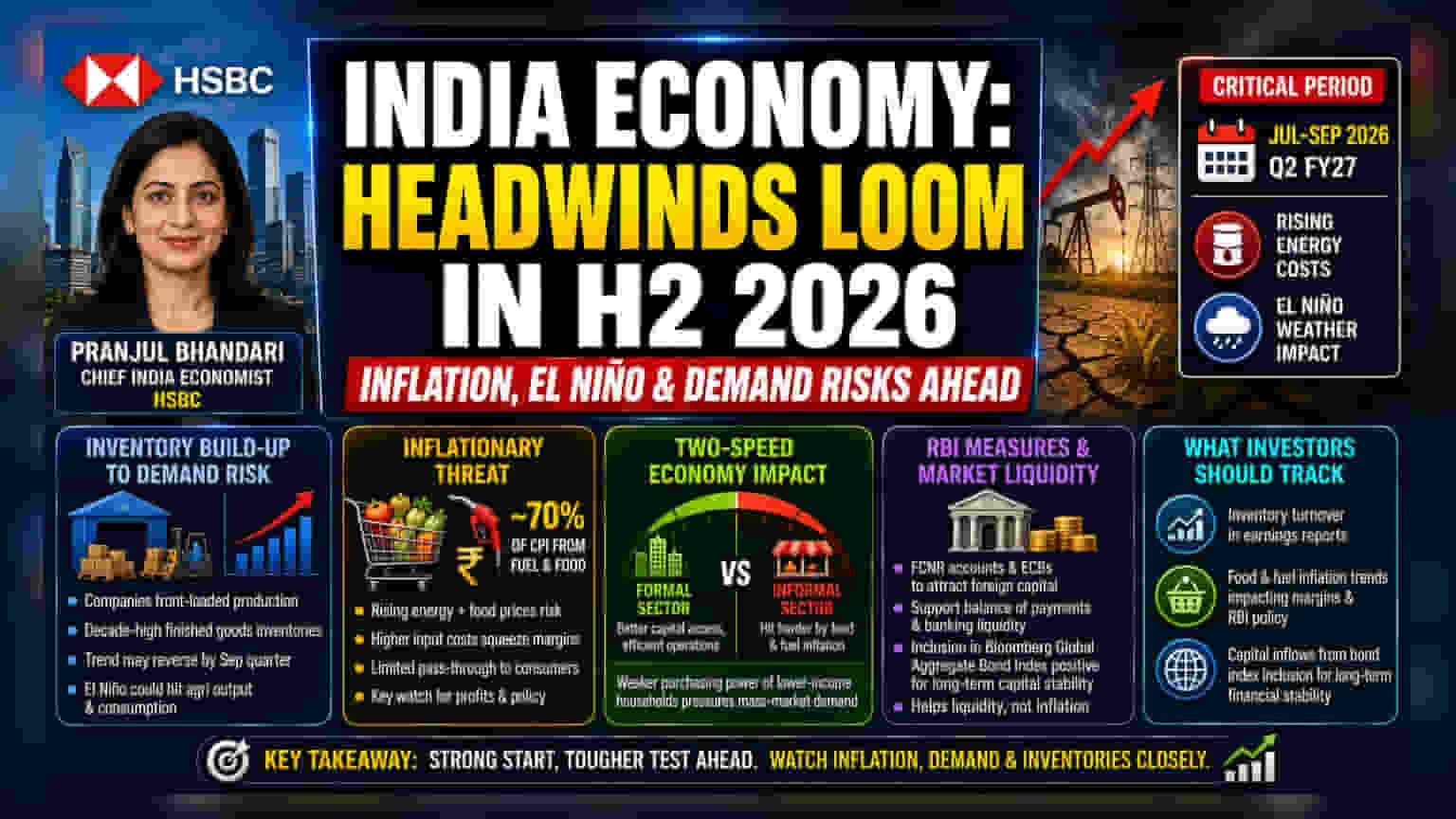


Bhai log, suno! HSBC ne alert diya hai ki India ki economy mein pichhle 6 mahine mein thodi dikkat aa sakti hai. Main reason hai energy prices ka badhna aur El Niño ka impact. Company ke paas abhi maal (inventory) bahut hai, jo manufacturing ko support kar raha hai, par aage demand kam ho sakti hai. RBI kuch paisa lane ki koshish kar raha hai, par inflation ka risk abhi bhi hai.
Kya hua?
HSBC ke Chief India Economist, Pranjul Bhandari ne bola hai ki India ki economy mein aage chal kar thodi rukawat aa sakti hai. Unke hisab se, July-September 2026 (FY27 ka Q2) ek critical time hoga jab energy prices badhengi aur El Niño weather ka impact dikh sakta hai. Economy abhi achhi chal rahi hai, par aane wale mahino mein thodi mushkil ho sakti hai.
Inventory ka khel aur Demand ka risk
Abhi economy isliye strong lag rahi hai kyunki companies ne zyaada maal bana liya hai, current demand se bhi zyada. Ek decade mein sabse zyada finished goods ka inventory hai. Yeh temporary boost hai. HSBC ko lagta hai ki September quarter tak yeh trend ulta ho jayega, jab companies stock karna band kar dengi aur El Niño ka effect dikhega.
Inflation ka threat
Inflation investors ke liye hamesha ek bada concern hota hai kyunki yeh company ke profit margins ko seedha affect karta hai. India ke CPI (Consumer Price Index) mein 70% hissa food aur fuel ka hai. Agar energy prices aur weather ki wajah se food prices badhi, toh inflation ka risk badh jayega. Agar raw materials aur fuel costly hue, toh companies yeh prices customers par daal paayengi ya nahi, yeh dekhna hoga.
Two-Speed Economy ka impact
Log worried hain ki economy 'two-speed' ho sakti hai, matlab formal aur informal sectors alag-alag tarah se stress feel karenge. Badi, formal companies ke paas paisa easily aa jata hai aur operations better hote hain, toh woh mushkil time nikal leti hain. Lekin zyada food aur fuel prices informal sector ko zyada hurt karti hain. Jab yeh costs badhti hain, toh low-income families ki khareedne ki taaqat kam ho jati hai, jisse mass-market consumption par depend karne wali companies ka sale impact hota hai.
RBI ke measures aur Market Liquidity
Reserve Bank of India (RBI) baar baar try kar raha hai ki foreign capital India aaye, jaise FCNR accounts aur ECB ke through. Yeh sab country ke balance of payments deficit ko finance karne aur banking system ki liquidity achhi rakhne ke liye hai. Plus, India ko Bloomberg Global Aggregate Bond Index mein include karne ki koshish bhi long-term capital stability ke liye achhi hai. Yeh sab banking liquidity ke liye to helpful hai, par yeh domestic inflation ya manufacturers ke demand issues ko seedha solve nahi karta.
Investors ko aage kya dekhna chahiye?
Investors ko H2 2026 mein kuch cheezon par nazar rakhni chahiye. Pehla, upcoming earnings reports mein manufacturing aur consumer goods companies se 'inventory turnover' par commentary check karein. Agar companies ko abhi bhi apna banaya hua maal bechne mein dikkat ho rahi hai, toh yeh demand slowdown ka sign ho sakta hai. Second, food aur fuel inflation trends ko track karein, kyunki yeh central bank policy aur company margins ko influence karega. Finally, bond index participation se capital inflows par updates dekhein, kyunki yeh long-term financial stability ke liye important hai.