 Whalesbook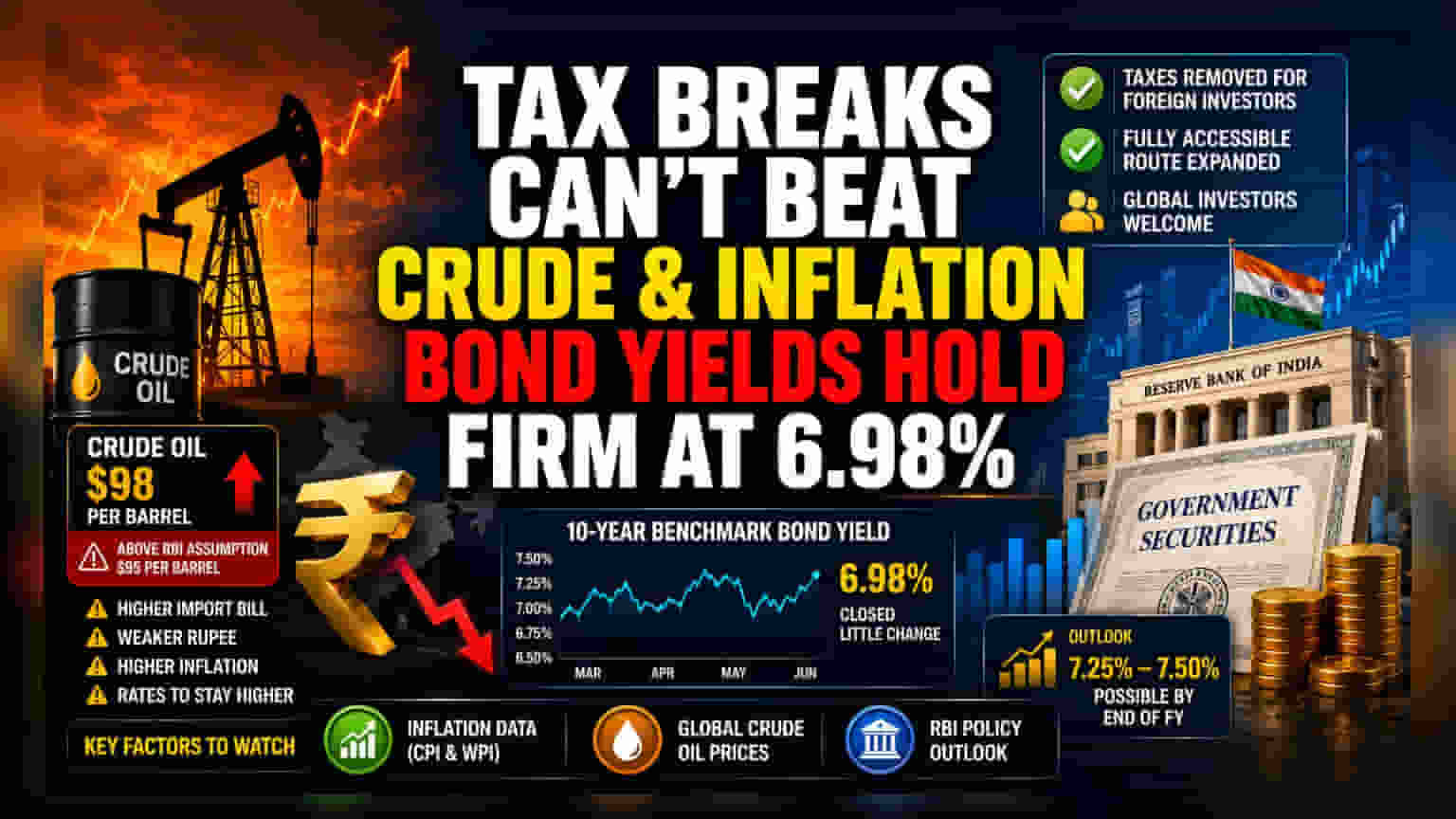


Kya Hua?
Indian government ne haal hi mein government securities mein foreign investors ke liye interest aur capital gains par tax hataya hai. Target ye tha ki local bond market attractive bane. Saath hi, RBI ne Fully Accessible Route (FAR) ko bhi expand kiya hai, jisse global investors bina investment limit ke specific long-term government bonds kharid sakte hain. Plan toh acha tha – foreign dollars lane aur rupee ko support karne ka. Lekin bond market ne zyada react nahi kiya. Jo 10-year benchmark bond yield hai, jo borrowing costs ka important indicator hai, wo 6.98% par band hua, matlab news ke bawajood koi khaas change nahi dikha.
Crude Oil Ka Drama!
Bond market ke investors ke liye, tax incentives se zyada abhi crude oil prices important ban gaye hain. India apni oil requirement ka bada hissa import karta hai, aur jab oil prices badhte hain, toh import bill badh jaati hai. Isse normally rupee kamzor hota hai aur domestic inflation badhti hai. RBI ka current inflation forecast $95 per barrel ke aas-paas crude oil prices assume kar raha hai. Lekin global prices abhi $98 per barrel ke paas hain. Investors ko dar hai ki agar oil mehenga raha, toh inflation high rahegi, aur RBI jaldi interest rates kam nahi kar paayega.
Investors Kya Soch Rahe Hain?
Samajhna important hai ki bond yields aur interest rates ka kya connection hai. Jab investors ko lagta hai ki inflation badhegi, toh woh existing bonds bech dete hain kyunki fixed interest payments ki real value kam ho jaati hai. Jab bonds ki prices girte hain, toh yields badh jaate hain. Abhi market participants risk compensation ke liye higher yields demand kar rahe hain, kyunki energy prices economy par pressure daal rahe hain. Chahe Indian bonds tax ki wajah se saste ho jayein, investors paisa lock karne mein hesitant hain jab interest rates ka future uncertain lag raha hai.
Inflation Aur Rate Ka Outlook
Experts in trends ko closely watch kar rahe hain. QuantEco Research jaise firms ka kehna hai ki 10-year benchmark yield is fiscal year ke end tak 7.25% se 7.50% tak ja sakta hai. Ye expectation isliye hai kyunki global aur domestic inflation pressure lagta hai ki India aur US dono mein monetary policy strict rahegi. Indian bonds ka global indices mein add hona ek long-term goal hai, lekin abhi market ka pura focus energy costs ke inflation impact par hai.
Investors Ko Kya Track Karna Chahiye?
Investors ko kuch cheezon par nazar rakhni chahiye ki bond yields kidhar jayenge. Sabse important hoga monthly inflation data (CPI aur WPI), kyunki ye decide karega ki RBI interest rates kaise adjust karta hai. Iske alawa, global crude oil prices mein hone wale changes bhi ek critical factor rahenge. Agar ye prices kisi bhi taraf sustained move karte hain, toh bond market ka sentiment affect hoga. Lastly, RBI ki Monetary Policy Committee meetings se aane wale official comments se clear hoga ki unka interest rates par kya stance hai aur woh growth ke saath inflation kaise manage karna chahte hain.