 Whalesbook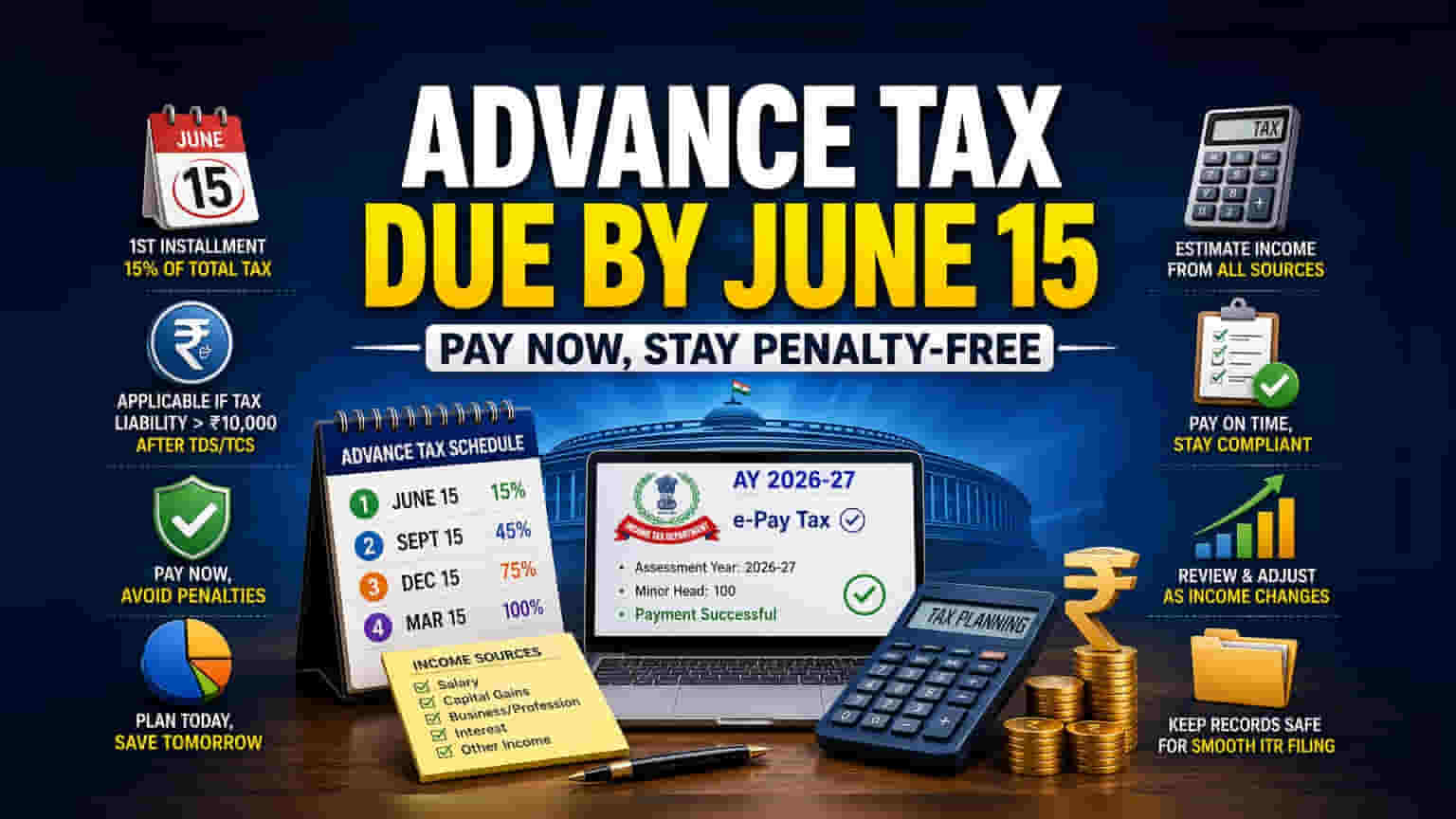


Bhai log, suno! FY 2026-27 ke liye pehla advance tax pay karne ki deadline June 15 ko hai. Agar aapki estimated tax liability Rs 10,000 se zyada hai (TDS aur TCS minus karne ke baad), toh aapko total tax ka kam se kam **15%** pay karna hoga, warna interest penalty lag sakti hai.
Kya hua?
FY 2026-27 ke liye advance tax ka pehla installment June 15 tak bharna hai. India ke "pay-as-you-earn" system ke according, jinka saal ka total tax Rs 10,000 se upar hai (TDS aur TCS deduct karne ke baad), unhein quarterly installments mein tax pay karna hota hai. Is pehle installment mein, total estimated tax ka kam se kam 15% jama karna zaroori hai.
Investors ke liye yeh kyun important hai?
Bahut se investors ko lagta hai ki tax toh saal ke end mein ITR file karte time hi bharna hota hai. Par bhai, stock trading se capital gains, F&O profits, dividends, ya interest income jaise market se hone wale income par aksar sufficient TDS nahi kata hota. Jab ye sab income milakar aapki saal ki tax liability Rs 10,000 ke threshold se upar chali jati hai, toh advance tax pay karna mandatory ho jata hai. Agar time par estimate karke pay nahi kiya, toh interest penalty lag sakti hai aur kharcha badh sakta hai.
Penalty provisions ko samjho
Income Tax Act, 2025 ke rules ke mutabik, agar advance tax time par nahi bhara ya kam bhara, toh interest lagta hai. Section 424 (pehle Section 234B) ke tehat interest lagta hai agar saal ke end tak total tax ka 90% se kam pay kiya ho. Aur Section 425 (pehle Section 234C) tab lagta hai jab installments sahi schedule par nahi bhari jaati. Dono cases mein, interest usually unpaid ya short-paid amount par 1% per month ke hisaab se lagta hai. Ye rules government ko saal bhar steady revenue milta rahe isliye banaye gaye hain.
Kisko pay karna hai?
Advance tax ka rule kaafi logon par apply hota hai. Jaise ki salaried log jinki salary ke alawa bhi income hai (rent income, FD interest etc.). Traders aur investors ke liye, stock market ki profits ko business income ya capital gains mana jata hai aur use advance tax mein add karna hota hai. Freelancers aur consultants ko bhi apna tax khud estimate karke pay karna hota hai. Haan, 60 saal se upar ke senior citizens agar business ya profession se koi income nahi kama rahe hain, toh unhein advance tax se chhoot hai.
Kaise estimate karein aur pay karein?
Advance tax calculate karne ke liye, aapko poore saal ki total income ka estimate lagana hoga. Investors ko apni saari income (salary, business, capital gains, interest) ko jodna hoga aur applicable deductions minus karne honge. Jo TDS already cut ho chuka hai, use adjust karne ke baad jo tax bachega, woh advance tax amount hoga. Payment Income Tax Department ke e-filing portal par 'e-Pay Tax' section se ho sakti hai. Assessment Year 2026-27 aur correct minor head code (100) select karna na bhoolein.
Investors ko kya track karna chahiye?
Jaise jaise financial year badhta hai, market conditions aur personal income mein changes aa sakte hain. Investors ko apna tax estimate baar-baar check karte rehna chahiye, especially agar stock market se capital gains kam ya zyada ho rahe hain. Agar saal mein income kaafi badh jati hai, toh September, December, aur March ki subsequent installments ko adjust karna zaroori hai taaki penalty se bach sakein. Saare tax challans aur payment receipts ko sambhal kar rakhein, ITR filing mein kaam ayenge.