 Whalesbook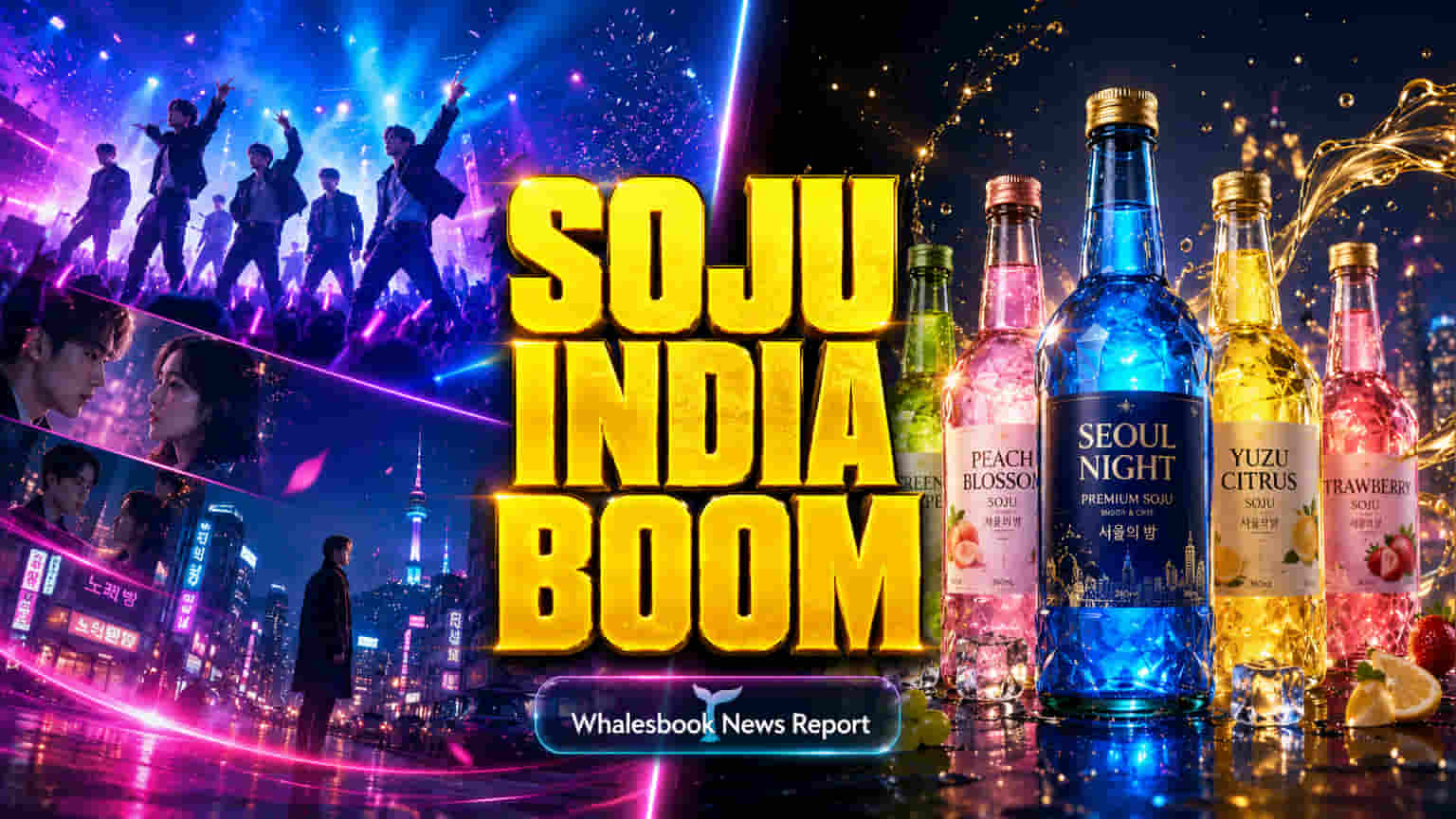


K-Culture Ka Jaadu Chala India Mein!
Korean entertainment ke badhte popularity ke saath, Indian consumers soju se kaafi familiar ho gaye hain, aur yeh ek trending drink ban gaya hai. Social media aur streaming platforms ne Korean dining culture ko explore karne mein help kiya hai, jisne is spirit ke liye cultural momentum build kiya hai. Nuvola Spirits ke CEO, Raghav Sachdeva ne kaha ki India mein commercial launch se pehle hi soju ko aspirational maana ja raha tha. Yeh cultural boost India mein drinking habits ke bade shift ko match karta hai, jahaan younger consumers zyada experimental, globally aware hain aur traditional spirits ki jagah lower-alcohol, flavorful drinks prefer karte hain. Yeh trend overall alcohol aur beverage market ko boost de raha hai, jo 2032 tak $72.74 billion tak pahunch sakta hai, jismein spirits ka share 75% hoga.
Brands Laga Rahi Hain Daud!
Kai companies is naye market mein enter karne ke liye active hain. Nuvola Spirits ne April 2026 mein Karnataka mein apni rice-distillate-based Seoulmate Soju launch ki, baad mein Goa aur Delhi mein expand kiya, aur Haryana, Maharashtra, aur Assam mein bhi plan hai. Monika Alcobev Limited, South Korea ki global giant Jinro (jisne 2024 mein 96.8 million cases bechi thi) ke saath partner karke, December 2025 se India mein launch kar rahi hai, bade cities ko target kar rahi hai aur aage bhi expand karegi. Penguin Overseas ne 'So Good' Soju launch kiya, jo domestically banayi gayi hai, April 2026 mein, low-alcohol aur craft beverage trend ko tap karne ke liye. Yeh brands craft aur locally developed products ki appreciation ko highlight kar rahi hain, soju ko ek accessible alternative ke taur par position kar rahi hain jo Pan-Asian cuisine ki badhti popularity ke saath achha pair karta hai. Globally, soju volume ke hisab se sabse zyada bikne wali spirit hai, aur India mein iska entry ek bada opportunity mana ja raha hai, khaas kar lighter, easy-drinking spirits ke trend ko dekhte hue.
Rules Aur Competition Ka Chakravyuh!
Cultural momentum hone ke bawajood, soju ke India mein widespread hone ke raaste mein kaafi challenges hain. Alcohol policy har state manage karta hai, jiski wajah se India ke 28 states aur 8 union territories mein alag-alag state taxes, import duties, aur distribution rules ka ek complex mix hai. Yeh alag-alag tax systems price mein bade differences create kar sakte hain aur underground sales ko bhi badha sakte hain. Iske alawa, most states mein alcohol advertising par ban hai, jiski wajah se creative marketing, aksar indirect promotions ke through karni padti hai. Imported spirits par pehle se hi high taxes lagte hain, jiski wajah se woh kam competitive rehti hain.
Indian spirits market mein largely whisky dominant hai, jo total consumption ka lagbhag 67% hai. Jabki spirits beverage category mein sabse badi hai (36.1% in 2026), market mein vodka aur gin jaise established categories se bhi zabardast competition hai, saath hi Indian craft spirits ka rise bhi ho raha hai, jo ab craft segment mein majority share rakhti hain. Soju brands ko ek naya category introduce karna hai, aur saath hi deeply rooted consumer preferences aur ek badhte local premium spirit market se bhi compete karna hai. For example, imported Jinro Maharashtra mein ₹830-₹850 ke beech mein hai, jabki locally produce hui Seoulmate Goa mein ₹550 mein 375-ml ki bottle mein milti hai, jo consumer price sensitivity dikhata hai.
Iske alawa, industry packaging materials jaise glass bottles aur cans ke liye supply chain issues se deal kar rahi hai, jiski wajah se costs badh gayi hain aur price hikes ho sakte hain jo state price controls ki wajah se consumers par pass karna mushkil hai. Jabki 'So Good' Soju ko local manufacturing ka fayda hai, soju import karne wali companies ko tougher cost structure face karna padta hai. Sirf global style import karne ki jagah, Indian tastes aur drinking occasions ke hisab se products ko tailor karna success ke liye crucial hai.
Challenges Ke Beech Growth Ka Potential
India ka alcohol aur beverage market strong premiumization dikhata hai, jahaan premium aur super-premium segments mass-market categories se kaafi zyada grow kar rahe hain, affluent urban consumers aur Gen Z dwara drive kiya ja raha hai. Soju, apne lower ABV aur varied flavors ke saath, is badalti demand ko meet karne ke liye well-suited hai, khaas kar flavored aur low-alcohol segments mein jinmein strong growth prospects hain. Halanki, iska full potential realize karne ke liye intricate regulatory environment ko navigate karna, strong distribution networks build karna, aur established spirits se khud ko effectively differentiate karna hoga. Woh brands jo apne products ko locally adapt kar sakti hain, costs wisely manage kar sakti hain, aur initial K-wave trend se pare ek lasting cultural story build kar sakti hain, woh is dynamic market mein long-term growth ke liye ready hongi.