 Whalesbook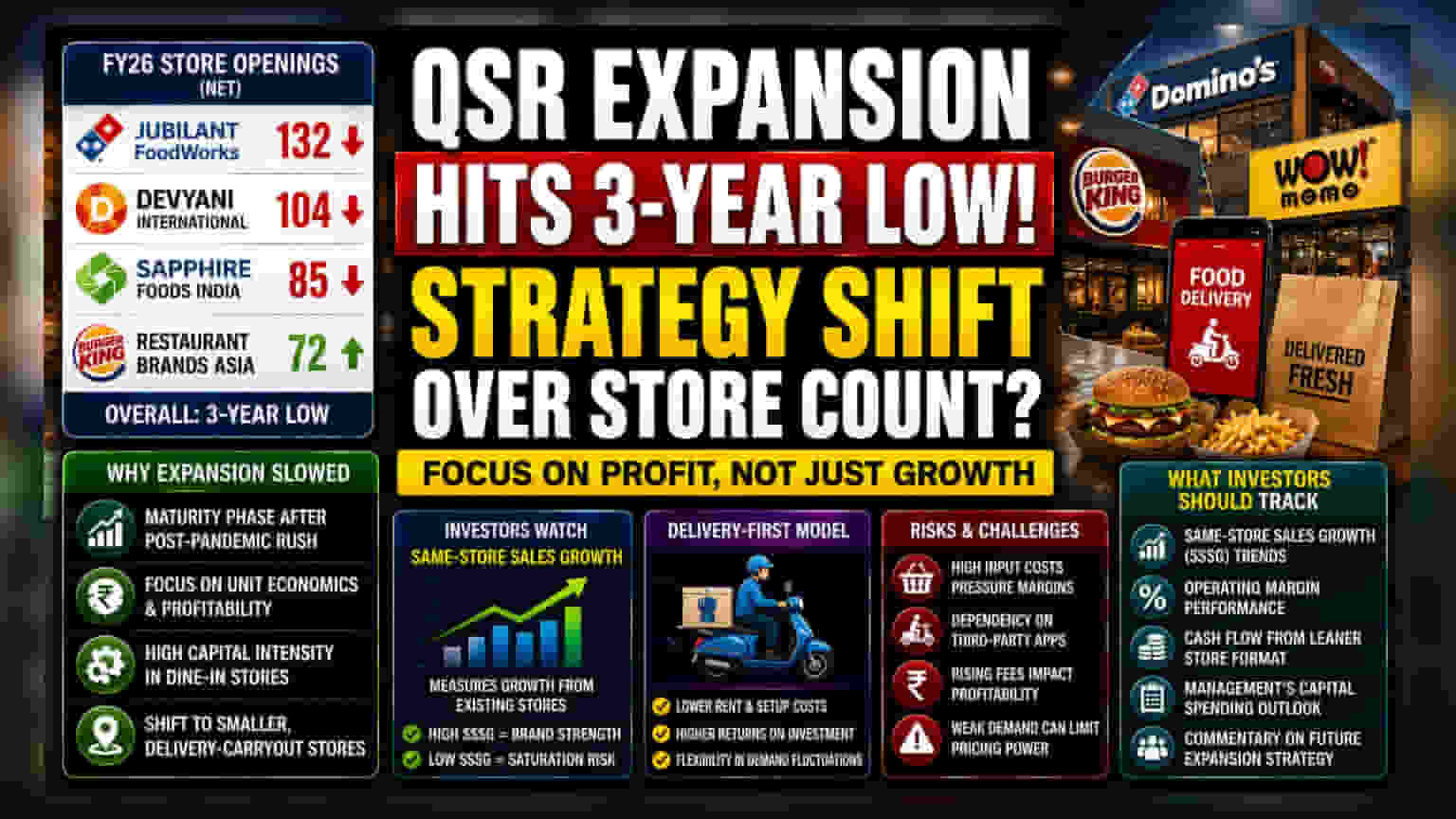


Bhai log, suno! India ke bade QSR chains like Jubilant FoodWorks, Devyani International, aur Sapphire Foods ne FY26 mein naye store kholne speed bahut slow kar di hai. Pichhle 3 saal mein sabse kam openings hui hain. Ab focus store badhane se hatkar, existing stores ko zyaada profitable banane par hai. Investors bhi ab store count se zyada sustainable profit dekh rahe hain.
Kya ho raha hai?
India ke top Quick Service Restaurant (QSR) brands ne apne store expansion ko kaafi slow kar diya hai. March 2026 ko khatam hone wale fiscal year mein, net store openings pichhle 3 saalon ke sabse low level par aa gayi hain. Ye is baat ka ishara hai ki pandemic ke baad jo rapid growth chal raha tha, woh ab thoda ruk gaya hai. Jubilant FoodWorks (jo Domino's manage karti hai), Devyani International, aur Sapphire Foods ne pichhle saalon ke comparison mein kam naye outlets khole hain. Haan, Restaurant Brands Asia (Burger King India) ne thoda expansion badhaya hai, par overall trend slow hone ka hi hai.
Strategy change!
Ye slowdown koi weakness nahi hai, balki ek calculated strategy hai. Pandemic ke baad market share capture karne ke liye companies ne tezi se stores khole the. Ab woh ek maturity phase mein aa gaye hain jahan focus 'unit economics' ko improve karne par hai. Simple bhasha mein, har ek store ko zyaada profitable aur efficient banana. Naye stores kam kholkar, companies apne profit margins ko protect karna chahti hain aur bade dine-in restaurants setup karne mein lagne wale capital strain ko bhi kam karna chahti hain.
Investors ko Same-Store Sales kyun dekhna chahiye?
Ab investors ke liye sabse important metric 'store count' nahi, balki 'Same-Store Sales Growth' (SSSG) ban gaya hai. Ye measure karta hai ki jo restaurants 1 saal se zyada time se khule hain, unki sales kitni badhi hai. Jab company naye stores nahi khol rahi, toh business ki health isi baat par depend karti hai ki existing stores mein customers zyaada kharidari kar rahe hain ya nahi. Accha SSSG brand loyalty aur pricing power dikhata hai, jabki girta hua SSSG signal de sakta hai ki brand ka appeal kam ho raha hai ya market saturated ho raha hai.
Delivery-first Model ka Kamaal
Slowdown ka ek aur bada reason hai online food delivery ka badhta trend. Brands ko samajh aa raha hai ki sales generate karne ke liye bade, expensive dine-in spaces ki zaroorat nahi hai. Ab companies chhoti 'delivery-carryout' stores ko prefer kar rahi hain, jisme investment aur space kam lagta hai. Is model se rental aur operational costs control mein rehte hain, jisse companies profitable reh sakti hain, bhale hi customer discretionary spending kam ho jaye.
Risks aur Challenges
Efficiency par focus karna achha hai, par iske risks bhi hain. Sector abhi bhi high input costs se lad raha hai, jaise cheese, vegetables, aur packaging ke daam. Agar ye costs aur badhe aur companies weak demand ke karan customers se zyada price nahi le payi, toh profit margins par pressure aa sakta hai. Dusra, online delivery channels par zyada depend karna companies ko third-party delivery apps ke fees aur policies ke liye vulnerable bana sakta hai. Agar delivery platforms ne apna pricing badhaya, toh seedha QSR chains ki profitability par asar padega.
Investors ko kya track karna chahiye?
Aage chal kar, investors ko sirf store count se zyada company ke operating margins ko dekhna chahiye. Ye bhi check karna hoga ki delivery-focused, chhote stores se cash flow badh raha hai ya nahi. Quarterly filings mein SSSG updates ye samajhne mein madad karenge ki brands apne customers retain kar pa rahe hain ya nahi. Aur haan, management ke capital spending plans se pata chalega ki kya woh wapas aggressive expansion shuru karne wale hain ya lean, profitable operations par hi focus rakhenge.