

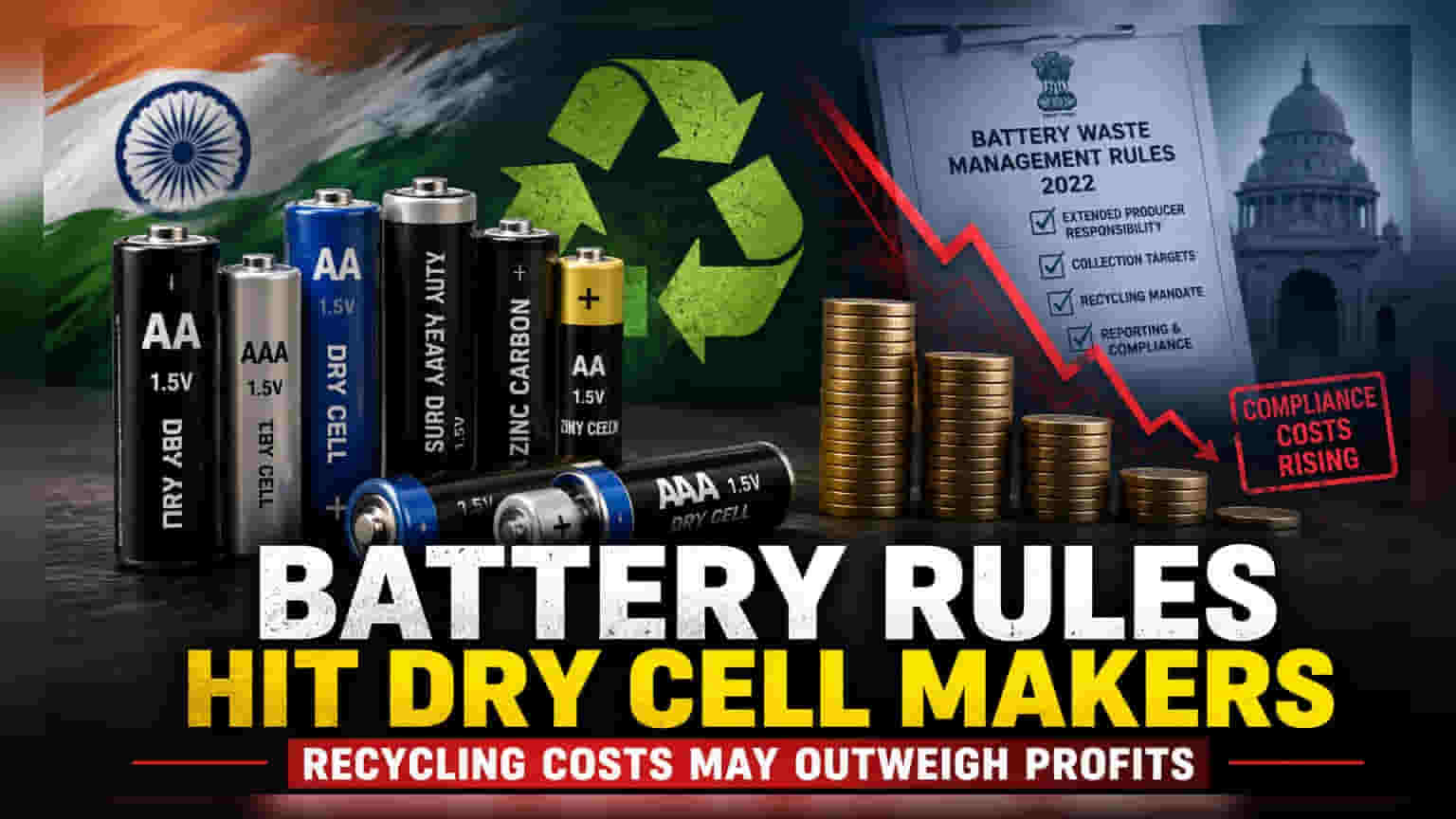
Arre yaar, Panasonic Energy India aur Eveready jaise bade battery makers ne bola hai ki ye naye recycling rules financially bilkul bhi faydemand nahi hain. Inka kehna hai ki high-value lithium-ion batteries wale rules ab zinc-carbon cells par bhi laga rahe hain, jisse compliance cost itni zyada ho gayi hai ki company ke profit se bhi upar nikal jayegi.
Kya Hua Hai?
India ke dry cell battery companies ne Ministry of Environment, Forest and Climate Change ke Battery Waste Management Rules, 2022 ko lekar chinta jatayi hai. Panasonic Energy India, Eveready Industries, aur Nippo batteries banane wali Indo National jaisi companies keh rahi hain ki ye naye govt. recycling rules sector ke liye financial crisis la rahe hain. Asli issue ye hai ki strict recycling targets aur pricing benchmarks ko zinc-carbon batteries par lagaya ja raha hai, jo abhi Indian market mein sabse zyada chalti hain. Industry leaders ka kehna hai ki ye regulations lithium-ion batteries ke liye banaye gaye the aur low-value, household dry cell batteries ki economic reality ko consider nahi karte.
Compliance Ka Financial Impact
Sabse badi chinta Extended Producer Responsibility (EPR) system ko lekar hai. Iske under, manufacturers ko apni specific percentage batteries ko recycle karwana hota hai. Compliance ke liye, companies ko authorized recyclers se digital EPR certificates kharidne padte hain. Industry ne bataya hai ki in certificates ka cost bohot high hai. For example, Panasonic Energy India ne kaha hai ki 50% collection mandate ko poora karne ke liye unko lagbhag ₹50 crore EPR certificates mein invest karne padenge. Ye figure unke FY26 ke expected profit ₹6 crore se kaafi zyada hai. Matlab, compliance cost company ke profit se bhi zyada ho sakti hai.
Collection Mein Problem Kya Hai?
Industry ka kehna hai ki lithium-ion batteries aur traditional dry cells mein bahut bada difference hai. Electric vehicles aur electronics mein istemal hone wali lithium-ion batteries ka scrap value high hota hai, isliye unhe collect aur recycle karna profitable hai. Lekin, standard zinc-carbon dry cells ka residual value bahut kam hota hai. Ye batteries aksar ghar ke kachre mein phenki jati hain, isliye ek specialized collection network banana mehnga aur mushkil hai. Executives ka kehna hai ki viable collection infrastructure ke bina, manufacturers ko certificates ke liye pay karna padega bina actual waste ko recover kiye, jisse compliance requirement ek ongoing operational expense ban jayegi.
Business Aur Margin Pressure
Industry abhi aise situation mein hai jahan compliance cost ko aise technology ke liye banayi gayi economics par rakha gaya hai. Zinc-carbon cells, jo market ka lagbhag 85% hissa hain, unpar is rules ka impact bohot bada hai. Agar ye costs abhi ke level par rahe, toh companies ko operating margins par pressure face karna pad sakta hai. Investors ke liye, ye future profitability ko lekar uncertainty paida karta hai aur ho sakta hai ki management ko pricing adjust karni pade, jisse demand par asar pad sakta hai. Companies ab regulatory adjustments ki maang kar rahi hain jo unke specific product segment ki nature ko behtar tarike se reflect karein.
Investors Ko Kya Track Karna Chahiye?
Sabse important cheez ye dekhna hai ki kya government zinc-carbon battery manufacturers ke liye rules mein koi relaxation ya amendment deti hai. Investors ko Ministry of Environment, Forest and Climate Change se in recycling targets ke bare mein official updates ya circulars par nazar rakhni chahiye. Iske alawa, upcoming quarterly earnings reports mein management ki commentary bahut zaruri hogi ye samajhne ke liye ki kya companies compliance ke liye zyada provision rakh rahi hain ya industry bodies ke through relief mang rahi hain. EPR certificates ki pricing mein changes bhi firms par hone wale potential financial burden ka ek key indicator honge.