 Whalesbook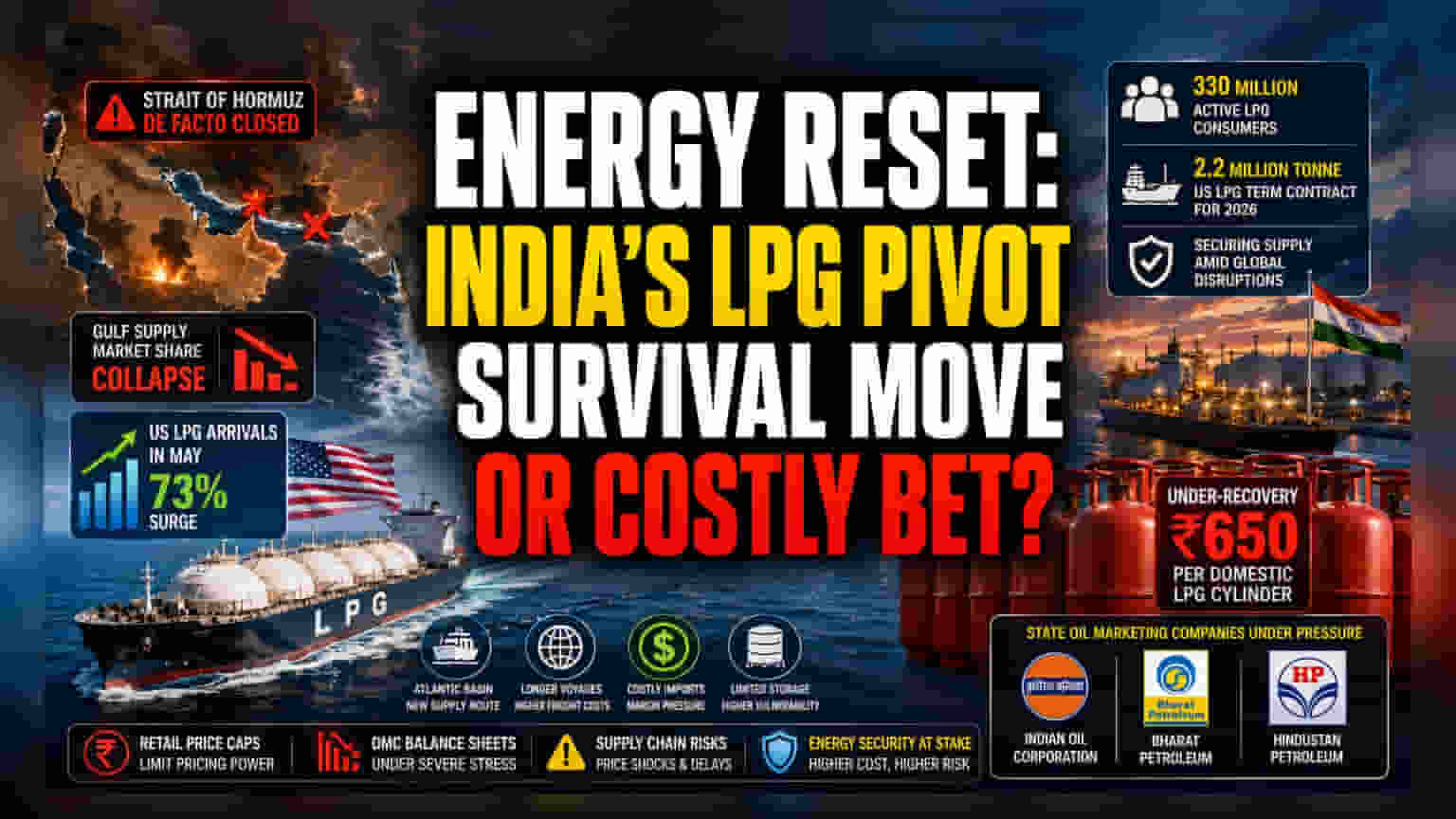


Geopolitical Supply Pivot: Force ki hui Badlav
India ka energy import ka system filhaal ek forced, fast change se guzar raha hai. Middle East mein badhti conflict ki wajah se Strait of Hormuz band hone ke baad, Gulf countries se jo pehle hamari energy security ka main source the, unka market share zero ho gaya hai. Desh mein 330 million se zyada LPG consumers ke liye supply maintain karne ki koshish mein, India ne ab US ki taraf dekha hai. May mein US se LPG arrivals mein 73% ka surge hua hai. Ye geographical shift, survival ke liye zaroori toh hai, par isse logistics mein complexities aur landed costs dono badh gaye hain, jisse domestic market abhi struggle kar rahi hai.
Margin Compression Trap: Kaisa hai nuksan?
Import shift ne physical inventory toh badha di hai, par state-run oil marketing companies (OMCs) – Indian Oil Corporation, Bharat Petroleum, aur Hindustan Petroleum – ki financial health par bahut pressure aa gaya hai. Ye retailers abhi har domestic LPG cylinder par lagbhag ₹650 ka under-recovery (loss) jhel rahe hain. Global market ki volatility aur retail prices mein stagnation (auto fuel mein hike hone ke baad bhi) ke beech ye ek structural deficit create ho gaya hai. Private companies ki tarah jinke paas pricing power hai, ye state-run giants ko government-mandated price caps ko follow karna padta hai taaki low-income families ko support mil sake. Ye cheez unke balance sheets ko aur complicated bana deti hai jab woh US se aane wale premium-priced imports ko manage karte hain.
Structural Weaknesses aur Risk Factors
US se LPG import karna koi free ka solution nahi hai. Atlantic region se aane wale cargoes mein Middle East ke comparison mein bahut lambi voyage duration hoti hai, jisse shipping costs badh jaati hain. Ye importing firms ki financial position ko aur strained karta hai. Market data ke hisab se, high freight rates ki wajah se kuch buyers ne already US cargo bookings cancel kar diye hain, jo is naye supply route ki fragility ko dikhata hai. Aur toh aur, 2026 ke liye 2.2 million tonne ka term contract supply certainty toh deta hai, par ye India ko West Asian energy flows se fully decouple karne ke liye kafi nahi hai, agar conflict lamba chalta hai. Desh mein adequate domestic storage capacity ki kami is vulnerability ko aur badha deti hai, jisse energy sector further price shocks aur supply delays ke liye susceptible ho jata hai.
Future Outlook: Aage kya?
Jaise India apni energy basket ko diversify kar raha hai, focus likely reliable, par mehange, alternative suppliers ko integrate karne par rahega. Officials ka kehna hai ki US-India energy cooperation ek strategic necessity hai, par is shift ka long-term sustainability landed costs ko stabilize karne aur possibly retail pricing mechanisms ko reform karne par depend karta hai. Investors ko state OMCs ke under-recovery levels ko monitor karna chahiye, kyunki aane wale quarters mein sector ki health ka ye ek primary indicator hoga. Agar expensive, long-haul imports par reliance bani rahi, toh unke margins par pressure aata rahega.